Home
How to Choose the Best Pokemon Binder to Protect Your Card Collection
For most collectors, a zippered 9-pocket binder with acid-free, PVC-free side-loading pockets is the standard for safety. Brands like Vault X and Dragon Shield are widely regarded as top choices for their durability and archival quality. Avoid 3-ring binders with O-rings to prevent "ring dents," and prioritize zippered closures over elastic straps to minimize card warping over time.
What Makes a Pokemon Binder Actually Worth Buying?
When you are investing hundreds or thousands of dollars into a card collection, the binder is your first line of defense. However, not all binders are created equal. The most critical factor in selecting a storage solution is the material science behind the pages. Serious collectors look for two specific labels: PVC-free and Acid-free .
The Archival Standard: PVC vs. Polypropylene
Polyvinyl Chloride (PVC) is a common plastic that often contains chemical plasticizers to make it flexible. Over time, these chemicals can migrate out of the plastic and onto your cards, leading to a sticky residue, surface discoloration, or even the "lifting" of the holographic foil. According to archival experts, polypropylene is the safer alternative. It is chemically inert, meaning it won't react with the ink or cardstock of your Pokemon cards. Most premium binders, such as those from Vault X , utilize these archival-safe materials to ensure long-term value preservation.
Side-Loading vs. Top-Loading Pockets
If you have ever turned a binder upside down only to have your rare Charizard slide out and hit the floor, you understand the importance of pocket orientation. Top-loading pockets are common in budget portfolios, but they offer less security. Side-loading pockets, which open toward the spine of the binder, make it nearly impossible for cards to fall out during transport. This design also provides a better seal against dust and environmental debris.
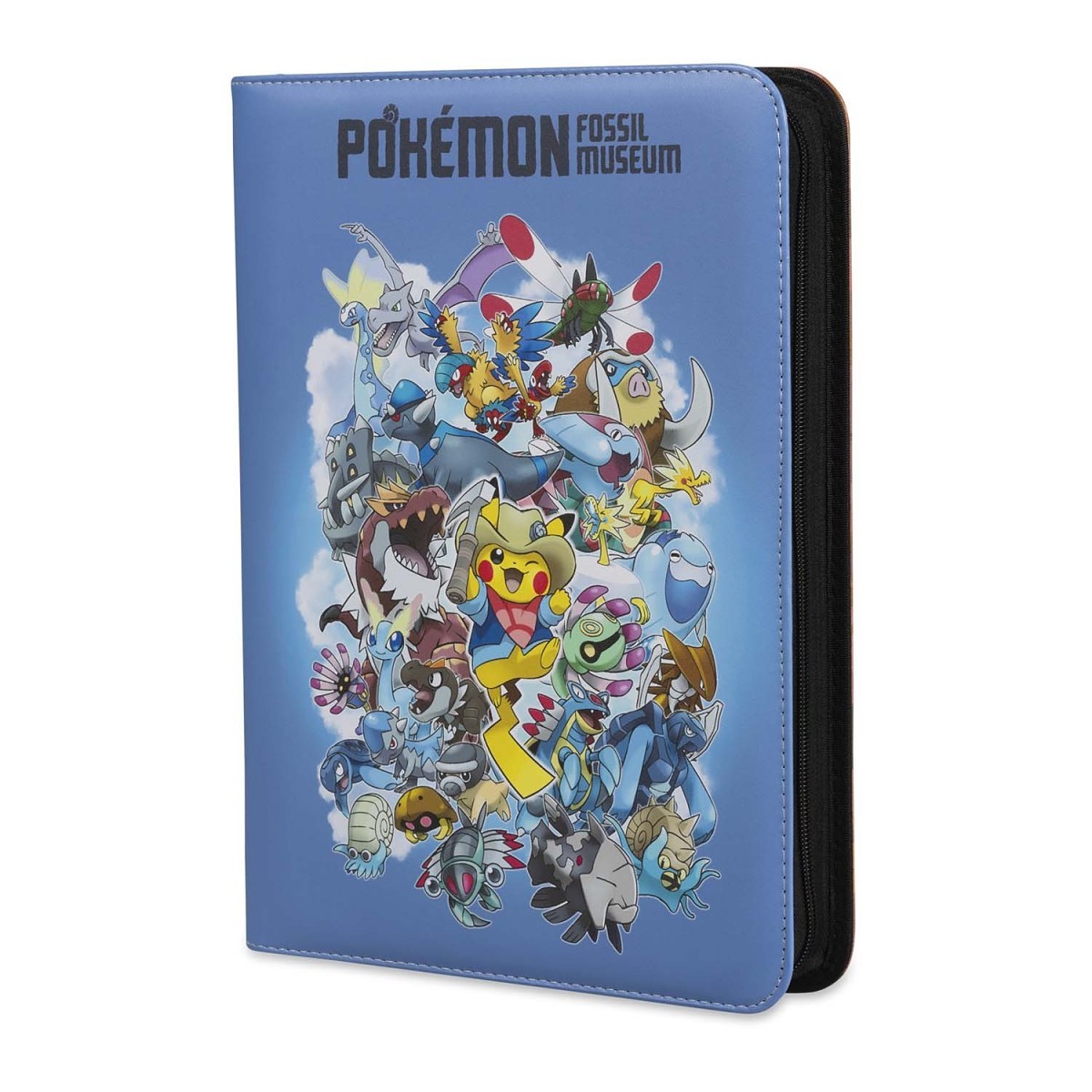
Image source: Pokemon Center
Which Closure System Best Protects Your Cards?
The way a binder closes is just as important as the pages inside. While many collectors start with simple elastic strap portfolios, long-term storage requires a more robust solution. The community consensus among veteran collectors often leans toward zippered options for several technical reasons.
The Case for Zippered Binders
Zippered binders provide a 360-degree seal. This is not just about preventing cards from falling out; it is about creating a micro-environment. A closed zipper significantly reduces the amount of dust, pet hair, and moisture that can enter the binder. For those living in humid climates, this can be a significant factor in preventing "foil curling" on holographic cards.
The Hidden Danger of Elastic Straps
While elastic straps are convenient, they present a specific risk known as "strap warping." Findings from collector communities like the EliteFourum suggest that the tension from an elastic band can create uneven pressure points. Over years of storage, this pressure can cause the cards on the very first and last pages to develop a slight curve or indentation where the strap sits. If you choose a strap binder, ensure it is not overfilled to minimize this risk.
Why Serious Collectors Avoid 3-Ring Binders
The "ring dent" is the nightmare of every Pokemon card grader. In traditional 3-ring binders, the metal rings can press against the innermost column of cards if the pages shift while the binder is closed. This results in a permanent indentation on the edge of the card, instantly dropping a potential PSA 10 to a PSA 6 or lower. If you must use a ring binder, only use D-rings , which allow the pages to lay flat against the straight edge of the ring, rather than the curved O-ring.
Top Pokemon Binders for Every Type of Collector
Choosing the right binder depends on your specific collecting goals. A "Master Set" collector has different needs than someone building a "Living Dex" of every Pokemon ever discovered.
Top Choice for Master Sets: Dragon Shield Codex 576
A Master Set typically includes every card in an expansion, including reverse holos and secret rares. Modern sets like Scarlet & Violet can easily exceed 400 cards. The Dragon Shield Codex 576 is a popular choice because its capacity allows for a full set plus extras without the binder bulging. Many users note that Dragon Shield pages lay flatter than competitors when the binder is at maximum capacity.
The Most Durable Choice for High-Value Cards: Vault X Exo-Tec
The Exo-Tec series is widely regarded as a top-tier option for those who prioritize physical protection. The outer shell is water-resistant and padded, providing a buffer against accidental drops. The internal lining is a soft microfiber that prevents the pages from scratching against the cover. It is a strong contender for anyone storing "Grail" cards like a Base Set Shadowless Charizard.
High-Capacity Storage for a Living Dex
If you are attempting to store one of every Pokemon (over 1,000 species), a standard 9-pocket binder won't suffice. 12-pocket binders, which hold 480 to 1,000+ cards, are the preferred choice here. These larger formats allow you to see more of the Pokedex at once and reduce the number of physical binders you need to manage.
| Brand/Model | Capacity | Closure Type | Best Use Case |
|---|---|---|---|
| Vault X Exo-Tec | 360 Cards | Zipper | High-Value Singles |
| Dragon Shield Codex | 576 Cards | Strap/Zip | Full Master Sets |
| Ultra Pro Snap | 160 Cards | Snap/Button | Small Sub-sets |
| Toploader Binder | 216 Cards | Zipper | Grading Candidates |
How to Organize Your Pokemon Binder Like a Pro
Organization is where collecting turns into an art form. A well-organized binder is not only satisfying to look at but also makes it easier to identify missing cards in your collection.
The Michi Method for Master Sets
Named after advanced collectors who utilize digital planning, the Michi Method involves using tools like PkmnBindr to map out your layout before you ever touch a card. This prevents the "ADHD spiral"—the frustrating process of having to move 300 cards because you realized you forgot a secret rare at the beginning of the set. By mapping the set digitally, you know exactly which slots to leave empty for cards you haven't acquired yet.
Sorting Strategies That Actually Work
- Pokedex Number: The classic way to organize a Living Dex. It follows the official order from Bulbasaur to Pecharunt.
- Set Number: The standard for Master Sets. Follow the numbers printed at the bottom of the cards (e.g., 001/198).
- Artist-Themed Pages: A growing trend where collectors group cards by specific illustrators like Yuka Morii or Mitsuhiro Arita.
- Energy Type: A visually striking method where each page represents a different type (Fire, Water, Psychic, etc.).
Common Problems and How to Fix Them
Even with a high-quality binder, issues can arise. Understanding how to maintain your storage system is key to protecting your investment over the next decade.
How to Handle Wavy Pages
Some collectors have reported that new binders, particularly from brands like Vault X, can arrive with "wavy" pages. This is often a result of temperature changes during shipping. In most cases, the pages will flatten out naturally once cards are inserted and the binder is stored flat under a light weight (like a few large books) for 48 hours. Avoid using high heat, as this can damage the polypropylene.
The Fake Leather Warning
Many "premium" binders use PU leather (polyurethane). While it looks great initially, low-quality PU leather is known to flake and peel after 5-10 years. When selecting a binder, look for "Exo-Tec" or high-density textured plastics which have a longer lifespan in climate-controlled storage. If you notice your binder cover starting to feel sticky or brittle, it is time to migrate your cards to a new home before the cover material begins to shed debris into the pockets.
Preventing Binder Bulge
Binder bulge occurs when you put too many cards into a fixed-page binder. This puts pressure on the spine and can cause the pages to pull at the seams. If the binder does not close easily without forcing the zipper, you have overfilled it. This pressure can eventually lead to surface indentations on the cards. Always leave the last page empty if the binder feels tight.
Frequently Asked Questions
Official binders from the Pokemon Center are excellent for their artwork and aesthetic appeal. However, many of them use elastic straps rather than zippers. For high-value collections, a third-party zippered binder often provides a higher level of environmental protection, though the official ones are perfectly suitable for casual sets.
A standard 20-page, double-sided 9-pocket binder holds 360 cards. If you are collecting a modern Master Set, you may need a high-capacity binder (480+ slots) to account for the large number of secret rares and parallel holos found in recent expansions.
Binders only damage cards if they are made of poor materials (PVC), use dangerous closure systems (O-rings), or are stored improperly. When using a side-loading, PVC-free, zippered binder, your cards are extremely safe. Avoid storing binders vertically if they are not full, as the pages can sag and cause the cards to warp over time.
Yes, this is highly recommended. Even the smoothest binder pockets can cause microscopic surface scratches over time as cards are moved. A simple penny sleeve or a "Perfect Fit" sleeve acts as a sacrificial layer, ensuring the card's surface remains in pristine condition.
A Toploader Binder is a specialized storage solution designed to hold cards that are already inside rigid plastic toploaders. This offers a much higher level of protection against bending and physical impact compared to standard flexible pages. It is a popular choice for cards valued at $50 or more.
Key Takeaways for Card Protection
- Prioritize Archival Safety: Only buy binders labeled as PVC-free and Acid-free to prevent chemical damage.
- Choose Side-Loading Pockets: These offer the best security against cards falling out during handling.
- Avoid O-Rings: Use fixed-page binders or D-ring binders to eliminate the risk of "ring dents."
- Use Zippered Closures: Zippers provide a superior seal against dust and humidity compared to elastic straps.
- Plan Your Layout: Use digital tools like PkmnBindr to map your collection before physically inserting cards.
- Sleeve Every Card: Always use at least a penny sleeve to protect the card surface from micro-scratches.
By selecting a high-quality zippered binder and following proper organization techniques, you can ensure your Pokemon collection remains in mint condition for decades to come.