Home
How to Make Pale Ale in Stardew Valley and Finish Pam's Quest
To make Pale Ale in Stardew Valley, you must place one Hops into a Keg . The brewing process takes approximately 2,360 in-game minutes (roughly 1.6 days or 34 hours). Once finished, the Pale Ale can be sold for a base price of 300g or given to Pam to complete the "Pam Is Thirsty" quest. You unlock the Keg recipe at Farming Level 8 .
In the world of Stardew Valley, few artisan goods offer the same balance of accessibility and consistent profit as Pale Ale. While many players focus on high-value wines, the rapid production cycle of Pale Ale makes it a top-tier choice for mid-game cash flow. Whether you are trying to satisfy Pam's thirst or looking to maximize your greenhouse profits, understanding the nuances of hops and kegs is essential.
What Do You Need to Start Brewing Pale Ale?
Brewing Pale Ale is a straightforward process, but it requires specific infrastructure and seasonal planning. Unlike basic crops that you simply sell after harvest, Pale Ale is an "Artisan Good," meaning it requires a machine to transform a raw ingredient into a higher-value product. According to the official Stardew Valley Wiki , the base sell price of 300g is significantly higher than the 25g base price of raw Hops.
The Essential Ingredients
You only need two primary components to begin your brewing empire:
- Hops: A vegetable crop grown from Hops Starters during the Summer season.
- Keg: A crafting station unlocked at Farming Level 8 that processes various fruits and vegetables into beverages.
The processing time is one of the most favorable in the game. While Wine takes 7 days to process in a keg, Pale Ale finishes in just under two days. This allows a single keg to produce multiple bottles per week, often resulting in a higher "Gold Per Day" ratio than many expensive fruits. In recent updates, including the 1.6 expansion, the mechanics of brewing remain a cornerstone of efficient farming strategies.
How to Grow Hops Without Getting Stuck in Your Fields
Growing Hops presents a unique challenge that often catches new farmers off guard: the Trellis Trap . Hops grow on trellises, which are solid objects that your character cannot walk through. If you plant a 3x3 block of Hops, you will be unable to reach the center plant to water or harvest it once it matures.
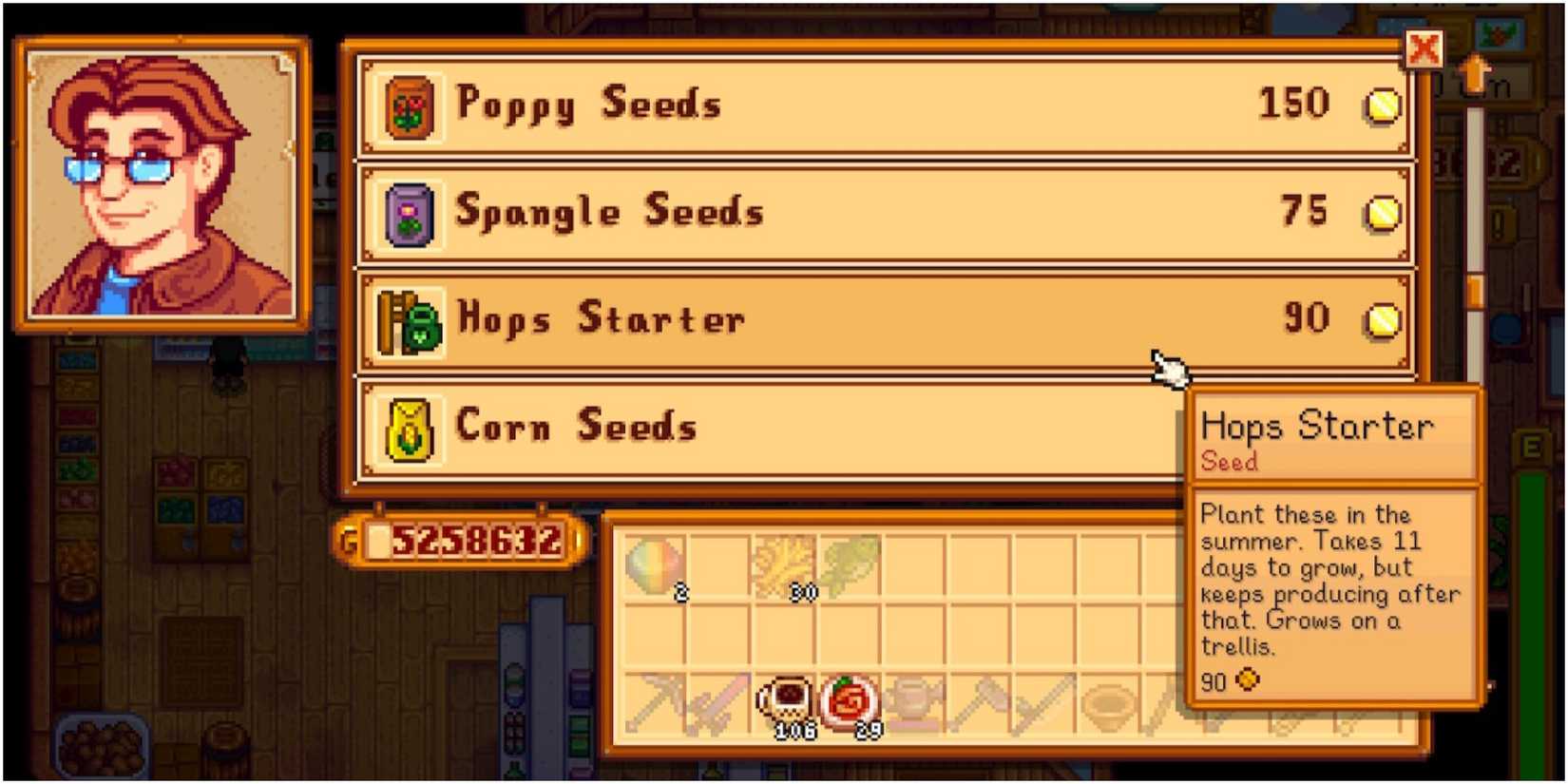
Image source: TheGamer
Optimal Planting Layouts
To avoid getting stuck, you should plant Hops in rows or specific patterns that allow for continuous movement. A popular choice among experienced players is the "H-Pattern" or long double-rows with a walking path in between. This ensures every trellis is reachable from at least one side.
If you have unlocked Junimo Huts , the trellis restriction becomes less of a burden. Junimos are capable of walking through trellises to harvest crops, allowing you to plant dense blocks of Hops without worrying about accessibility. This is widely considered one of the most efficient ways to manage large-scale Hops production.
Growth Timeline and Speed-Gro
Hops take 11 days to reach maturity. However, once they are fully grown, they produce a new harvest every single day . This daily yield is what makes Hops exceptionally strong for consistent brewing. To speed up the initial 11-day wait, you can use Deluxe Speed-Gro , which reduces the growth period to approximately 8 days, giving you three extra days of harvest during the Summer season.
How to Unlock and Craft the Keg Recipe
The Keg is the heart of your brewery, but it is not available immediately. You must reach Farming Level 8 to receive the crafting recipe. If you are struggling to level up your farming skill, focus on harvesting high-XP crops like Pumpkins or Melons, or consider purchasing "Books of Power" from the 1.6 Bookseller to gain a permanent XP boost.
Crafting Materials
Each Keg requires the following materials:
- 30 Wood: Easily obtained by chopping trees on or off your farm.
- 1 Copper Bar: Smelted from 5 Copper Ore and 1 Coal in a Furnace.
- 1 Iron Bar: Smelted from 5 Iron Ore and 1 Coal.
- 1 Oak Resin: Obtained by placing a Tapper on an Oak Tree and waiting 7-8 days.
Oak Resin is often the bottleneck for players trying to build a large brewery. It is highly recommended to start an "Oak Farm" early by planting Oak seeds in a grid and tapping them as soon as they mature. This ensures a steady supply of resin for your growing keg collection.
How to Complete the Pam Is Thirsty Quest Quickly
On the 14th of Summer, you will receive a letter from Pam titled "Pam Is Thirsty." She explicitly requests a Pale Ale to help her deal with the heat. Completing this quest is a significant step in building your relationship with her, as it rewards you with 350g and one full friendship heart.
Common Pitfalls
A frequent mistake players make is attempting to give Pam a Beer purchased from Gus at the Stardrop Saloon. While Pam certainly enjoys beer, the quest specifically requires Pale Ale . Because Gus does not sell Pale Ale, you must either brew it yourself or find an alternative source. Giving her the wrong drink will not progress the quest and will simply count as a normal gift.
To deliver the item, simply hold the Pale Ale in your active inventory slot and interact with Pam. You can usually find her standing outside her trailer in the morning or at the Stardrop Saloon in the evening after the bus service (if restored) has ended for the day.
Where to Buy Pale Ale if You Missed the Summer Season
If you missed the window to grow Hops in Summer and haven't unlocked the Greenhouse yet, you might feel stuck on Pam's quest. Fortunately, there are several ways to acquire Pale Ale out of season, especially following the 1.6 Update .
The 1.6 Desert Festival Method
A notable addition in the 1.6 update is the Desert Festival , which takes place from Spring 15 to 17. During this event, Pam sets up a small shop where she sells various items, including Pale Ale, for Calico Eggs. This is a reliable way to finish her quest in the Spring of Year 2 if you failed to prepare during Year 1.
Other Sources
- Traveling Cart: The merchant appears on Fridays and Sundays near the Wizard's Tower. She occasionally sells Pale Ale for prices ranging from 300g to 1,000g.
- Ginger Island Resort: Once you have unlocked the resort on Ginger Island, the bar there sells Pale Ale for 1,000g.
- The Greenhouse: Once repaired, the Greenhouse allows you to grow Hops year-round, providing a permanent source of brewing ingredients.
Pale Ale vs. Beer — What Is the Real Difference?
It is easy to confuse these two beverages, as they are both processed in kegs and look similar in the inventory. However, they serve different purposes and have distinct economic values. According to guides on TheGamer , the primary difference lies in the base ingredient and the time investment.
| Feature | Pale Ale | Beer |
|---|---|---|
| Base Ingredient | Hops | Wheat |
| Base Sell Price | 300g | 200g |
| Keg Processing Time | 1.6 Days (34 Hours) | 1 Day (24 Hours) |
| Growth Cycle | 11 Days (Daily Harvest) | 4 Days (Single Harvest) |
| Artisan Price (40%) | 420g | 280g |
While Beer processes faster, Pale Ale's higher sell price and the daily harvest nature of Hops make it a more profitable long-term investment. Wheat must be replanted after every harvest, whereas Hops continue to produce until the end of the season, saving you both time and seed money.
Is Pale Ale More Profitable Than Ancient Fruit Wine?
This is a common debate in the Stardew community. At first glance, Ancient Fruit Wine (2,310g with Artisan perk) seems to dwarf Pale Ale (420g). However, the "Hops Meta" relies on throughput . Because Hops produce every day and Pale Ale brews in less than two days, the volume of product you can generate is much higher.
"While a single bottle of wine is worth more, the sheer volume of Pale Ale you can produce in a single season makes it one of the strongest contenders for early-to-mid game wealth."
In a standard 28-day month, a single Hops plant in the Greenhouse can produce 28 Hops. If you have enough kegs, those 28 Hops become 28 Pale Ales. In the same timeframe, an Ancient Fruit plant produces 4 fruits, which become 4 bottles of Wine. While the Wine still wins in total value per tile, Pale Ale provides "liquid cash" much faster, which is vital for buying expensive upgrades like the Iridium Sprinklers or the Gold Clock.
How to Age Pale Ale for Maximum Profit in the Cellar
Once you have fully upgraded your farmhouse to include a Cellar , you gain access to Casks . Casks allow you to age certain artisan goods to increase their quality and value. Pale Ale is one of the few items that can be aged, alongside Wine, Cheese, and Mead.
Aging Tiers and Timelines
Aging Pale Ale to Iridium quality doubles its base value. The timeline is as follows:
- Normal to Silver: 9 Days (1.25x value)
- Silver to Gold: 8 Days (1.5x value)
- Gold to Iridium: 17 Days (2x value)
Total aging time from base to Iridium is 34 days . While this sounds impressive, many experts suggest that your cellar space is better utilized for Starfruit or Ancient Fruit Wine. Since those items have a much higher base value, the 2x multiplier from aging yields a significantly larger raw profit increase compared to the relatively low base price of Pale Ale.
Frequently Asked Questions
Can I make Pale Ale in the Winter?
Yes, but you cannot grow the necessary Hops outdoors during Winter. To make Pale Ale in the Winter, you must either grow Hops in your Greenhouse, on Ginger Island, or use Hops that you harvested and stored during the Summer season. The Keg itself works year-round in any location.
Why won't my Hops go into the Keg?
There are two common reasons for this. First, ensure the Keg is not already processing another item (it will be pulsing if active). Second, verify that you are holding Hops and not Wheat . Wheat produces Beer, and while it also goes into a Keg, players often mix up the two ingredients when trying to fulfill Pam's quest.
Does Pale Ale give any special buffs?
Pale Ale provides a "Tipsy" buff when consumed. This buff reduces your movement speed by 1 for 30 seconds. While it restores a decent amount of energy and health (especially at higher qualities), the speed penalty makes it less ideal for dungeon crawling in the Skull Cavern compared to non-alcoholic food items.
Can Junimos harvest Hops trellises?
Yes! This is one of the most useful interactions in the game. Junimos can pass through trellises that are impassable to the player. By placing a Junimo Hut in the center of a large Hops field, you can maximize your planting space without needing to leave walking paths for yourself.
How do I get Oak Resin faster for more Kegs?
To increase your Oak Resin production, plant a large number of Oak Trees (using Acorns) in an empty area like the Quarry or the Railroad. Once they grow, place Tappers on all of them. Using Heavy Tappers (unlocked via Mr. Qi's Walnut Room) will double the production speed, giving you resin every 3-4 days instead of 7-8.
Key Takeaways for Mastering Pale Ale
- Unlock the Keg by reaching Farming Level 8 through consistent harvesting and XP-boosting books.
- Plan your Hops layout carefully to avoid the "Trellis Trap," or use Junimo Huts to bypass movement restrictions.
- Prioritize the Summer 14 quest by saving at least one bottle of Pale Ale for Pam to earn a quick friendship boost.
- Utilize the 1.6 Update by visiting the Desert Festival in Spring if you need to buy Pale Ale out of season.
- Maximize profits by choosing Pale Ale for fast cash flow, but save your Cellar casks for higher-value wines.
- Distinguish between Beer and Pale Ale by remembering that Hops are the required ingredient for the latter.
Start planting your Hops starters on the first day of Summer to ensure you have a steady supply of ingredients for your brewing empire.