Home
How to Play Dies Irae Amantes Amentes and Navigate Every Route Correctly
For the intended narrative experience in
Dies Irae ~Amantes Amentes~
, players should follow the specific route order:
Kasumi → Kei → Marie → Rea
. The Steam version utilizes a "Free to Start" model where the common route (Chapters 1–6) is free, while individual heroine paths are purchased as DLC. To ensure a complete experience, apply the community restoration patch, but be aware that the
January 2026 Steam update
requires a specific executable fix (using the older
malie.exe
) to maintain compatibility with older mods.
What Is Dies Irae Amantes Amentes?
Originally released by the developer Light, Dies Irae ~Amantes Amentes~ is a massive urban fantasy visual novel that has earned a reputation as a cornerstone of the "Chuunige" subgenre. The term refers to stories that embrace theatrical, over-the-top, and often poetic aesthetics, typically involving supernatural battles and complex philosophical themes. Written by Takashi Masada with art by G-Yuusuke, the game is widely regarded as one of the best examples of high-octane narrative ambition in the medium.
The story follows Ren Fujii, a high school student in Suwahara City whose life is upended following a brutal fight with his former best friend. As he begins to experience terrifying visions of a guillotine and supernatural killers, he is drawn into a conflict involving the Longinus Dreizehn Orden (the Obsidian Round Table). This group, composed of Nazi sorcerers who performed a dark ritual in 1945 Berlin, has returned in the modern day to complete their "Grand Guignol" and achieve godhood.
What sets this title apart is its dense, sophisticated prose. For years, the game was considered "untranslatable" due to its heavy use of German-inspired terminology, Buddhist philosophy, and operatic dialogue. However, following a highly successful crowdfunding campaign that raised over 30 million yen in less than 24 hours, the game finally reached Western audiences, proving its enduring cult status.
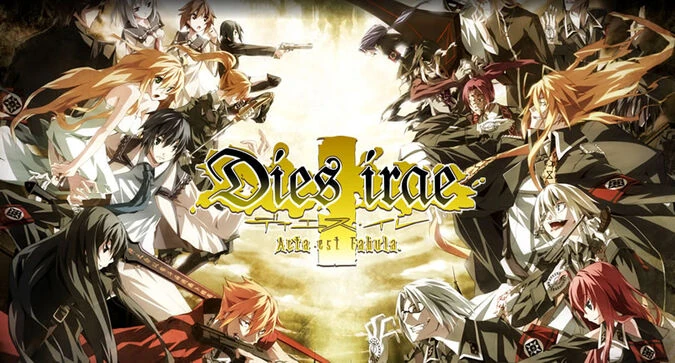
Image source: Shinza Bansho Wiki - Fandom
What Makes Amantes Amentes Different From Other Versions?
Navigating the various releases of Dies Irae can be confusing for newcomers. The series has undergone several iterations since its initial 2007 debut. Amantes Amentes , released in 2012, is generally considered the most complete version of the story, even though it was originally designed as an "all-ages" release for the PlayStation Portable and PC.
While the earlier Acta est Fabula version contained adult content (H-scenes), Amantes Amentes compensated by adding significant narrative depth. This includes a new scene in Rea’s route and a second ending that provides a more definitive conclusion to the saga. For many fans, the trade-off of losing explicit scenes for a more polished and expanded script makes this the premier way to experience the story.
| Feature | Acta est Fabula (2009) | Amantes Amentes (2012/Steam) |
|---|---|---|
| Content Type | Adult (18+) | All-Ages / Refined |
| Resolution | 4:3 Only | Supports 16:9 and 4:3 |
| Story Depth | Standard Routes | Includes additional Rea scenes & 2nd Ending |
| Side Stories | Limited | Includes 5 essential side stories |
| Availability | Legacy PC | Steam, Switch, Modern PC |
How to Navigate the Steam Free to Start Model
The Steam release of Dies Irae ~Amantes Amentes~ utilizes a unique "Free to Start" distribution method. When you download the base game from the Steam store , you receive the Common Route, which covers Chapters 1 through 6. This allows players to sample the first 10–15 hours of the story without financial commitment.
Once you reach the end of the common route, the story branches into individual heroine paths. These are sold as DLC packs. To see the full story, you will need to purchase the routes for Kasumi, Kei, Marie, and Rea. Given that a full completionist run can exceed 80 hours of playtime, this model allows players to pay as they progress. However, most veterans recommend buying the full bundle, as the narrative is designed to be read in its entirety to make sense of the "Eternal Recurrence" concept.
The Most Effective Route Order for New Players
In many visual novels, route order is a matter of personal preference. In Dies Irae , however, the order is vital. The game employs a narrative structure where each successive route reveals more about the underlying mechanics of the world and the true motivations of the Obsidian Round Table. Playing them out of order can lead to significant confusion and spoiled plot points.
The community-standard sequence is: Kasumi → Kei → Marie → Rea . This progression is designed to gradually peel back the layers of the mystery, starting with the most "grounded" perspective and ending with the cosmic revelations of the true ending.
Why You Should Start With Kasumi and End With Rea
Kasumi's Route serves as the essential introduction. It focuses on the immediate threat in Suwahara City and Ren's struggle to maintain his humanity. It provides the least amount of "lore dump," allowing you to get accustomed to the characters before the stakes escalate. Kei's Route begins to introduce the internal politics of the Obsidian Round Table and the history of the 1945 ritual.
Marie's Route is where the game truly opens up, shifting the focus toward the metaphysical nature of the "Souls" and the "Gods" governing the universe. Finally, Rea's Route acts as the grand finale. It is the only route that ties every loose thread together and explains the "Eternal Recurrence"—the cycle of rebirth that defines the Shinza Bansho universe. Rea's path is widely regarded as one of the strongest conclusions in the genre, but its impact is entirely dependent on having seen the previous three stories.
Where to Read the Side Stories for the Best Experience
Amantes Amentes includes five side stories that were originally released as separate audio dramas or short stories. Integrating these into your playthrough is highly recommended for a complete understanding of the cast. According to community experts at Gareblogs , the following timeline is the most effective:
Read this immediately after finishing Kasumi’s Route . It provides crucial backstory for the antagonists, specifically focusing on the events of World War II.
Read after Kei’s Route . This story details the early days of the Obsidian Round Table and their initial formation in Berlin.
Also best read after Kei’s Route . It explores the darker aspects of the ritual's cost and the nature of the "Curse" affecting the city.
This serves as an essential epilogue to Marie’s Route . Do not skip this before moving on to Rea.
The final piece of the puzzle. Read this only after completing Rea’s Route and the second ending.
How to Install the Restoration Patch and Fix Technical Issues
Because Amantes Amentes is technically an all-ages game, some of the more visceral and atmospheric elements from the original Acta est Fabula were altered or removed. The community has developed a restoration patch that brings back uncensored CGs, missing voice files, and original UI elements like the Longinus Lance cursor. Applying this patch creates a "best of both worlds" experience, combining the superior script of Amantes Amentes with the raw intensity of the original art.
Fixing the 2026 Steam Update Conflict
malie.exe
engine handles external assets.
To fix this, you must ensure you are using the "DX version" executable or a patched version of the
malie.exe
file provided by the community. When applying the patch, always back up your save files located in the
savedata
folder. If the game fails to boot, verify the integrity of game files through Steam and re-apply the patch using the updated 2026 instructions found on community forums.
Choosing Between 16:9 and 4:3 Resolutions
Amantes Amentes supports modern widescreen (16:9), but this comes with a caveat: the original art was drawn in 4:3. The widescreen mode often "crops" the top and bottom of the images to fill the screen. While this looks better on modern monitors, some players find it distracting as it can cut off important visual details. Furthermore, some users have reported that certain lines of dialogue lack audio when playing in 16:9 mode. For the most authentic experience, many purists suggest playing in the original 4:3 aspect ratio.
How to Avoid the Enforced Route Glitch on Steam
One of the most common pitfalls for new players is the "Enforced Route" buttons found in the Steam version's main menu. These buttons allow you to "lock" the game into a specific heroine's path from the start. While this sounds convenient, it is widely considered a trap by the community.
Using these buttons can trigger a glitch where the game skips essential dialogue choices in the common route. This is problematic because certain choices are required to unlock the final side story, Nihil Difficile Amanti . If the game "forces" you into a route, it may not register that you've met the requirements for the true ending's epilogue. The solution is simple: Always select "New Game" and use a manual walkthrough to make the correct choices. Avoid the menu shortcuts entirely to ensure your save file remains "clean" for the final chapters.
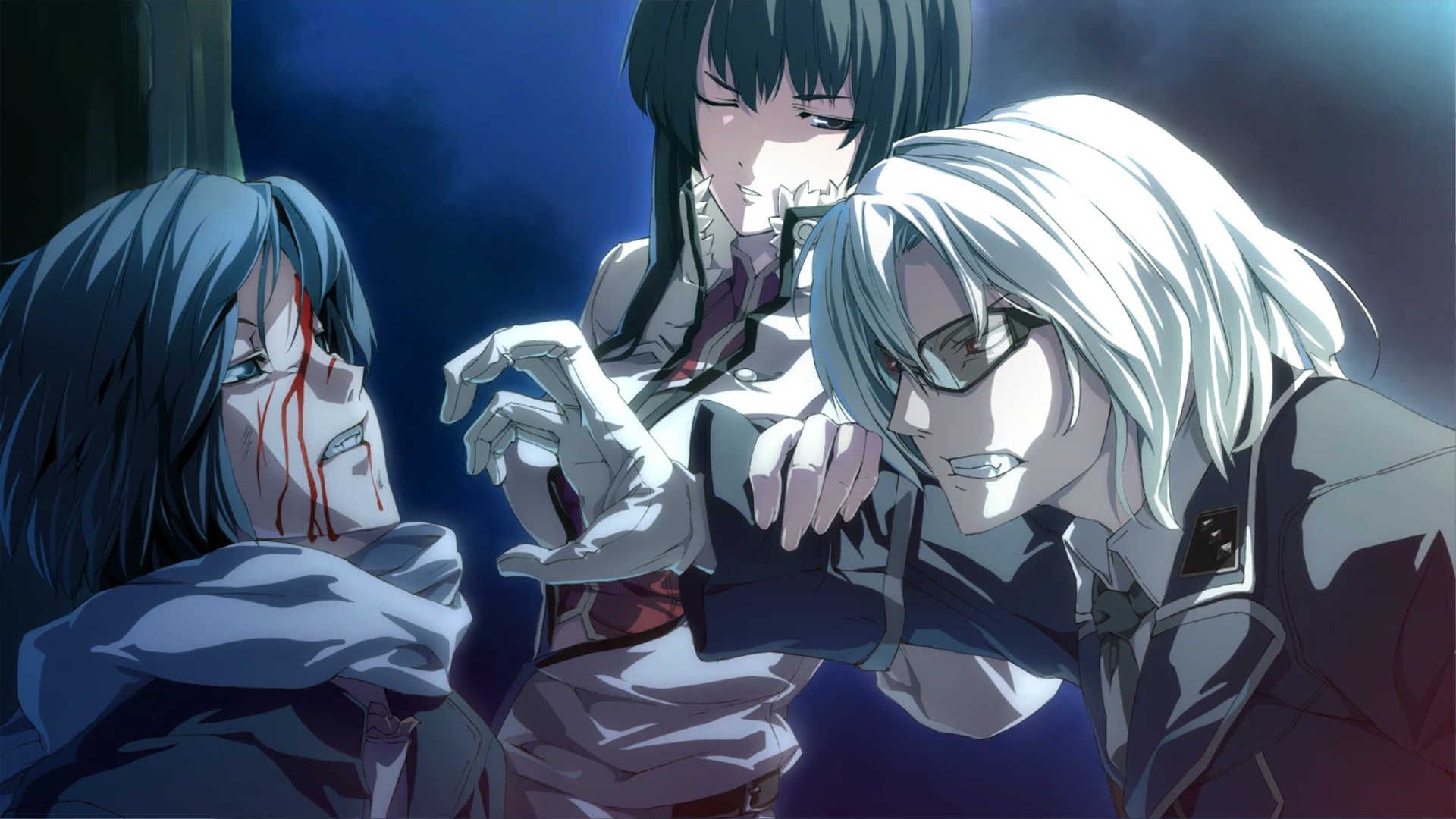
Image source: Steam
Understanding the Shinza Bansho Universe and Lore
Dies Irae does not exist in a vacuum. It is the second entry in the Shinza Bansho series, a larger multiverse created by Takashi Masada. While Dies Irae is a standalone story, it shares themes and cosmic mechanics with other titles like Kajiri Kamui Kagura and the (now cancelled) mobile project Pantheon .
- The Throne
- A metaphysical seat of power that allows a "God" to paint the entire universe with their own laws and desires. The conflict in Dies Irae is essentially a battle to determine whose "Law" will rule the Throne.
- Eternal Recurrence
- The specific Law of the current God, which forces the universe to repeat in an endless cycle. This explains why characters often feel a sense of déjà vu or "fate" throughout the different routes.
- Ahnenerbe
- The supernatural artifacts used by the Obsidian Round Table, fueled by the souls of the dead. Ren's own power is tied to a specific Ahnenerbe that manifests as a guillotine.
Understanding these concepts isn't strictly necessary for the first few routes, but by the time you reach Marie and Rea, they become the focal point of the narrative. The series' ability to blend high-concept philosophy with shonen-style battle tropes is what makes it a top-tier choice for fans of deep lore.
Frequently Asked Questions
Is the Dies Irae anime worth watching before the game?
Does the Steam version include H-scenes?
How many chapters are in the free common route?
Can I play the routes in any order I want?
What does the title "Amantes Amentes" mean?
Final Takeaways for New Players
- Download the free common route on Steam to see if the "Chuunige" style and dense prose appeal to you before buying DLC.
- Follow the standard route order (Kasumi → Kei → Marie → Rea) to ensure the narrative reveals its secrets in the intended sequence.
- Integrate the five side stories at the recommended intervals (Wehrwolf after Kasumi, etc.) to fully flesh out the antagonists.
-
Apply the restoration patch
for the most atmospheric experience, but ensure you use the 2026
malie.exefix to avoid crashes. - Avoid the "Enforced Route" buttons in the main menu; always start a "New Game" to prevent dialogue glitches.
- Consider the 4:3 resolution if you want to see the original artwork without the cropping issues found in widescreen mode.
Start your journey by downloading the common route and following a manual walkthrough to reach Kasumi's ending first.