Home
How to Play Doctordle and Use It to Master Medical Diagnosis
What Is Doctordle and Why Is It Viral Among Medical Students?
In the landscape of digital education, few tools have captured the attention of the medical community as effectively as Doctordle. Often described as the "Medical Wordle," this game transforms the rigorous process of differential diagnosis into a daily interactive challenge. Originally developed by medical students as a passion project, the game was designed to bridge the gap between dry textbook learning and the dynamic nature of clinical practice. According to community discussions on Reddit , the creators intended to provide a fun, low-stakes environment for mastering "high-yield" conditions frequently encountered on the USMLE Step 1 exam.
The game's surge in popularity can be attributed to its adoption by prominent medical influencers and organizations. Board-certified physicians, including the widely recognized Doctor Mike, have featured the game in their content, demonstrating how seasoned professionals apply clinical reasoning to solve complex vignettes. This "Doctor Mike effect" helped transition the game from a niche student tool to a mainstream phenomenon within the healthcare sector.
As of late 2026, Doctordle has evolved significantly. It now features collaborations with prestigious institutions like the New England Journal of Medicine (NEJM) , which has contributed real-world cases to the platform, such as a notable pediatric measles case. This level of institutional involvement validates the game's clinical accuracy and its utility as a supplementary educational resource. The game stands out as a top-tier option for those looking to sharpen their diagnostic intuition while staying engaged with current medical standards.
How to Play Doctordle and Solve the Daily Case
The core mechanics of Doctordle are straightforward yet intellectually demanding. Players are presented with a clinical vignette—a brief story of a patient's presentation—and must guess the correct diagnosis. You are granted a total of six attempts to identify the condition.
Start with the patient's age, gender, and primary complaint (e.g., "A 45-year-old male presents with sudden onset chest pain").
Each incorrect guess reveals a new piece of information, such as physical exam findings, lab values, or imaging results.
Use the accumulated data to input the formal medical name of the condition before you run out of guesses.
According to the official documentation on the .net domain , the game offers two primary modes. The "Daily Case" is a synchronized puzzle shared by the entire global community, fostering discussion and competition. For those seeking more intensive practice, the "Endless Mode" (including Practice and Challenge variations) allows for back-to-back puzzles, which is particularly useful for students in the final weeks of board exam preparation.
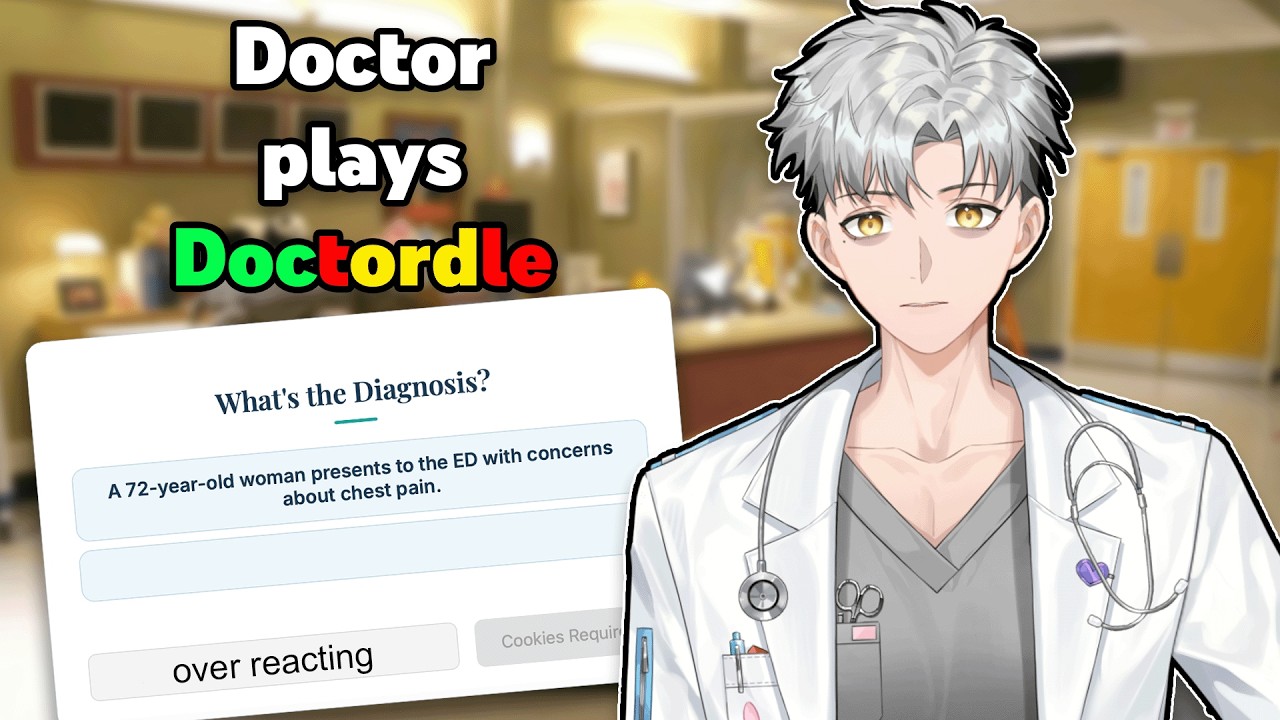
Image source: YouTube
How to Get the Doctordle App on Your iPhone or Android
A common point of confusion for new players is the search for an official "Doctordle App" in the Apple App Store or Google Play Store. As of 2026, there is no native mobile application. However, the developers have optimized the site as a Progressive Web App (PWA), which allows you to install it directly onto your home screen for an app-like experience.
Installing on iOS (iPhone/iPad)
- Open Safari and navigate to doctordle.org .
- Tap the Share icon (the square with an upward arrow) at the bottom of the screen.
- Scroll down and select "Add to Home Screen."
- Name the shortcut "Doctordle" and tap Add . The icon will now appear on your home screen.
Installing on Android
- Open Google Chrome and go to the Doctordle website.
- Tap the three vertical dots in the top-right corner.
- Select "Install app" or "Add to Home screen" from the menu.
- Confirm the installation. You can now launch the game without opening your browser first.
Using the PWA method is highly recommended because it ensures your progress and statistics are saved via browser cookies, as noted in the site's technical FAQ . This setup provides the convenience of a dedicated app without taking up significant storage space on your device.
Advanced Clinical Reasoning Strategies to Solve Puzzles in Fewer Guesses
To consistently solve Doctordle cases in two or three guesses, you must move beyond simple word-guessing and adopt a structured clinical mindset. Drawing from the methods shared by experts like Doctor Mike and Dr. Josh Korzan, here are the top-rated strategies for diagnostic success.
Linguistic Hacking with Medical Suffixes
If you have confirmed several letters but are stuck on the diagnosis, use medical suffixes to narrow the pathology type. This linguistic approach is a significant advancement for players who may know the symptoms but struggle with the exact terminology:
- -itis: Look for clues involving inflammation or infection (fever, elevated WBC).
- -oma: Focus on mass effects, weight loss, or imaging showing a lesion.
- -pathy: Consider chronic organ dysfunction without acute inflammation.
- -emia: Shift your focus to blood-based lab results like potassium or glucose levels.
Differential Pruning
This strategy involves maintaining a mental list of possibilities and "pruning" them as new clues appear. If Clue 2 reveals a normal EKG, you can immediately prune myocardial infarction and arrhythmias from your list, even if the patient has chest pain. This systematic elimination is a hallmark of board-certified reasoning and is one of the strongest ways to improve your Doctordle score.
How to Use the Doctordle Anki Export for USMLE Step 1 Prep
One of the most valuable features for medical students is the ability to export cases directly to Anki, the gold standard for spaced-repetition learning. This workflow allows you to transform a quick game into a long-term memory asset.
- Complete the Case: Finish the daily puzzle, regardless of whether you guessed correctly.
- Locate the Export Button: On the results screen, look for the "Export to Anki" button. This feature was highlighted as a key study aid in the iatroX medical gaming blog .
- Download the File: The site will generate a small `.apkg` or text file containing the vignette and the correct diagnosis.
- Import to Anki: Open your Anki desktop or mobile app and import the file.
- Tag for Review: Add tags like #Doctordle or specific organ systems (e.g., #Cardiology ) to ensure the case appears during your relevant study blocks.
By integrating Doctordle into your Anki routine, you ensure that you don't just solve the puzzle once and forget it. Instead, you reinforce the clinical pearls associated with that specific diagnosis, making it a highly effective component of a comprehensive study plan.
Doctordle vs. iatroX Rounds vs. Disordle
While Doctordle is a leading choice in the United States, other medical games offer different perspectives and gameplay styles. Understanding these differences helps you choose the tool that best aligns with your specific educational goals.
| Feature | Doctordle | iatroX Rounds | Disordle |
|---|---|---|---|
| Primary Region | USA (USMLE Focus) | UK (UKMLA/PLAB Focus) | Global / General |
| Format | Clinical Vignette | Patient Rounds | Feature Matching |
| Guesses | 6 Attempts | Variable | 6 Attempts |
| Study Tools | Anki Export | Clinical Notes | None |
Doctordle remains a top-tier option for those targeting the USMLE, as its terminology and "high-yield" focus are specifically tailored to the American board exams. In contrast, iatroX Rounds is widely regarded as one of the best options for UK-based students, as it incorporates guidelines from the NHS and the GMC. Disordle offers a more analytical approach, focusing on matching specific symptoms to diseases rather than interpreting a narrative vignette.
Common Troubleshooting Tips for Answer Matching and Synonyms
A frequent source of frustration for players is the "synonym conflict." You might correctly identify the condition but have your answer marked wrong because you used a common name instead of the formal medical term. For instance, entering "Heart Attack" might be rejected while "Myocardial Infarction" is accepted.
To address this, the developers implemented a significant logic update in June 2026. This update improved the game's ability to recognize common synonyms and abbreviations. However, for the highest accuracy, players are still encouraged to use formal USMLE-standard terminology. Avoid abbreviations like "SLE" and instead type out "Systemic Lupus Erythematosus."
Another common issue is domain confusion. While doctordle.org is the primary site for the daily game, doctordle.net often hosts more detailed documentation and experimental modes. If you find the daily case isn't loading, clearing your browser cookies or switching between these two domains often resolves the issue.
Key Takeaways for Mastering Daily Medical Diagnosis
- Start with a broad differential to eliminate entire organ systems with your first two guesses.
- Use formal medical terminology (e.g., Myocardial Infarction vs. Heart Attack) to ensure the game's logic recognizes your answer.
- Install the PWA on your mobile device to bypass the lack of an official app store version.
- Leverage the Anki export feature to turn daily puzzles into long-term study cards for board exams.
- Pay attention to suffixes like -itis or -oma when you have confirmed letters but are missing the diagnosis.
- Check both .org and .net domains if you encounter technical glitches or want to access Endless Mode.
Start your daily diagnostic practice today by visiting the official site and applying these clinical reasoning strategies to your first guess.
Frequently Asked Questions
- What is the Doctordle answer for today?
- The Doctordle answer changes every 24 hours at midnight. Because the game is designed to test clinical reasoning, we encourage players to use the progressive clues provided after each guess. If you are truly stuck, medical student communities on platforms like Reddit often discuss the daily case in spoiler-tagged threads.
- Is Doctordle free to use?
- Yes, Doctordle is a completely free, browser-based educational tool. It does not require an account or a subscription, though it uses cookies to track your daily streak and progress. The developers maintain the site through community support and its utility as a study aid.
- Can I play past Doctordle games?
- While the main site focuses on the daily case, the "Endless Mode" found on the .net version of the site allows you to play through a vast library of previous cases. This is an excellent way to practice for exams without waiting for the daily reset.
- Does Doctordle have pediatric cases?
- Yes, Doctordle frequently includes pediatric cases. A notable example was the collaboration with the New England Journal of Medicine, which featured a complex case of a 5-year-old with measles. The game covers the full spectrum of medicine, from neonatology to geriatrics.
- Why was my correct answer marked wrong?
- This usually happens due to terminology differences. While the June 2026 update improved synonym matching, the game still prioritizes formal medical names. Ensure you are using the full, non-abbreviated name of the condition as it would appear in a medical textbook or on a USMLE exam.