Home
Split Fiction Ratings and Reviews — Is This Co-op Adventure Worth Your Money?
Split Fiction stands out as a top choice for co-op enthusiasts, currently holding a 91 Metacritic score . Developed by Hazelight, it offers a 14-hour campaign that blends sci-fi and fantasy through a unique narrative-merging mechanic. While it is more difficult than It Takes Two , the included Friend's Pass makes it a high-value $49.99 investment.
In the landscape of modern gaming, few developers have managed to capture the magic of local and online co-op quite like Hazelight Studios. Their latest release, Split Fiction , represents a significant advancement in their design philosophy. The game follows Mio, a sci-fi writer, and Zoe, a fantasy novelist, who find themselves trapped inside a narrative-merging machine. As their two distinct worlds collide, players must navigate a landscape that shifts between neon-soaked cybernetic cities and sprawling enchanted forests.
As of late 2026, the discussion surrounding split fiction ratings has reached a fever pitch. With a critical reception that places it among the top-rated titles of the year, many players are wondering if the $49.99 price tag is justified for a game that requires two people to play. In this detailed review roundup, we analyze the critical consensus, technical requirements, and the community-specific nuances that define this experience.
What Do the Critics and Players Actually Think About Split Fiction?
Breaking Down the 91 Metacritic and 8.6 User Scores
The critical reception for Split Fiction has been overwhelmingly positive. According to Metacritic's aggregation of 110 reviews , the game holds a 91, earning the "Must-Play" badge. Critics have praised the game for its mechanical polish and the sheer creative scope of its "universes." Unlike many titles that stick to a single genre, Split Fiction forces players to adapt to new mechanics every 30 to 45 minutes, ranging from third-person shooting to rhythm-based platforming.
However, the 8.6 User Score reveals a slight friction between professional critics and the general public. While an 8.6 is still exceptionally strong, some players have pointed toward story pacing as a minor drawback. In the middle chapters, the narrative momentum can occasionally stall as the game introduces complex puzzles that require high levels of coordination. Despite this, the consensus remains that it is one of the strongest co-op experiences available on modern hardware.
Why the Story Is Proving Controversial Among Fans
While the gameplay is widely celebrated, the narrative themes have sparked intense debate on platforms like Reddit. The primary antagonist, Rader, is widely interpreted as a metaphor for the "AI/Tech Bro" culture. Rader represents a force that seeks to harvest creative output—in this case, Mio and Zoe's stories—and merge them into a soulless, automated product. According to analysis from GameSpot , this theme is a "compassionate tribute" to human creativity, though some community members find the metaphor a bit heavy-handed.
There is also a noted narrative inconsistency regarding the character Zoe. Early in the game, Zoe expresses a deep-seated dislike for science fiction, yet she enthusiastically participates in a "Temu Dune" parody quest shortly thereafter. Some players have flagged this as a "lazy" character motivation, though others argue it represents the characters' growing willingness to compromise for the sake of survival.
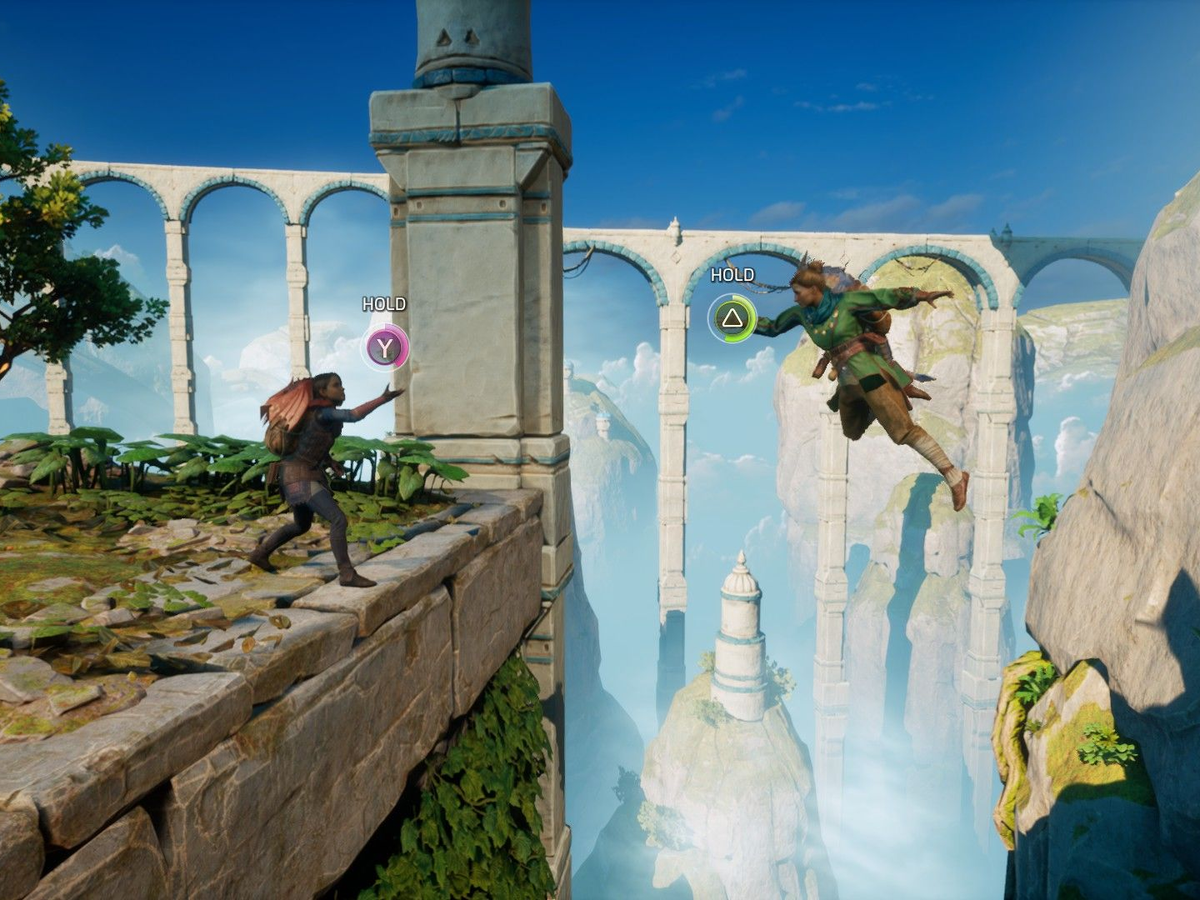
Image source: Rock Paper Shotgun
How Does Split Fiction Compare to It Takes Two?
Mechanical Polish and Movement Weight
For those who played Hazelight's previous Game of the Year winner, It Takes Two , the first thing you will notice in Split Fiction is the weight of the movement. Experts at Big Nerd Gaming note that the jumping and traversal feel significantly less "floaty" than in previous titles. The physics engine has been refined to provide a more tactile sense of presence, which is vital during the game's more demanding platforming sections.
The Shift from Competitive Mini-Games to Co-op Vignettes
A major point of difference that players should be aware of is the removal of 1v1 competitive mini-games. In It Takes Two , players could frequently stop to compete in small games like tank battles or whack-a-mole. In Split Fiction , these have been replaced by "Co-op Vignettes." These are short, collaborative challenges—such as a joint race through a collapsing digital city—that emphasize working together rather than competing. While some miss the competitive edge, the vignettes feel more integrated into the core narrative.
Visual Variety and the Nier Automata Influence
The game's opening 30 minutes are a masterclass in perspective shifting, drawing heavy inspiration from Nier Automata . You will transition from a standard third-person camera to a top-down twin-stick shooter and then into a 2.5D side-scroller seamlessly. This visual variety is a significant step forward, with the "Neon Revenge" (Cyberpunk) and "Woodland Grove" (Fantasy) aesthetics providing a constant sense of discovery across the 20+ unique universes.
Is Split Fiction Too Hard for Casual Gamers?
Managing the Difficulty Gap for Non-Gamer Partners
One of the most common pitfalls for couples playing Split Fiction is the sudden spike in combat difficulty during Chapter 3. Unlike the relatively forgiving combat in It Takes Two , this title requires precise aiming and timing. If you are playing with someone who rarely picks up a controller, they may find the "Cyber-Ninja" sections particularly frustrating.
How to Use the Per-Player Accessibility Toggles
Fortunately, Hazelight has included some of the most robust accessibility features in the genre, though they are often overlooked in standard reviews. You can find these in the Settings > Accessibility menu:
- Reduced Enemy Damage: This can be toggled per player . This means a veteran gamer can play on standard difficulty while their partner is effectively invincible, allowing both to enjoy the story without frustration.
- Skip to Next Checkpoint: If a platforming section is proving too difficult after three failed attempts, a prompt will appear allowing you to skip directly to the next safe zone.
- Auto-Aim Strength: A slider that helps players snap to targets, which is essential for those struggling with dual-stick coordination.
Why the Pacing Changes After Chapter 5
Players should be aware that the game's structure shifts mid-way through. While the first five chapters are packed with side stories and hidden interactions, these stop appearing almost entirely after Chapter 5. This leads to a more linear, combat-focused final act. Some players have reported that this makes the final three hours feel slightly repetitive compared to the explosive variety of the opening acts.
Understanding the ESRB Rating and Safety for Families
What Does a T for Teen Rating Actually Mean for This Game?
The ESRB has rated Split Fiction T for Teen . The descriptors include Blood and Gore, Crude Humor, Language, and Violence. While the game features a stylized, almost animated art style, the violence can be surprisingly visceral. For example, in the "Neon Revenge" chapters, enemies explode into digital gore that, while not realistic, is quite intense.
Parental Guidance on Language and Themes
The "Crude Humor" descriptor primarily refers to the banter between Mio and Zoe, which includes some mild profanity and suggestive jokes. More importantly, the emotional stakes involve themes of career failure, medical debt, and the fear of being replaced by technology. While these are appropriate for younger teens, parents should be prepared for a story that deals with more "adult" anxieties than the whimsical divorce plot of It Takes Two .
| Feature | It Takes Two | Split Fiction |
|---|---|---|
| Difficulty | Moderate / Accessible | High (Combat-heavy) |
| Mini-Games | 1v1 Competitive | Co-op Vignettes |
| Average Length | 12 Hours | 14-15 Hours |
| PC Storage | 50 GB | 85 GB |
| Price | $39.99 | $49.99 |
Technical Requirements and Platform Performance
What Kind of PC Do You Need to Run Split Fiction?
Split Fiction is a demanding title, largely due to the way it renders two distinct art styles simultaneously on a split-screen. You will need a significant amount of storage and memory to run the game smoothly. According to the official Steam requirements , the game requires 85 GB of available space and a minimum of 16 GB of RAM .
Should You Play Split Fiction on PS4 or PS5?
There is a noticeable performance gap between console generations. While the PS4 version is playable, it is locked at 30 FPS and features significantly lower texture resolution in the fantasy segments. The PS5 version, however, offers a "Performance Mode" that targets a stable 60 FPS at 1440p. Given the fast-paced nature of the cyber-ninja combat, the higher frame rate on PS5 makes it the definitive console experience.
Is the 14-Hour Campaign Worth the $49.99 Price Tag?
How the Friend’s Pass Doubles the Value
The most significant factor in the game's value proposition is the Friend's Pass . This mechanic allows one person to purchase the full game and invite a friend to play the entire campaign for free. The second player does not need to own the game; they simply download the "Friend's Pass" version from their respective store. This effectively brings the cost down to $25 per person, which is a top-tier value for a 14-hour high-production-value experience.
Replayability and Completionist Value
Does Split Fiction warrant a second playthrough? Because the two characters, Mio and Zoe, have entirely different abilities and perspectives, playing the game a second time as the other character offers a fresh experience. Mio’s gameplay focuses on long-range gadgets and hacking, while Zoe utilizes melee combat and elemental magic. Switching roles allows you to see the puzzles from a different angle and discover hidden dialogue that is character-specific.
The Bottom Line: Key Takeaways
- Critical Acclaim: With a 91 Metacritic score, it ranks among the top co-op games of the decade.
- Friend's Pass Value: One purchase covers two players, making the $49.99 price point very competitive.
- Difficulty Spikes: It is notably harder than previous Hazelight games; use the per-player accessibility toggles if your partner is a novice.
- Technical Demands: Ensure you have 85GB of SSD space and 16GB of RAM for the best PC experience.
- Narrative Depth: The story offers a significant step forward in thematic complexity, tackling AI and creative erasure.
- Platform Choice: The PS5 and PC versions are the recommended ways to play due to the 60 FPS performance targets.
If you have a dedicated co-op partner, Split Fiction is a must-buy that sets a high standard for narrative-driven multiplayer games.
Frequently Asked Questions
- Is Split Fiction worth it for solo players?
- No, Split Fiction is a strictly co-op experience. There is no single-player mode or AI partner option. You must play with another person, either locally on the same couch or online via the Friend's Pass.
- Does Split Fiction feature LGBTQ+ characters?
- The game explores a deep, complex relationship between Mio and Zoe. While their dynamic is central to the plot, the game focuses more on their creative partnership and shared trauma rather than explicitly labeling their orientation, leaving much of their history to be discovered through optional dialogue.
- How long does it take to beat Split Fiction?
- A standard playthrough takes approximately 14 hours. If you stop to find all the hidden vignettes and side stories in the first half of the game, you can easily extend that to 16 or 17 hours.
- Is Split Fiction cross-platform?
- Yes, the Friend's Pass supports cross-play functionality within the same console family (PS4 to PS5) and between PC and consoles, though you should check the latest patch notes for specific platform compatibility updates.
- Can I play Split Fiction offline in local couch co-op?
- Yes, the game fully supports local split-screen play. You only need one controller for each player and no internet connection is required once the game is installed and updated.