Home
When Does the New PlayStation Come Out and Should You Wait for PS6?
As of September 2026, the PlayStation 5 Pro is the most recent hardware available, having launched in late 2024. However, industry analysts and internal Sony roadmaps point to a PlayStation 6 (PS6) release window between late 2028 and 2029 . This timeline aligns with Sony's official January 2028 digital-only transition and the standard seven-year console lifecycle.
The Current State of PlayStation Hardware in 2026
In the current gaming landscape of late 2026, the hardware conversation is split between the established performance of the PS5 Pro and the growing anticipation for the next generation. The PlayStation 5 Pro , which arrived on shelves in late 2024, currently stands out as a top choice for enthusiasts seeking high-frame-rate 4K gaming. It serves as the mid-generation refresh, bridging the gap between the original 2020 launch and the future PS6.
For many gamers, the PS5 Pro has addressed the "performance vs. fidelity" dilemma that plagued the early years of this generation. By utilizing advanced AI upscaling and improved ray-tracing capabilities, it has become widely considered one of the best ways to experience modern titles. However, as we move deeper into 2026, the question of "when does the new PlayStation come out" increasingly refers to the true successor: the PlayStation 6.
Understanding the current market requires looking at how Sony has managed its inventory. While the base PS5 remains a popular entry point, the Pro model has captured the high-end segment. Yet, the community is already looking toward the horizon, fueled by technical leaks and Sony's own strategic shifts regarding digital distribution and cloud integration. The "new" PlayStation is currently in your local store, but the "next" PlayStation is already taking shape in the labs of Sony and AMD.
When Is the PlayStation 6 Release Date Expected to Be?
Predicting a console launch involves balancing historical patterns with modern economic realities. While Sony has not officially confirmed a date, several key indicators allow us to narrow the window with significant confidence. The consensus among market analysts points toward a launch that coincides with a major shift in how Sony distributes software.
Why the Historical Seven Year Cycle Points to 2027
If we look strictly at the history of the brand, a pattern emerges that suggests a new console every seven years. The PlayStation 3 launched in 2006, followed by the PlayStation 4 in 2013, and the PlayStation 5 in 2020. Following this logic, 2027 would be the natural year for the PS6 to arrive. This seven-year "itch" allows developers enough time to maximize the current hardware while giving Sony's R&D team a clear window to integrate new chip architectures.
However, this generation has been anything but standard. The global supply chain issues of 2020-2022 delayed the "true" start of the PS5 era for many, leading some to believe Sony might extend the cycle to ensure a larger install base before moving on. According to Wccftech's analysis , while 2027 remains a theoretical target, the internal momentum seems to be shifting slightly later.
How the 2028 Digital Deadline Changes the Launch Timeline
One of the most significant pieces of evidence for a later launch is Sony's "Digital Deadline." Sony has officially signaled that starting in January 2028 , the ecosystem will undergo a fundamental transition where all new software releases must be available in digital formats. While this doesn't strictly forbid physical media, it marks the point where Sony’s business model pivots entirely toward a digital-first infrastructure.
Analysts believe the PS6 will launch alongside this transition to anchor the new ecosystem. Launching a new console in late 2028 would allow Sony to market the PS6 as the premier gateway to this new digital era. This alignment makes strategic sense, as it allows the company to move away from the costs associated with physical distribution while launching hardware designed specifically for high-speed cloud integration and digital licensing.
Why Economic Factors Might Push the Release to 2029
We must also consider the "RAMpocalypse" and other supply chain hurdles cited by experts like David Gibson of MST International. The rising cost of GDDR7 memory and the complexities of the 2nm manufacturing process have made the Bill of Materials (BOM) for a next-gen console exceptionally high. If Sony were to launch in 2027, the retail price might be prohibitively expensive for the average consumer.
By pushing the release to late 2028 or even early 2029, Sony can wait for component prices to stabilize. A 2029 launch would also give the PS5 Pro a full four-year lifecycle, ensuring that those who invested in the mid-gen refresh don't feel their hardware has become obsolete too quickly. In this scenario, the PS6 would arrive as a highly refined, albeit more expensive, leap forward.
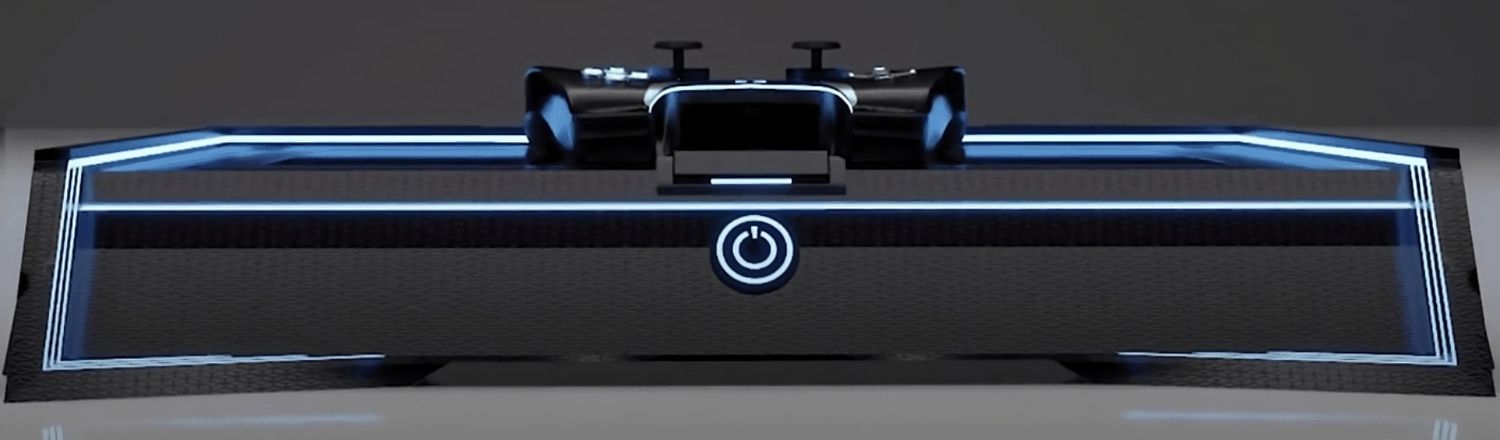
Image source: Lifewire
What We Know About the PlayStation 6 Specs and Performance
While the release date is a matter of timing, the specifications are a matter of engineering. Leaks from the supply chain, particularly regarding Sony's partnership with AMD, give us a clear picture of the performance targets the PS6 is aiming for. We are looking at a jump that far exceeds the transition from PS4 to PS5.
The AMD Partnership and the Move to 2nm Architecture
It is now confirmed that Sony has renewed its contract with AMD to design the PS6 chipset, reportedly beating out a competitive bid from Intel. This partnership is crucial for maintaining backward compatibility and ensuring a smooth transition for developers. The most significant advancement, however, is the move to a 2nm (N2) manufacturing node .
For context, the base PS5 was built on a 7nm process. The jump to 2nm allows for significantly higher transistor density, which translates to better power efficiency and much higher raw performance. This architecture will likely be paired with Zen 5 or Zen 6 CPU cores, providing the processing headroom needed for more complex AI-driven environments and physics simulations that current consoles simply cannot handle.
Understanding the Three Times Rasterization Performance Leap
Leaked technical targets suggest that Sony is aiming for a 3x increase in rasterization performance compared to the base PS5. In practical terms, this means the PS6 could target a native 4K resolution at a consistent 60 or even 120 frames per second without the need for aggressive image reconstruction or lowering settings.
According to reports from Polygon , the goal is to eliminate the "Performance vs. Quality" toggle that has become standard this generation. With an estimated 30+ Teraflops of computing power, the PS6 would rank among the highest-performing consumer electronics on the market, potentially rivaling high-end gaming PCs of the same era.
Will the PlayStation 6 Really Cost One Thousand Dollars?
One of the more concerning rumors involves the potential price tag. The Bill of Materials for the PS6 is reportedly nearing $1,000, driven largely by the cost of GDDR7 RAM and the 2nm silicon wafers. While Sony has historically sold hardware at a loss to gain market share, a $1,000 manufacturing cost makes a $499 retail price almost impossible.
Industry experts suggest a tiered launch or a retail price in the $599 to $799 range. While this would make it the most expensive PlayStation at launch, it reflects the reality of modern semiconductor economics. Sony may offer a "Digital Edition" at a lower price point, especially given the January 2028 mandate, but gamers should prepare for a higher entry fee for the next generation of play.
Sony’s Plan to Move Beyond the Living Room with Project Canis
The PS6 is not just a box under your TV; it represents a shift in Sony's philosophy. Internal documents refer to "Project Canis," a strategy aimed at breaking the "PlayStation equals the living room" perception. Sony CEO Hideaki Nishino has hinted at a "seamless experience" that follows the user across different devices.
This has led to intense speculation regarding a dedicated PS6 handheld or a hybrid "Switch-like" dockable experience. While a full hybrid console seems unlikely given the power requirements of 2nm chips, a high-end companion handheld designed for native local play (rather than just streaming) is a strong possibility. As noted by Back Market's research , Sony is looking to recapture the portable market that the PlayStation Portal only scratched the surface of.
Should You Buy a PlayStation 5 Pro Now or Wait for PS6?
This is the primary dilemma for gamers in 2026. With the PS6 still at least two years away, the decision depends heavily on your current setup and your patience for the "True Next-Gen" experience.
Who Should Buy the PlayStation 5 Pro Today
- You own a 4K TV with a 120Hz refresh rate and want to utilize its full potential.
- You are currently using a base PS4 or a launch-model PS5 that is showing its age.
- You want immediate access to the "Pro Enhanced" library of games released between 2024 and 2026.
- You prefer having a disc drive (which the PS6 may move away from or offer only as an add-on).
Why Patient Gamers Should Wait for the PlayStation 6
If you already own a functional PS5 and aren't bothered by the occasional 30fps cap in high-fidelity modes, waiting is a viable strategy. The PS6 will likely be the first console to truly escape the "Cross-Gen Trap"—the trend where games are held back by the need to run on older hardware. By 2028, developers will likely be building exclusively for the 2nm architecture, leading to a significant step forward in game design, not just resolution.
Will the PlayStation 6 Be Backward Compatible with Your Current Games?
One of the most reassuring aspects of the PS6 development is the continued partnership with AMD. Because the PS6 will share the same underlying x86 architecture as the PS4 and PS5, backward compatibility is almost a certainty. Sony understands that its library of over 8,500 games is its most valuable asset.
Expect the PS6 to not only play your PS5 games but to offer "Boost Mode" features similar to how the PS5 handled PS4 titles. This means faster loading times, more stable frame rates, and potentially AI-driven resolution upscaling for older titles. For those with large digital libraries, the transition to the new hardware should be seamless, further supporting Sony's 2028 digital-only vision.
Frequently Asked Questions
Is there an official PS6 release date?
No, Sony has not officially announced a release date for the PlayStation 6. However, based on historical seven-year cycles and Sony's 2028 digital transition mandate, most industry analysts expect the console to launch in late 2028 or early 2029. The PS5 Pro remains the current flagship hardware for the foreseeable future.
Will the PS6 have a disc drive?
This is a point of significant debate. While Sony's January 2028 mandate focuses on digital distribution, it is likely that the PS6 will follow the trend set by the PS5 Pro, offering a disc-less base model with the option to purchase a detachable disc drive separately. This allows Sony to cater to physical collectors while pushing the majority of the user base toward digital storefronts.
How much will the PS6 cost at launch?
Estimates for the PS6 retail price range from $599 to $799. The rising costs of advanced 2nm semiconductors and GDDR7 memory make a $499 price point unlikely. Sony may attempt to offset this with a subscription-heavy model or a lower-priced digital-only version, but enthusiasts should expect a premium price for the next-gen leap.
Can I play my PS4 and PS5 games on the PS6?
Yes, backward compatibility is expected to be a core feature of the PS6. By maintaining their partnership with AMD and using similar x86 architecture, Sony ensures that the transition between generations is smooth. Your digital library and most physical discs (if using a disc drive) should be compatible with the new system.
Is the PS5 Pro worth buying in 2026?
For many, yes. With the PS6 still at least two years away, the PS5 Pro offers the best available gaming experience for current and upcoming titles. If you value 4K/60fps performance and advanced ray tracing today, the PS5 Pro is a strong investment. However, if you are on a budget and already have a base PS5, waiting for the PS6 might be the more economical choice.
The Bottom Line on the Next Generation of PlayStation
The road to the next generation is becoming clearer as we move through 2026. Here are the key takeaways for every PlayStation fan:
- Launch Window: Expect the PS6 to arrive between late 2028 and 2029 , following the PS5 Pro's lifecycle.
- Digital Shift: The January 2028 digital mandate is the strongest indicator that the next era of PlayStation will prioritize digital ecosystems.
- Hardware Leap: The move to 2nm architecture and GDDR7 RAM will provide a significant performance boost, targeting native 4K at high frame rates.
- Project Canis: Sony is looking to expand beyond the living room , potentially introducing a hybrid or companion handheld experience.
- Backward Compatibility: Your current library is safe, thanks to the continued AMD partnership ensuring architecture consistency.
- Pricing Reality: Prepare for a higher retail price , likely exceeding $600 due to increased manufacturing costs.
If you need the highest performance available right now, the PS5 Pro is your best option; otherwise, start saving for the significant leap coming in 2028.