Home
Where to Find Every River in Stardew Valley and How to Catch Rare Fish
The river in Stardew Valley is divided into two distinct zones: Pelican Town and Cindersap Forest . While they appear as one continuous body of water, the fish you catch change the moment you cross the map boundary. To master river fishing, you must account for the 1.6 update's River Jelly , seasonal weather requirements (like rain for Catfish), and specific tile depths that influence fish quality. Ranks among the top activities for early-game gold, river fishing is essential for completing the Community Center bundles.
What Counts as a River in Stardew Valley?
Understanding the geography of Pelican Town is the first step toward becoming a master angler. In Stardew Valley, "River" water is a specific classification in the game's code that determines which loot tables are accessed when your bobber hits the surface. It is distinct from the "Lake" (found near the Mines) and the "Ocean" (found at the Beach).
The river system flows from the north, winding through the heart of Pelican Town, and extending south into the Cindersap Forest. According to the Stardew Valley Wiki , the river is the most geographically diverse fishing zone, offering different species depending on whether you are standing behind the Blacksmith's shop or south of Leah's cottage. It is important to note that even though the water looks the same, the game treats the Town and the Forest as separate sub-regions with slightly overlapping but unique fish pools.
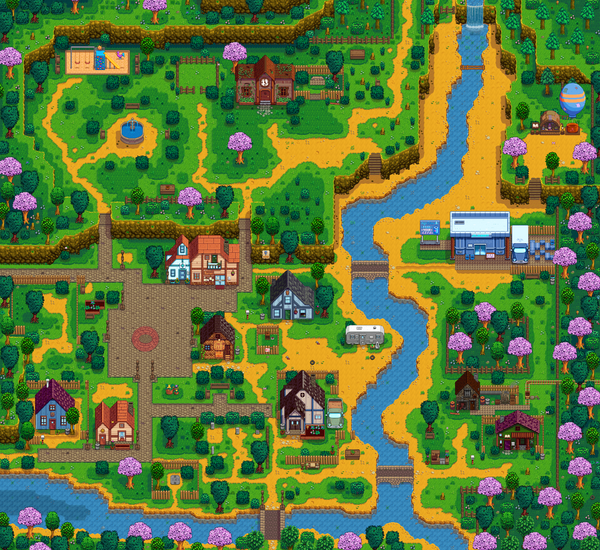
Image source: Stardew Valley Wiki
For players focused on resource gathering, the river is also the primary source of River Jelly , a valuable item introduced in the 1.6 update. Unlike fish, River Jelly can be caught in any season and in any weather, provided you are fishing in water designated as "River." This includes the small streams on the Riverland Farm map, which many players find to be a top-tier choice for early-game resource farming.
How to Tell the Difference Between the River and the Mountain Lake
One of the most common points of confusion for new players is the boundary between the Mountain Lake and the Town River. Because the water flows directly from the mountains into the town, it is easy to assume they share the same fish. However, the distinction is critical: catching a Sturgeon or Largemouth Bass requires Lake water, while catching a Pike or Smallmouth Bass requires River water.
The definitive boundary is the wooden bridge leading to the Mines . Any water north of this bridge is considered the Mountain Lake. As soon as you step south of that bridge—near the path leading to the Carpenter's Shop or the back entrance to the Town—you are officially in the River zone. The water color often shifts slightly, and the surrounding terrain changes from rocky cliffs to grassy banks, serving as a visual cue for players.
Community discussions on platforms like Steam highlight that the "Mountain Lake" is often preferred for high-value fish like the Legend, but the River stands out as a top choice for consistent, year-round experience gains. If you are standing near the Adventurer's Guild, you are at the Lake. If you walk south past the bridge toward the town, you have entered the River.
Where the Pelican Town River Ends and the Cindersap Forest Begins
While the water is physically connected, the transition between Pelican Town and Cindersap Forest is triggered by a loading screen. This transition is more than just a change in scenery; it alters the probability of certain catches. For example, the Walleye is notably more prevalent in the Cindersap Forest section of the river during rainy Autumn nights than it is in the Town section.
The primary entry point to the Forest River zone is the path south of Leah’s cottage or the entrance near the Abandoned House (where the Hat Mouse lives). The Forest River is characterized by wider banks and several small islands that allow you to reach "deeper" water tiles. Reaching these deep tiles is essential for catching Iridium-quality fish, as the distance from the shore directly correlates with the quality of the catch.
Does the Forest Pond Count as River Water in the 1.6 Update?
The 1.6 update brought significant changes to water coding in Stardew Valley. Historically, the small pond located west of the Cindersap Forest river (near the dock and the Cindersap Forest pond) was considered its own "Pond" zone, primarily yielding Smallmouth Bass and Trash. However, recent community findings suggest a shift in how this water is handled.
Reports from the Stardew Valley Forums indicate that in version 1.6, the Forest Pond may now share a portion of the River's fish pool. This is particularly relevant for players hunting for River Jelly. If you find the main riverbanks too crowded or difficult to navigate, the Forest Pond serves as a quieter alternative that may still yield the specific items you need for crafting. While not a complete replacement for the river, it is a significant advancement in map utility for players who prefer specialized fishing spots.
How to Catch Every River Fish Across the Seasons
River fishing requires careful planning because many species are locked behind specific seasons, times, and weather conditions. The Catfish , for instance, is widely considered one of the most difficult fish to catch early in the game, appearing only when it rains during Spring and Fall.
Below is a breakdown of the primary river residents you will encounter throughout the year:
| Fish Name | Season | Weather | Time | Difficulty |
|---|---|---|---|---|
| Sunfish | Spring / Summer | Sunny | 6 AM – 7 PM | 30 (Easy) |
| Catfish | Spring / Fall | Rain | 6 AM – 12 AM | 75 (Hard) |
| Shad | Spring / Summer / Fall | Rain | 9 AM – 2 AM | 45 (Medium) |
| Tiger Trout | Fall / Winter | Any | 6 AM – 7 PM | 60 (Medium) |
| Walleye | Fall | Rain | 12 PM – 2 AM | 45 (Medium) |
| Pike | Summer / Winter | Any | Any | 60 (Medium) |
To maximize your efficiency, always check the weather report on your TV the day before. If rain is forecasted for the next day in Spring, ensure you have enough bait and perhaps a Trap Bobber to handle the aggressive movements of the Catfish. Missing these windows can delay your Community Center progress by an entire in-game year.
How to Farm River Jelly Using the Training Rod Exploit
River Jelly is a top-tier resource in the 1.6 update, required for crafting the Fish Smoker. While it has a base 10% catch rate, players have discovered a notably innovative way to "force" the game to give them Jelly more frequently: the Training Rod Exploit .
The Training Rod is designed for beginners, restricting your catches to fish with a difficulty rating of less than 50. By using this rod in areas where the native fish are all high-difficulty (such as the Ginger Island West freshwater pond or the Desert pond), the game's logic is forced to skip the fish roll and instead roll for Trash or Jelly. Because River Jelly is not classified as a "fish," it bypasses the difficulty restriction.
The RNG Seed Nuance: Catching trash does not advance the hidden RNG seed for River Jelly. If you find yourself catching nothing but soggy newspapers and driftwood, switch to a regular rod, catch one actual fish to "reset" your luck, and then switch back to the Training Rod. This strategy is a popular choice for players who need to craft multiple Fish Smokers quickly.
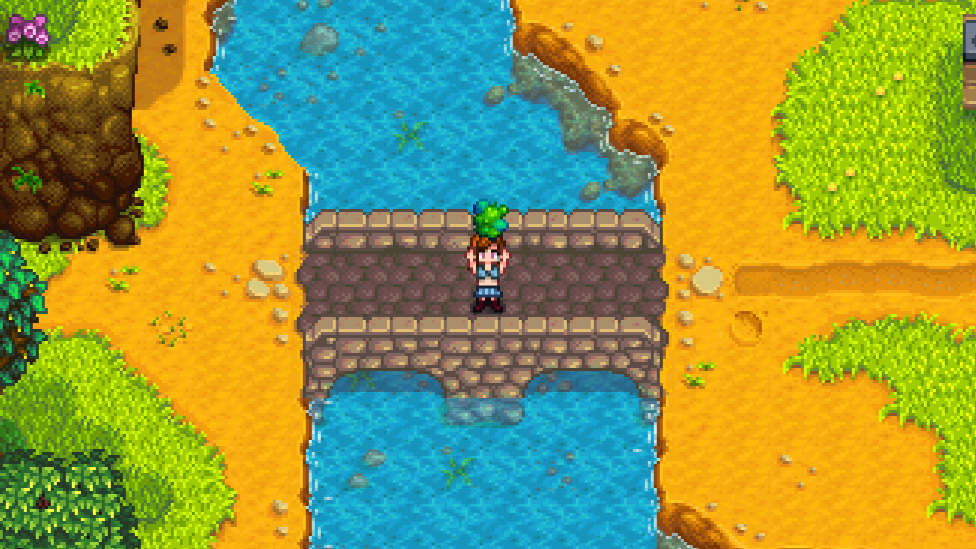
Image source: ScalaCube
Why Daily Luck Does Not Help You Find River Jelly
There is a common misconception that checking the TV for a "Good Luck" day will help you find more River Jelly. However, technical analysis of the 1.6 source code reveals that Daily Luck (the Fortune Teller's report) has zero impact on the catch rate of Jelly. Instead, the game relies on Luck Buffs from food and drinks.
According to data shared in the Stardew Valley community , each level of Luck from a buff (like Lucky Lunch or Ginger Ale) increases the base 10% catch rate by exactly 5%. This means if you consume a Lucky Lunch (+3 Luck), your chance of hooking a River Jelly increases from 10% to 25%. Stacking a Lucky Lunch with a Ginger Ale (+1 Luck) brings that total to 30%, nearly tripling your efficiency.
Advanced Fishing Techniques for High-Difficulty River Fish
Catching high-difficulty river fish like the Tiger Trout or the legendary Angler requires more than just a high fishing level. Experienced players use specific physical techniques to manage the erratic "darting" behavior of these species.
Tapping vs. Holding
For most fish, holding the action button to raise the green bar is sufficient. However, for "darting" fish that move rapidly up and down, rapid tapping is a much stronger approach. Tapping allows you to maintain the bar's position with micro-adjustments, preventing the momentum that often causes the bar to bounce off the top or bottom of the meter. This technique provides a level of control that few alternatives match when dealing with the Catfish's sudden plunges.
The "Edge of Bar" Strategy
Instead of trying to center the fish in the middle of your green bar, try to keep the fish near the top or bottom edge of the bar. If a fish is known to dart upwards, keeping it at the bottom edge gives you the maximum amount of "reaction space" to follow it when it jumps. This strategy, often discussed in Willy’s Advanced Fishing Guides , significantly reduces the chance of the fish escaping during a sudden movement.
Is the Riverland Farm Worth It for Fishing Enthusiasts?
The Riverland Farm is a specialized map that replaces the vast majority of tillable land with islands and flowing water. While it is often criticized for its lack of space for crops and buildings, it offers a unique advantage: the water on your farm is coded as River water .
This means you can catch Town and Forest fish (including the elusive River Jelly) without ever leaving your front porch. For players who enjoy the fishing minigame, this map ranks among the top options for a "challenge" run. However, the trade-off is steep. Below is a comparison to help you decide:
| Feature | Standard Farm | Riverland Farm |
|---|---|---|
| Tillable Tiles | 3,427 | 1,578 |
| Early Game Gold | Moderate (Crops) | High (Fishing) |
| Late Game Automation | Easy (Junimo Huts) | Difficult (Limited Space) |
| Resource Access | Standard | Immediate River Access |
Choose the Riverland Farm if you want to prioritize the Fishing skill and the Fish Smoker economy. Choose the Standard Farm if you plan on building a massive ancient fruit empire in the late game.
How to Use the Fish Smoker to Double Your Profits
The Fish Smoker is a notably innovative addition to the 1.6 update that has fundamentally changed the economics of fishing. By placing any fish and one piece of coal into the smoker, you receive a "Smoked Fish" item that is worth exactly double the base price of the fish. Crucially, the smoked version retains the quality (Silver, Gold, or Iridium) of the original catch.
This machine is particularly powerful when paired with the Artisan profession , which further increases the value of processed goods by 40%. An Iridium-quality Catfish, which already sells for a high price, becomes a massive source of income once smoked. To craft the smoker, you will need 10 Hardwood, 1 Sea Jelly, 1 River Jelly, and 1 Cave Jelly. This makes farming the river for that initial Jelly a top priority for any profit-focused player.
Frequently Asked Questions
What is the best spot to fish in the Pelican Town river?
The most effective spot in Pelican Town is the deep water near the bridge leading to the Blacksmith or the small island in the center of the river. To maximize quality, you want your bobber to land as far from any walkable land as possible. Fishing near the bridge allows you to hit "Zone 4" water, which significantly increases your chances of catching Gold and Iridium-quality fish.
Why can't I catch Catfish in the summer?
Catfish are seasonal and weather-dependent. In the main river, they only appear during rainy days in Spring and Fall. If you need a Catfish in the Summer, your only options are to fish in the Secret Woods pond (where they appear regardless of weather) or the Witch's Swamp. They will not appear in the Pelican Town or Cindersap Forest rivers during the Summer months.
Does the Copper Pan work in the river?
Yes, the Copper Pan can be used in the river whenever you see shimmering lights in the water. This mechanic allows you to "fish" for ores, gems, and occasionally Lucky Rings. The river is one of the most common places for these spots to appear, especially near the bridge by the Mines after you have cleared the glittering boulder.
Can I catch Legendary Fish in the river?
Yes, two of the five Legendary Fish are found in the river. The Angler is found in the Pelican Town river (north of the JojaMart bridge) during the Fall. The Glacierfish is found in the Cindersap Forest river (on the southern tip of Arrowhead Island) during the Winter. Both require high fishing levels and are among the most challenging catches in the game.
How do I get River Jelly if I keep catching trash?
If you are catching too much trash, it means your hidden RNG seed is stuck. Catching trash does not advance the seed for Jelly. You must catch at least one actual fish to move the seed forward. Additionally, ensure you are using Luck Buffs from food like Lucky Lunch, as this is the only way to statistically increase your Jelly catch rate beyond the base 10%.
Key Takeaways for River Fishing
- Master the boundaries by using the Mine bridge and the Forest entrance to identify your fishing zone.
- Use the Training Rod exploit to farm River Jelly by filtering out high-difficulty fish in specific ponds.
- Prioritize rainy days in Spring and Fall to catch the high-value Catfish and Walleye.
- Stack Luck Buffs from food and drinks to increase your River Jelly catch rate by up to 30%.
- Invest in a Fish Smoker early to double the profit of every river fish you catch.
- Aim for deep water tiles to ensure Iridium-quality catches and maximum XP gains.
- Practice rapid tapping to maintain control over erratic fish like the Tiger Trout.
Start your next rainy Spring morning by heading to the Pelican Town bridge with a Trap Bobber and a stack of bait to maximize your early-game progress.