Home
Which Fall Crops Make the Most Money in Stardew Valley 1.6?
In Stardew Valley 1.6, the Sweet Gem Berry remains the leader for raw gold per square (3,000g base). For scalable farming, Cranberries are widely considered a top choice for Year 1 due to multiple harvests and low maintenance. However, Pumpkins processed into Pumpkin Juice offer higher profit margins for players with extensive Keg infrastructure. The 1.6 update has also made Grapes and Cranberries significantly more viable through the new Dehydrator mechanic.
Which Fall Crops Generate the Most Raw Gold for Your Farm?
When evaluating the financial potential of the Fall season, players must distinguish between raw sell value and long-term artisan potential. Raw gold is essential for early-game progression, allowing farmers to upgrade tools and construct buildings before the onset of Winter. According to data from the Stardew Valley Wiki , the Fall season offers some of the highest-value individual items in the game.
The "Big Three" of Fall profit are the Sweet Gem Berry, Cranberries, and Pumpkins. Each serves a different economic purpose. The Sweet Gem Berry is a high-value, single-harvest crop that requires a significant upfront investment but yields a massive return. Cranberries, by contrast, are a volume-based crop. They produce multiple berries per harvest and regrow every five days, making them a consistent source of liquidity throughout the month.
Pumpkins sit in the middle, offering a solid base price of 320g. While their raw gold per day (GPD) is slightly lower than Cranberries when sold directly, their utility in the late game is significant. For players focusing purely on raw sales without any processing equipment, the leaderboard typically looks like this:
- Sweet Gem Berry: 3,000g base sell price.
- Cranberries: ~19g GPD (assuming 5 harvests).
- Pumpkins: ~17g GPD.
- Artichokes: ~16g GPD (available from Year 2).
It is important to note that these figures assume basic quality. As your Farming skill increases and you utilize fertilizers, the gap between these crops can widen. For example, an Iridium-quality Sweet Gem Berry sells for 6,000g, a figure that few other items in the game can approach.
How the 1.6 Dehydrator Changes Your Fall Profit Strategy
The 1.6 update introduced the Dehydrator , a new artisan machine that has notably innovative implications for Fall farming. The Dehydrator processes five pieces of the same fruit into one "Dried Fruit" in just one day. This is a significant advancement for players who find themselves overwhelmed by high-yield crops like Cranberries or Grapes but lack the hundreds of Kegs required to turn them all into wine.
According to Out of Games , the math for the Dehydrator makes it a strong contender for mid-game profit. For instance, five standard Cranberries sell for 375g. Processing them in a Dehydrator results in Dried Cranberries worth 587g. While turning those same five berries into Cranberry Wine would yield 1,575g (with the Artisan profession), the wine takes seven days to process. The Dehydrator offers a faster turnaround, allowing for quicker reinvestment of capital.
The Dehydrator is particularly useful for "low-value, high-volume" fruits. While you should still prioritize Pumpkins for Kegs or Preserves Jars, the Dehydrator allows you to extract extra value from the hundreds of Cranberries you will inevitably harvest. It bridges the gap between selling raw crops and the slow, high-value processing of the Keg meta.
Why Cranberries Are a Top Choice for Year 1 Farmers
For players in their first year, Cranberries are widely regarded as a premier choice for wealth accumulation. The primary reason is the multi-harvest mechanic. Once planted, Cranberries take seven days to mature and then continue to produce two or more berries every five days. This "set and forget" nature is ideal for new players who are still spending significant time in the Mines or fishing.
The reinvestment math for Cranberries is exceptionally strong. If planted on Fall 1, you will receive your first harvest on Day 8. The gold earned from this first harvest can be immediately used to buy more seeds, upgrade your Watering Can to Copper or Steel, or purchase the materials needed for Quality Sprinklers. This liquidity is what makes Cranberries a leading option for early-game growth.
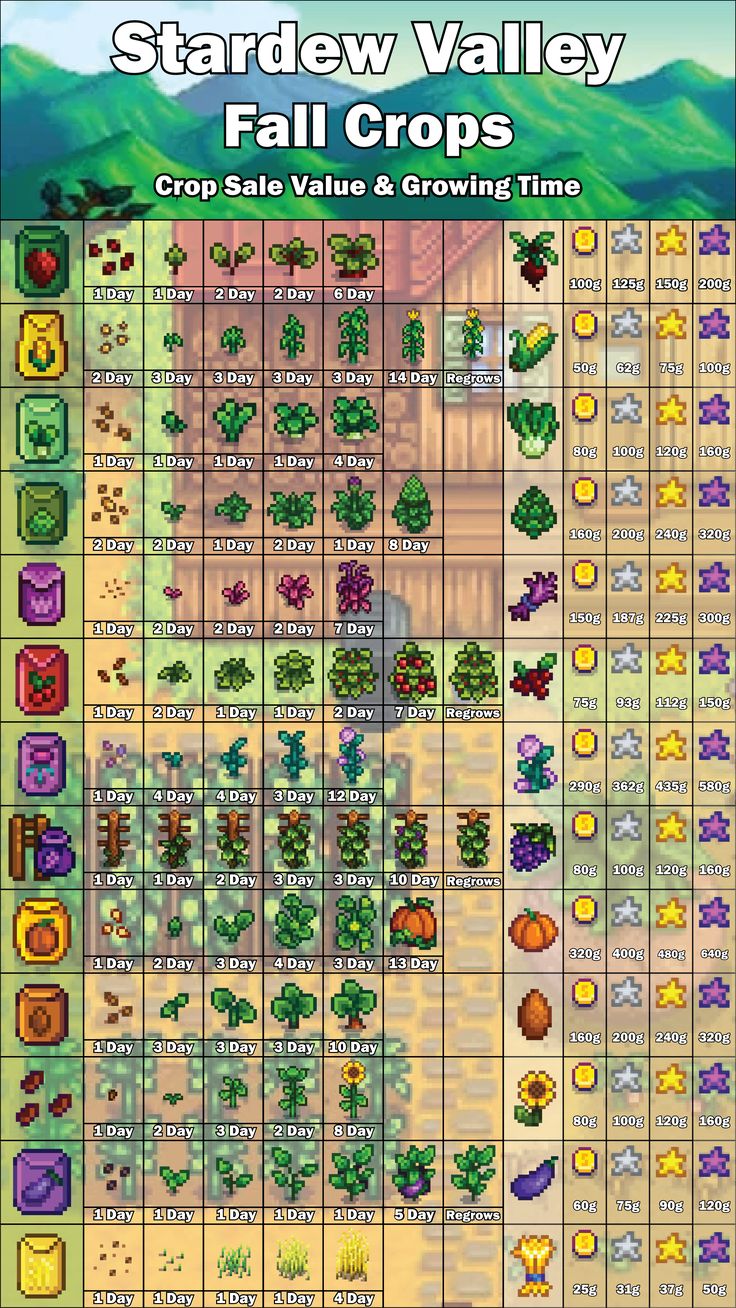
Image source: Pinterest
Furthermore, Cranberries offer a unique long-term benefit: the Seed Maker Strategy . Every time you harvest a Cranberry, there is a small chance to obtain Ancient Seeds when putting the fruit through a Seed Maker. Since Cranberries produce so many individual fruits, they are one of the most efficient ways to "farm" for Ancient Seeds to set up your Greenhouse or Year 2 Ancient Fruit empire. Research from community forums suggests that this transition is a key step in moving from a struggling farm to a multi-million gold operation.
Comparing Pumpkins and Cranberries for Artisan Processing
Once a farm moves into the mid-to-late game and has access to Kegs and Preserves Jars, the profit hierarchy shifts. While Cranberries win on raw volume, Pumpkins stand out as a top-tier option for artisan processing. A base-quality Pumpkin sells for 320g, but turning it into Pumpkin Juice in a Keg increases that value to 720g (or 1,007g with the Artisan profession).
The "click tax" is a factor many players overlook. Harvesting 1,000 Cranberries requires significantly more real-world time and energy than harvesting 200 Pumpkins. Because Pumpkins have a higher individual value, they are more efficient for players with limited processing machines. If you only have 50 Kegs, you will make far more money processing Pumpkins than Cranberries.
| Crop | Seed Cost | Raw Sell (Base) | Artisan Product | Artisan Value (w/ Profession) |
|---|---|---|---|---|
| Sweet Gem Berry | 1,000g | 3,000g | N/A | N/A |
| Pumpkin | 100g | 320g | Juice (Keg) | 1,007g |
| Cranberries | 240g | 75g (x2) | Wine (Keg) | 315g |
| Grape | 60g | 80g | Wine (Keg) | 280g |
| Artichoke | 30g | 160g | Juice (Keg) | 504g |
Another advantage of Pumpkins is the potential for Giant Crops . When planted in a 3x3 grid, Pumpkins have a chance to merge into a Giant Pumpkin. When harvested with an axe, these yield 15-21 items, which is a significant boost over the standard 9 items from that same space. This makes Pumpkins a highly impactful choice for large-scale, open-field farming.
Evaluating Whether the Sweet Gem Berry Is Worth the Investment
The Sweet Gem Berry is often cited as the most profitable crop in the game, but experienced players often refer to it as the "Sweet Gem Trap" for Year 1. While the 3,000g sell price is impressive, the opportunity cost is high. A single Rare Seed costs 1,000g from the Traveling Cart. In the early game, that 1,000g could instead buy four Cranberry seeds, which would generate more total gold and more experience points over the course of the season.
Furthermore, Sweet Gem Berries cannot be processed. You cannot put them in a Keg to make wine or a Preserves Jar to make jelly. Their value is fixed at their sell price. This means that once you have a robust artisan setup, crops like Starfruit (grown in the Greenhouse) or Pumpkins can actually rival the Sweet Gem Berry in terms of profit per square when processed.
However, in the late game, Sweet Gem Berries become a premier way to utilize excess land. Once you have unlocked the Greenhouse and have a steady supply of seeds through the Seed Maker, they offer a low-labor, high-reward option. They take 24 days to grow, meaning you only have to plant and harvest them once per season. For a billionaire farmer, this reduction in labor is often worth more than the marginal gains of other crops.
Maximizing Your Passive Income with Fairy Rose Honey
One of the most overlooked strategies for Fall profit is the use of Fairy Roses in conjunction with Bee Houses. While the Fairy Rose itself is a decent flower, its true value lies in the honey it produces. According to Stardew Price DB , Fairy Rose Honey sells for a base of 950g, which jumps to 1,330g with the Artisan profession.
This is one of the strongest passive earners in the game. A single Fairy Rose can influence any Bee House within a 5-tile radius. By creating a layout where dozens of Bee Houses surround a single protected flower, you can generate massive amounts of high-value honey every few days without ever having to replant or water (once the flower is grown).
This strategy is particularly effective on the Ginger Island farm, where Fairy Roses can grow year-round, but it remains a top-tier tactic for the standard farm during the Fall. It requires very little labor once the initial setup is complete, making it a favorite for players who prefer exploring or combat over daily farm chores.
Understanding the Impact of Speed-Gro on Fall Harvest Cycles
There is a common misconception in the Stardew community regarding the use of Deluxe Speed-Gro on Cranberries. Many players believe that by using high-end fertilizer and the Agriculturist profession, they can squeeze a 6th harvest out of their Cranberry plants. However, frame-perfect data and community testing have debunked this myth.
Even with the maximum possible growth speed increases, Cranberries are capped at 5 harvests per season. This is because the regrow cycle is fixed. While Speed-Gro can make the first harvest happen sooner, it does not speed up the subsequent regrowths enough to allow for an extra full cycle within the 28-day limit. Therefore, using expensive fertilizer on Cranberries is often a waste of resources.
Instead, Speed-Gro should be reserved for single-harvest crops like Pumpkins . Using Deluxe Speed-Gro on Pumpkins allows you to fit three full harvests into a single season (Days 1, 10, and 19) instead of the usual two. This effectively increases your Pumpkin profit by 50% for the season, making it a much more impactful use of your crafting materials or gold.
Final Planting Dates for a Successful Fall Harvest
Timing is everything in Stardew Valley. Planting a crop even one day late can result in a field of dead plants on Winter 1. To maximize your profit, you must adhere to a strict planting calendar. Below are the final dates you can plant major Fall crops to ensure a harvest before the season ends (assuming no fertilizer):
- Sweet Gem Berry: Fall 4 (Takes 24 days).
- Pumpkins: Fall 15 (Takes 13 days).
- Artichokes: Fall 20 (Takes 8 days).
- Cranberries: Fall 1 (To get all 5 harvests). Planting later reduces your total profit significantly.
- Amarynth: Fall 21 (Takes 7 days).
- Bok Choy: Fall 24 (Takes 4 days).
For large-scale farmers, utilizing crops that can be harvested with a Scythe is a significant step forward in efficiency. Amaranth and Grapes (on trellises) allow for much faster clearing of fields compared to hand-picking. As noted in community discussions , this can save hours of in-game time during the busy harvest days at the end of the month.
Frequently Asked Questions
For most players in Year 1, Cranberries are the top choice. They provide multiple harvests, which ensures a steady stream of gold throughout the month. This liquidity is vital for buying tool upgrades and building materials before Winter. While Pumpkins have a higher individual value, the total volume of gold generated by Cranberries usually wins out when you lack advanced artisan equipment.
If you have the Artisan profession, Pumpkin Juice (made in a Keg) is the superior choice, selling for 1,007g. Pickled Pumpkins (made in a Preserves Jar) sell for 690g. However, Preserves Jars work much faster than Kegs. If you have a massive surplus of Pumpkins and limited time, using Jars is a respectable way to process your harvest quickly, but Kegs offer the highest value per item.
If you plant Cranberries on Fall 1 and water them every day, you will receive 5 harvests. These occur on Days 8, 13, 18, 23, and 28. Even with Speed-Gro, you cannot reach a 6th harvest, so it is generally recommended to use basic soil or Quality Fertilizer to increase the value of the raw berries instead.
Sweet Gem Berries are a top-tier late-game crop but can be a financial burden in Year 1. The 1,000g seed cost is a heavy investment when your farm is still growing. However, once you have a Seed Maker and can produce your own Rare Seeds, they become one of the most efficient ways to make large sums of money with minimal labor.
Starfruit is a Summer crop and will die if planted outdoors in the Fall. However, you can grow Starfruit year-round in the Greenhouse or on the Ginger Island farm. If you have these areas unlocked, Starfruit Wine remains one of the few items that can outperform Fall crops in terms of pure profit.
Key Takeaways for Fall Profit
- Prioritize Cranberries in Year 1 for consistent cash flow and Ancient Seed farming.
- Use Pumpkins for Artisan goods , specifically Pumpkin Juice, to maximize value per square.
- Leverage the 1.6 Dehydrator for high-volume crops like Grapes and Cranberries to save time.
- Plant Fairy Roses near Bee Houses for high-value passive income via Fairy Rose Honey.
- Avoid wasting Speed-Gro on Cranberries; use it on Pumpkins to secure a third harvest instead.
- Check the Traveling Cart every Friday and Sunday for Rare Seeds to prepare for late-game Sweet Gem Berry farming.
- Observe planting deadlines strictly to avoid losing your entire investment to the Winter frost.
Start your Fall season by clearing your fields on Day 1 and planting your Cranberries immediately to ensure you hit all five harvest windows.