Home
Who Is Pit and Why Are There So Many Video Games With This Name?
The term "video game pit" usually refers to one of three things: Pit , the angelic protagonist of Nintendo's Kid Icarus series; The Pit , a foundational 1982 arcade digging game; or Ball x Pit , a modern roguelite trending in 2026. While the Nintendo character is the most recognized, the 1982 arcade title is historically significant as the mechanical ancestor to Boulder Dash .
Identifying the Different Versions of Video Game Pit
When searching for "video game pit," the results can be confusing because the name spans over a century of gaming history, from tabletop classics to modern digital roguelites. To help you find exactly what you need, we have categorized the most common entries below.
| Name | Primary Genre | Key Feature | Era |
|---|---|---|---|
| Pit (Kid Icarus) | Action-Platformer | Angelic wings and Palutena's Bow | 1986–Present |
| The Pit (Arcade) | Digging/Maze | Retrieving gems from a labyrinth | 1982 |
| Ball x Pit | Roguelite | Ball evolutions and fusions | 2025–2026 |
| Pit Fighter | Fighting | Digitized live-action sprites | 1990 |
| Pit (Card Game) | Tabletop Trading | Open-outcry commodity trading | 1903–Present |
How the Kid Icarus Protagonist Became a Nintendo Icon
Pit is widely regarded as one of Nintendo's most enduring characters, despite having long gaps between his standalone adventures. As the captain of Palutena's army and the protector of Angel Land, Pit stands out for his unwavering loyalty and his ability to wield a variety of divine weapons, most notably the Palutena Bow.
From 8-Bit Origins to Super Smash Bros. Stardom
Pit made his debut in the 1986 NES title Kid Icarus . At the time, he was a pixelated angel tasked with rescuing the goddess Palutena from Medusa. The game was notably difficult, blending vertical platforming with RPG-lite elements. However, Pit’s popularity truly surged when he was redesigned by Masahiro Sakurai for Super Smash Bros. Brawl in 2008. This new look—more mature yet still youthful—paved the way for the 2012 title Kid Icarus: Uprising on the Nintendo 3DS, which reimagined the series as a high-speed aerial and ground combat epic.
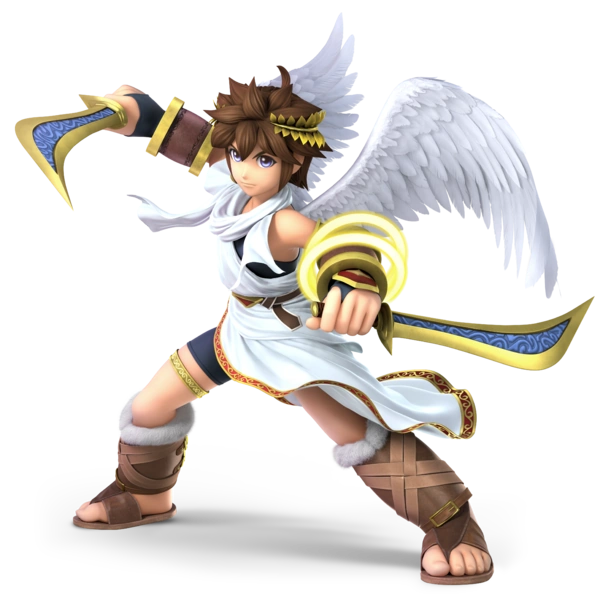
Image source: Nintendo | Fandom
Why Pit Is Often Called Kid Icarus by Mistake
A common misconception among casual gamers is that the character's name is "Kid Icarus." This confusion largely stems from the 1980s animated series Captain N: The Game Master , where the character was referred to as "Kid Icarus" and frequently added the suffix "-icus" to his words. In reality, Pit is the character, and Kid Icarus is the title of the franchise. This is similar to the "Link vs. Zelda" naming confusion that persists in gaming culture.
How Pit’s Abilities Change Across Different Genres
Pit's gameplay mechanics have evolved significantly over the decades. In his 8-bit origins, he was a traditional platforming hero who relied on arrows and limited flight. By the time of Kid Icarus: Uprising , his kit expanded to include staves, claws, and cannons, emphasizing a "rock-paper-scissors" style of combat depth. In the Super Smash Bros. series, Pit is balanced as a top-tier all-rounder, featuring multiple mid-air jumps and a reflective shield that makes him a strong choice for players who prefer defensive versatility.
Why the 1982 Arcade Game The Pit Is Historically Important
While Nintendo's angel dominates modern search results, the 1982 arcade game The Pit holds a vital place in the history of game design. Developed by AW Electronics and published by Centuri in North America, it was one of the earliest examples of the "digging" sub-genre that would later define the early 80s arcade era.
How The Pit Paved the Way for Boulder Dash
One of the most significant pieces of historical context regarding The Pit is its direct influence on the legendary Boulder Dash . According to historical records, programmer Chris Gray created a BASIC game titled Pit-Fall , which was heavily inspired by the mechanics of The Pit . This project eventually caught the attention of Peter Liepa, who refined the concepts of falling rocks and subterranean navigation into the 1984 classic Boulder Dash . Without the foundation laid by The Pit , the digging genre might have evolved in a completely different direction.
The Legal Battle Between Centuri and Atari Over Dig Dug
In 1982, the arcade industry was a legal minefield. The Pit and Namco's Dig Dug (published by Atari in the US) were released within weeks of each other. Atari initially threatened legal action, claiming The Pit was a clone of their digging title. However, Wikipedia and historical archives note that Centuri had actually registered their US copyright three weeks earlier than Atari, effectively neutralizing the lawsuit and allowing both games to coexist in arcades.
How to Survive the Labyrinth and the Zonker Tank
Gameplay in The Pit involves controlling an "Astronaut-Explorer" who must descend into a subterranean maze to retrieve a gem. The game introduces several hazards that were notably innovative for 1982:
- The Zonker: A tank that appears at the top of the screen if the player takes too long. It will destroy the player's ship, ending the run.
- The Pit Room: A central chamber with a retracting floor and a monster. Crossing this successfully yields 1,000 points.
- Acid Vats: Stationary hazards that require precise digging to avoid.
How to Master the Modern Roguelite Ball x Pit
As of 2026, Ball x Pit has emerged as a popular choice for fans of the "survivor" and roguelite genres. The game involves navigating a circular arena (the pit) while managing ball evolutions to fend off waves of enemies. Success in this game requires a deep understanding of building priorities and character unlocks.
Why You Should Unlock the Cogitator Character First
For new players, the most impactful early-game goal is unlocking the Cogitator . This character is typically unlocked after completing the second pit (the Snow level). The Cogitator is widely considered one of the best characters for high-level play because it reveals potential ball evolutions during the selection screen and allows for auto-selection of upgrades. This significantly reduces the mental load during intense waves and helps ensure you don't miss a critical fusion path.
Which Buildings and Evolutions Should You Prioritize?
According to community wisdom on Reddit enthusiast forums , your building strategy determines your late-game viability. Follow this priority list:
- Base Stat Buildings: Focus on these until your core stats (Damage, Speed) reach double digits.
- Scaling Buildings: Once your base is established, pivot to D and E rank scaling buildings. These provide exponential growth in the final five minutes of a run.
- Evolution over Fusion: In the early game, prioritize evolving a single ball type to its maximum level rather than trying to fuse multiple low-level balls. A single "Wind" or "Ghost" evolution is more effective than three basic fusions.
How to Navigate the Fungal Forest with Wind and Ghost Evolutions
The Fungal Forest level is a notorious difficulty spike. The enemies here have high health regeneration, making standard physical damage less effective. To clear this level, you should aim for the Wind evolution (for crowd control) and the Ghost evolution (for armor penetration). This combination creates a "push-and-pierce" effect that keeps the fungal spores at bay while slowly chipping away at the elite enemies.
Troubleshooting Hardware Issues in Retro Arcade Cabinets
For collectors of physical arcade hardware, the name "Pit" often brings to mind Pit Fighter , the 1990 Atari classic known for its digitized sprites. However, these boards are aging, and technical issues are common. If you are experiencing graphics glitches—such as garbled motion objects or flickering backgrounds—the issue is rarely the monitor.
According to the Arcade Museum Forum , these symptoms are frequently caused by SRAM failure or degradation of the ribbon cables connecting the main PCB to the video daughterboard. Before attempting a complex repair, try reseating all socketed chips and cleaning the ribbon cable contacts with isopropyl alcohol. If the garbling persists, you may need to test the 6116 SRAM chips, which are a known point of failure for Atari boards of this era.
What Is the Difference Between the Video Game and the 1903 Card Game?
It is important to distinguish the digital "Pit" titles from the classic commodity trading card game. First published in 1903, Pit is a tabletop experience that simulates the chaos of a corn exchange or stock market. While it shares the name, its mechanics are entirely different from any video game counterpart.
Why Commodity Trading Is the Core of the Pit Card Game
In the Pit card game, players engage in "open-outcry" trading. There are no turns; everyone shouts the number of cards they want to trade (e.g., "Two! Two! Two!") simultaneously. The goal is to "corner the market" by collecting all nine cards of a specific commodity, such as Wheat, Barley, or Corn. It is a high-energy game that relies on speed and social intuition rather than the reflexes required for the 1982 arcade game.
How the Deluxe Bell Changes the Gameplay Experience
Collectors often seek out the "Deluxe" version of the Pit card game. The primary differentiator is the inclusion of a physical, silver-toned bell. When a player corners the market, they must ring the bell to stop the round. In standard versions, players simply shout "Corner on Wheat!" The bell adds a tactile, satisfying conclusion to the frantic trading and is considered a top-tier addition for serious tabletop gamers.
Frequently Asked Questions
Pit is a high-ranking angel and the captain of the Centurions in Palutena's army. While he serves the Goddess of Light, he is not a deity himself. His wings are naturally incapable of sustained flight, which is why he requires the "Miracle of Flight" granted by Palutena to soar through the skies for limited periods.
The 1982 arcade version of The Pit is not widely available on modern storefronts like the PlayStation Store or Xbox Marketplace. However, it has appeared in various retro collections over the years, specifically those focusing on Centuri or Taito's library. For most players today, emulation via MAME or dedicated retro-handhelds is the most common way to experience this piece of history.
The modern version of the Pit card game typically contains 74 cards. This includes sets of commodities (9 cards each) and special cards like the Bull and the Bear. The game is designed for 3 to 8 players, and the number of commodities used in a round depends on the number of people playing.
The Zonker is a specialized enemy tank that serves as a "hurry-up" mechanic. If the player spends too much time in the underground labyrinth, the Zonker appears at the top of the screen and fires at the player's rescue ship. If the ship is destroyed, the player loses a life, even if their character is still alive underground.
The game was designed by Andy Walker and Tony Gibson and developed by AW Electronics. It was published by different companies depending on the region: Zilec in the UK, Taito in Japan, and Centuri in North America. This multi-publisher approach was common in the early 80s to ensure global distribution.
The Bottom Line on Video Game Pits
Whether you are looking for an 8-bit angel or a 1980s digging classic, the "Pit" name covers a vast spectrum of gaming history. Here are the key takeaways:
- Nintendo's Pit is an angel from Kid Icarus , not the game's title, and is a top choice for Smash Bros. players.
- The Pit (1982) is a foundational arcade title that directly inspired the mechanics of Boulder Dash .
- Ball x Pit is a modern roguelite where unlocking the Cogitator is the most effective early-game strategy.
- Pit Fighter hardware issues are often tied to SRAM failures rather than screen damage.
- The Pit card game is a 1903 commodity trading classic that remains a popular choice for high-energy group play.
If you are interested in exploring the roots of the digging genre, try seeking out a port of the 1982 arcade classic to see how it influenced the games we play today.