Home
Why Highguard Shut Down After Only 45 Days and What Happens Next
Servers Offline Highguard is officially dead. The game permanently shut down on March 12, 2026 , just 45 days after its initial launch. The closure followed a sudden withdrawal of funding by primary backer Tencent, despite the development team at Wildlight Entertainment claiming they had "years of content" planned just weeks prior. Players can no longer access servers, and there is currently no offline mode available.
The gaming industry in 2026 has seen several high-profile live-service titles struggle to find an audience, but few collapses have been as swift or as surprising as that of Highguard . Developed by Wildlight Entertainment—a studio founded by industry veterans with significant pedigree from the Apex Legends and Titanfall franchises—the game was positioned as a tactical 3v3 "raid shooter" that would bridge the gap between hero shooters and tactical combat sims.
However, despite a marketing push that claimed over a million players had trialed the game, the reality on the ground was far bleaker. With concurrent player counts on Steam hovering around 400 and PlayStation 5 numbers struggling to break 800, the financial viability of the project evaporated almost overnight. This article explores the technical, financial, and mechanical reasons why Highguard failed to survive its first two months.
The Final Status of Highguard Servers and Online Services
As of September 14, 2026, Highguard is completely inaccessible to the public. The shutdown, which occurred on March 12, was not a phased sunsetting but a total erasure of the game's online presence. Unlike some live-service titles that transition to a "maintenance mode" or offer an offline patch to preserve the gameplay for solo users, Wildlight Entertainment was forced to pull the plug entirely.
According to reports from PC Gamer , the decision to shut down was driven by the immediate cessation of server funding. Because Highguard relied on a complex cloud-based infrastructure to manage its unique "Orb" mechanics and real-time tactical data, the cost of keeping servers running for a sub-1,000 player base was deemed unsustainable by the publisher.
For those holding out hope for private servers or community-led revival projects, the outlook is grim. Journalist Jason Schreier noted that the game’s architecture was deeply integrated with proprietary Tencent backend services, making a standalone "offline mode" technically difficult to implement without significant additional investment—investment that the studio no longer has the resources to provide.
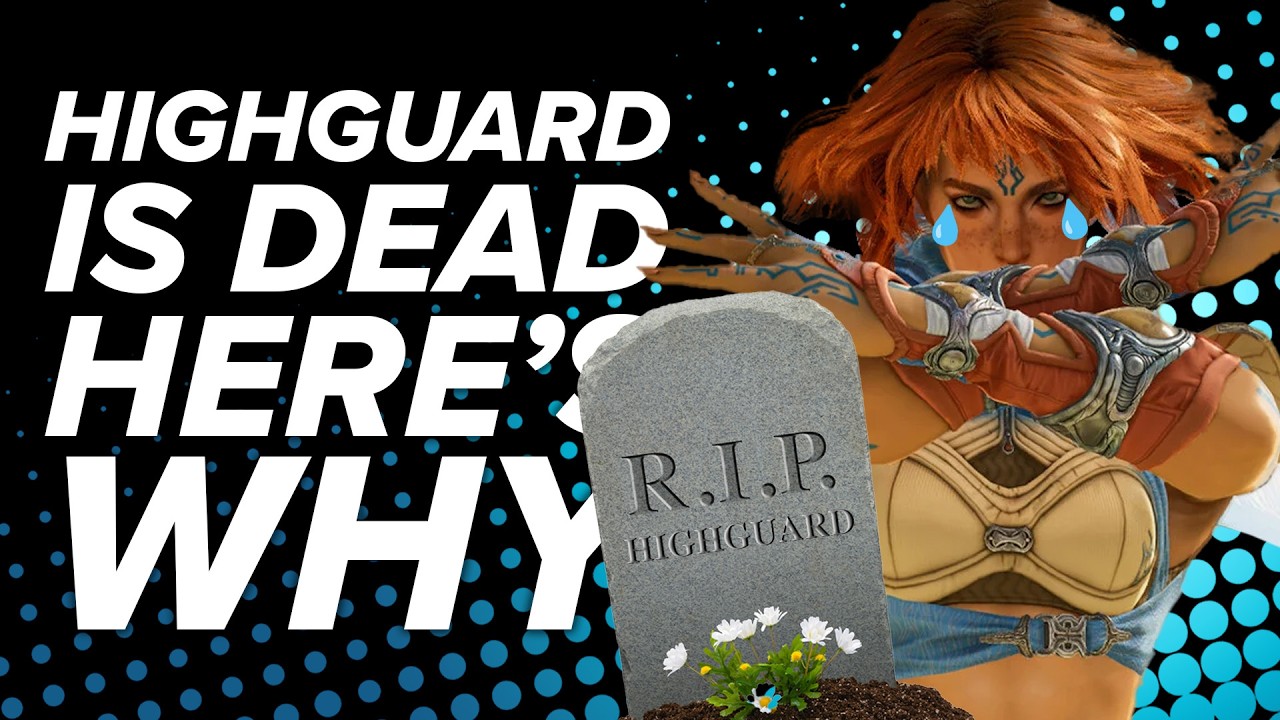
Image source: YouTube
Primary Factors That Led to the Rapid Shutdown of Highguard
The failure of Highguard can be traced back to a "perfect storm" of market saturation, technical barriers, and a fundamental disagreement between the developers and their financial backers. While the team at Wildlight Entertainment, led by figures like Chad Grenier and Mohammad Alavi, believed the game could thrive with a "small, core group of fans," the reality of modern AAA publishing rarely allows for such niche success.
The Tencent Funding Cut
The most direct cause of the shutdown was the withdrawal of support from Tencent. As the primary financial engine behind Wildlight, Tencent expected Highguard to become an "instant hit" that could compete with established giants in the hero shooter space. When the game failed to achieve viral growth within its first 30 days, the publisher reportedly cut the "runway" for the project, leading to the immediate announcement of the March 12 closure.
The "Runway" Contradiction
One of the most frustrating aspects for the community was the mixed messaging from the studio. As late as February 18, 2026, developers were publicly insisting that the game was "not dead" and that the team was hard at work on a multi-year content roadmap. This discrepancy suggests a sudden and perhaps unexpected pivot by the publisher that left the development team scrambling.
Market Saturation and the 3v3 Struggle
The hero shooter market in 2026 is exceptionally crowded. Highguard attempted to differentiate itself with a 3v3 format, but many players found the smaller team sizes less forgiving and more prone to toxicity compared to 5v5 or 6v6 alternatives. Without a massive influx of new players to keep matchmaking times low, the "death spiral" of long queues leading to player attrition became unavoidable.
Comparing the Highguard Timeline to Other High-Profile Gaming Failures
To understand the scale of this collapse, it is helpful to look at how Highguard compares to other titles that suffered rapid shutdowns. While it lasted longer than the infamous The Day Before , its 45-day lifespan ranks it among the shortest-lived major releases in recent memory.
| Game Title | Launch to Shutdown Duration | Primary Reason for Failure |
|---|---|---|
| The Day Before | 4 Days | Technical fraud and studio collapse |
| Concord | ~14 Days | Lack of player interest and market fit |
| Highguard | 45 Days | Funding withdrawal and low player counts |
| Hyper Scape | ~18 Months | Slow decline in player retention |
The comparison to Concord is particularly poignant. Both games were developed by talented teams and featured high production values, yet both failed to capture the zeitgeist. The community quickly labeled Highguard as "Concord 2," a narrative that became a self-fulfilling prophecy as potential new players avoided the game out of fear it would soon be discontinued.
A Technical Post-Mortem of the Controversial Orb Mechanic
Beyond the financial issues, Highguard featured a core gameplay mechanic that proved to be highly divisive. Known as the "Orb" system, this mechanic required players to perform a specific "finishing" animation—stabbing a floating orb—to confirm a kill and remove an enemy from the round.
While many players found the Orb mechanic tedious, it offered significant tactical depth for high-level squads. Breaking an enemy orb restored 50% of the player's shield and tactical charges. Expert players utilized the character Mara , who could break orbs at range, to essentially "battery" their team's abilities during a firefight.
According to community discussions on Reddit , the "Orb" system was intended to prevent long-range sniping from dominating the game, forcing teams to close the distance. However, the "pre-canned animation" required to break the orb felt sterile to many shooters fans. It interrupted the flow of combat and often left the player vulnerable in a way that felt frustrating rather than tactical.
Critics argued that the mechanic was a "solution in search of a problem." By adding an extra step to the core gameplay loop of a shooter—killing the enemy—Wildlight inadvertently created a barrier to the "satisfaction" that players expect from the genre.
Hardware Optimization Failures and the Barrier to Entry
Even players who enjoyed the mechanics often found themselves unable to play the game smoothly. Highguard launched with significant optimization issues that targeted high-end hardware specifically. Reports on the Steam Community forums detailed consistent stuttering and frame drops even on RTX 3090 and 40-series cards.
The technical barriers included:
- Shader Compilation Stutter: The game did not pre-compile shaders, leading to massive hitches every time a new ability was used.
- High VRAM Usage: Even at low presets, the game frequently exceeded 12GB of VRAM, causing crashes on mid-range cards.
- CPU Bottlenecking: The tactical AI and physics calculations for the "Orbs" put an immense strain on processors, leading to inconsistent frame times.
These technical hurdles meant that the "core group of fans" the developers were counting on was limited to those with both the patience for the mechanics and the hardware to brute-force the poor optimization. When the game's performance didn't improve in the weeks following launch, many of these early adopters simply moved on to more stable titles.
The Impact on Wildlight Entertainment and Future Projects
The fallout from the Highguard shutdown has been devastating for Wildlight Entertainment. Shortly after the March 12 announcement, reports surfaced of mass layoffs at the studio. According to TheGamer , the "majority" of the development team was let go as the studio pivoted to a much smaller, skeleton crew.
This is a significant blow to the industry, as Wildlight was seen as a "supergroup" of talent. The failure of their debut title raises questions about the viability of independent AAA-quality studios in an era where marketing costs often eclipse development budgets. While the studio has not officially closed its doors, its future remains uncertain as it seeks new funding or a potential acquisition.
How to Secure a Refund for Highguard on Steam and PlayStation
If you purchased Highguard or spent money on in-game currency (Guard Credits), you are likely eligible for a refund due to the permanent shutdown of the service. Both Valve and Sony have established precedents for refunding "dead" live-service games.
- Steam Users: Navigate to the Steam Support page, select Highguard , and choose "I would like a refund." Even if you have more than 2 hours of playtime, mention the "Permanent Server Shutdown on March 12" in your notes. Valve is typically lenient in these specific cases.
- PlayStation 5 Users: You must contact PlayStation Support via their live chat or phone line. Because the game is no longer playable, you can request a refund based on the "faulty product" or "service no longer provided" clauses.
- Third-Party Keys: If you bought a key from a site like Green Man Gaming or Humble Bundle, you will need to contact their specific support teams. Note that these sites often have stricter policies once a key is redeemed.
Frequently Asked Questions
- When exactly did Highguard shut down?
- Highguard officially shut down its servers on March 12, 2026. The game was only active for 45 days following its launch earlier that year.
- Why was Highguard cancelled so quickly?
- The primary reason was the withdrawal of funding by Tencent. The game failed to reach the high concurrent player counts required by the publisher to sustain the expensive server infrastructure.
- Can I play Highguard offline or on private servers?
- No. Highguard was built as an online-only experience with no offline mode. There are currently no official or community-led private servers available.
- What happened to the developers at Wildlight Entertainment?
- Following the shutdown, Wildlight Entertainment suffered major layoffs, losing the majority of its staff. The studio's future remains uncertain as of late 2026.
- How many people were actually playing Highguard at its peak?
- While marketing claimed 1 million trials, SteamDB data showed a peak of only ~400 concurrent players on Steam, with approximately ~800 on PlayStation 5.
- Is it still possible to get a refund for the game?
- Yes, most players have successfully received refunds through Steam and PlayStation Support by citing the permanent server shutdown as the reason for the request.
The Bottom Line
The collapse of Highguard serves as a stark reminder of the volatility in the modern live-service gaming market. Here are the key takeaways:
- 45-Day Lifespan: Highguard shut down permanently on March 12, 2026, making it one of the fastest failures in gaming history.
- Funding Withdrawal: Tencent pulled financial support after the game failed to meet aggressive growth targets.
- Technical Barriers: Severe optimization issues on high-end hardware like the RTX 3090 prevented the game from retaining its core audience.
- Divisive Mechanics: The "Orb" kill-confirmation system was widely criticized for interrupting the flow of combat.
- Studio Impact: Wildlight Entertainment faced mass layoffs, leaving the future of the Titanfall/Apex veterans in doubt.
- Refund Availability: Players should immediately contact Steam or PlayStation support to reclaim funds spent on the defunct title.
If you still have Highguard installed, you should proceed with a refund request and uninstall the client, as there are no plans for a revival.