Home
Why War Final Assault Remains a Notable 1999 Arcade First Person Shooter Experiment
Released in 1999 by
Atari Games and Midway
,
War: Final Assault
is a futuristic first-person shooter set in a war-torn Siberia. It stands out for its unique
6-key movement system
and analog joystick controls. While it never received its planned Nintendo 64 port, it remains a top-tier choice for collectors of late-90s arcade hardware. For modern players, successful emulation requires the
warfa.chd
file (MD5:
39791a5a2aea2532d590f5472b061605
) and specific MAME configurations to overcome the "half-speed" performance bug.
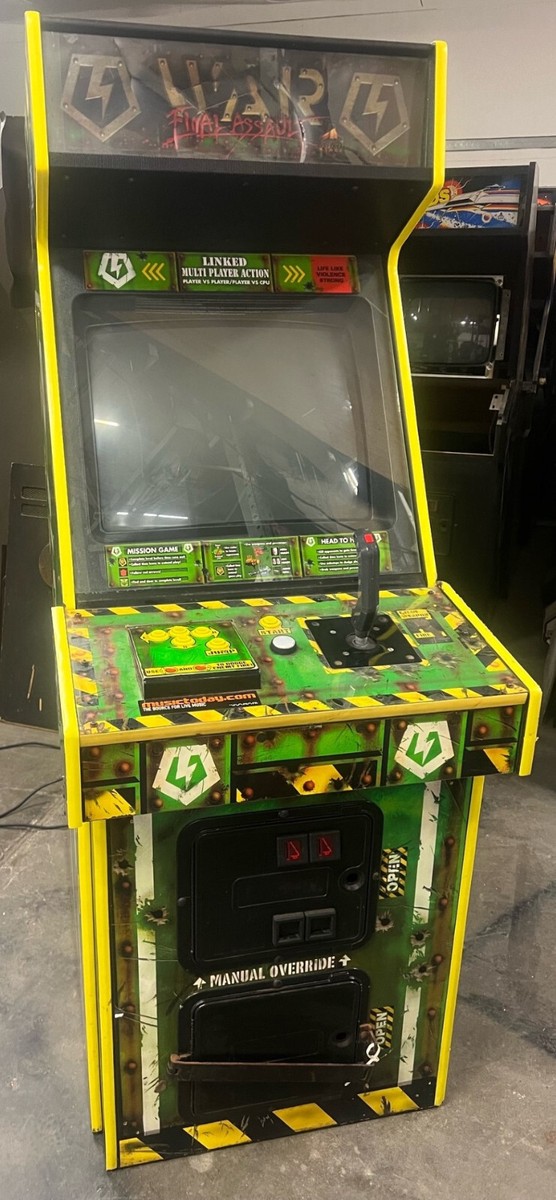
Image source: eBay
Understanding the Siberian Conflict and General Alienov’s Republic
In the late 1990s, the arcade landscape was shifting. While fighting games and racers still dominated, the rise of PC shooters like Quake and Unreal prompted Atari Games and Midway to collaborate on a dedicated arcade FPS. The result was War: Final Assault , a game that attempted to bridge the gap between high-speed PC action and the visceral, tactile experience of an arcade cabinet.
The narrative setting is bleak and industrial. Players are thrust into a futuristic Siberia, where a rogue faction known as the Republic, led by the enigmatic General Alienov , is conducting dangerous genetic experiments. The game features a hybrid perspective, allowing players to switch between first-person and third-person views, a feature that was notably innovative for its time. According to historical records at the International Arcade Museum , the game was officially released in March 1999 in North America, followed by a European launch in October of the same year.
Despite its high production values, including impressive 3D environments and a robust ranking system, the game remains a "hidden gem" in the Atari/Midway catalog. It arrived just as the arcade industry began its sharp decline, overshadowed by the impending release of the PlayStation 2 and the dominance of home consoles. However, for those who experienced it in the arcade, the game’s heavy atmosphere and unique control scheme left a lasting impression.
How the Unique Six Button Control System Redefines Arcade Movement
One of the most common misconceptions about War: Final Assault is that it utilizes "tank controls," similar to early Resident Evil or Battlezone . In reality, the game features a sophisticated 6-key system designed to replicate the complexity of a keyboard and mouse setup within an arcade interface. The hardware consists of a molded analog joystick equipped with a trigger and a thumb button, paired with a panel of six auxiliary buttons.
The button layout is essential for high-level play, especially when facing the game's later bosses. The six buttons are typically mapped as follows:
- Forward & Backward: Used for primary movement.
- Strafe Left & Strafe Right: These are the "secret sauce" of the game, allowing for lateral movement while aiming—a necessity for dodging General Alienov’s projectiles.
- Jump: Essential for navigating the verticality of the Siberian industrial complexes.
- View Change: A tactical toggle that switches the camera between a traditional FPS view and a third-person perspective, providing better situational awareness in crowded arenas.
By utilizing the strafe buttons in conjunction with the analog stick's turning, players can achieve a level of mobility that few other arcade shooters of the era could match. This system was a significant advancement in arcade interface design, attempting to solve the "FPS on a stick" problem years before dual-analog controllers became the industry standard for consoles.
"The 6-key system isn't just an alternative; it's a requirement for survival. Players who rely solely on the joystick for movement will find themselves quickly overwhelmed by the Republic's forces."
Analyzing the Playable Characters and Their Strategic Roles
War: Final Assault offers four distinct characters, each representing a different tactical approach to the conflict. Unlike many arcade games where character choice is purely cosmetic, the selection here impacts movement speed, health pools, and starting equipment. The game also features a persistent ranking system where players can enter a Name and PIN to track their progress and unlock hidden character skins.
| Character | Playstyle | Starting Weapon | Unique Trait |
|---|---|---|---|
| Sgt. Gunn | Balanced | Assault Rifle | Standard health and speed; a top choice for beginners. |
| Hawk | Scout | Rapid Fire Gun | Highest movement speed; excels at hit-and-run tactics. |
| Jayne Dough | Specialist | Tactical Rifle | Smaller hit box; widely regarded as a strong choice for deathmatch. |
| Capt. Zukov | Tank | Heavy Cannon | Highest damage resistance; moves slower but hits harder. |
Each character’s starting weapon serves as a baseline, but the core gameplay loop revolves around finding superior armaments scattered throughout the levels. The character balance ensures that both aggressive players and those who prefer a more methodical, defensive approach can find a suitable avatar for the Siberian campaign.
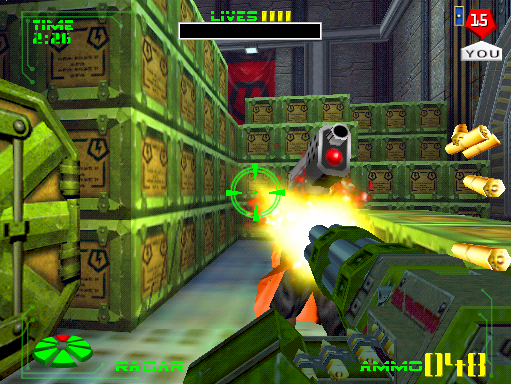
Image source: lunatic obscurity
Mastering the Weapon Ejection and Battlefield Pickup Mechanics
The combat in War: Final Assault is defined by its "Eject" mechanic. Unlike modern shooters where you might carry an entire arsenal, this game encourages players to constantly evaluate their current weapon against what is available on the battlefield. Pressing the thumb button on the joystick allows the player to drop their current weapon, clearing the slot to pick up a new power-up.
Weapons are categorized into tiers based on their effectiveness against the Republic's genetically modified soldiers:
- Tier 1 (Heavy Ordnance): Grenade Launchers and Flamethrowers. These provide essential Area of Effect (AoE) damage, making them a top-tier choice for clearing rooms.
- Tier 2 (Crowd Control): The Shock Wave weapon. This unique armament sends out a pulse that can stun or knock back multiple enemies, providing breathing room in tight corridors.
- Tier 3 (Standard Issue): Assault Rifles and Rapid Fire guns. While reliable, these lack the stopping power needed for the game's difficult boss encounters.
Strategic weapon management is the key to completing the eight-level campaign. Players must often decide whether to keep a high-damage weapon with low ammo or swap it for a full Tier 3 rifle. This "Arcade Logic" keeps the pace fast and forces players to stay mobile, constantly hunting for the next crate or drop.
Why the Planned Nintendo 64 Port Never Reached Store Shelves
During the late 90s, Midway was a powerhouse in porting arcade hits to the Nintendo 64. Titles like Quake II , Doom 64 , and Mace: The Dark Age found significant success on the platform. Naturally, a port of War: Final Assault was planned and even discussed in gaming magazines of the era. However, the project was ultimately cancelled, leaving the game as an arcade exclusive.
Several technical and market factors contributed to this cancellation:
- Storage Limitations: The arcade version of War ran on a hard disk drive (HDD), allowing for high-resolution textures and large amounts of data. Compressing this into a standard N64 cartridge would have required significant visual compromises.
- RAM Constraints: The game’s "Dreamcast-level" visuals pushed the limits of the arcade hardware. The N64, even with the Expansion Pak, would have struggled to maintain the arcade's frame rate and environmental detail.
- Market Transition: By 1999 and 2000, the industry was focused on the upcoming PlayStation 2. Midway likely determined that the resources required to port a niche arcade shooter to a fading console were not worth the investment.
While the cancellation was a disappointment for N64 owners, it has contributed to the game's mystique among retro enthusiasts, as the arcade cabinet remains the only way to experience the title in its intended form.
Technical Guide for Running War Final Assault on MAME in 2026
For many years, War: Final Assault was considered "unplayable" in MAME due to its reliance on a complex 3-board stack and HDD-based storage. As of 2026, emulation has improved significantly, though it still requires a powerful PC to maintain full speed. The game is notorious for a "half-speed" bug where the internal timing of the emulated CPU doesn't match the video output, leading to sluggish gameplay.
To get the game running correctly, you will need the following:
- MAME Version: Use the most recent stable release (0.260 or later recommended).
-
ROM Set:
Ensure you have the
warfa.zipBIOS file. -
CHD File:
The game data is stored in
warfa.chd. You must verify the MD5 hash:39791a5a2aea2532d590f5472b061605. - Software Version: Version 1.91 is widely regarded as the most stable and feature-complete revision.
Configuring Modern Controllers for a Dual Stick Experience
The biggest hurdle for MAME players is the control scheme. Mapping the arcade's 6-key system to a standard keyboard is cumbersome. The most effective solution is to use a modern Xbox or PlayStation controller and utilize a "Dual-Stick" configuration. By mapping the "Strafe" buttons to the Left Stick and the "Turn" functions to the Right Stick, you can replicate the feel of a modern console FPS, which makes the game much more accessible.
In the MAME input settings, try the following mapping:
- Left Stick X-Axis: Strafe Left / Strafe Right
- Left Stick Y-Axis: Forward / Backward
- Right Stick X-Axis: Analog Turn (Joystick X)
- Right Trigger: Fire (Button 1)
- Right Bumper: Eject Weapon (Thumb Button)
- Left Bumper: View Change
Troubleshooting Common Hardware Failures and LED Error Codes
For collectors lucky enough to own a physical War: Final Assault cabinet, maintenance is a constant reality. The game runs on a 3-board stack: a Video Card (PCI-based), a CPU board, and an I/O board. When the game fails to boot, the CPU board provides diagnostic information via a small LED display.
- Error Code "8."
- This typically indicates a Boot ROM failure. Before replacing the chip, try reseating the U27 ROM. Oxidation on the pins is a frequent culprit in these older Atari/Midway stacks.
- Error Code "d"
- This is the most common error and signifies a Hard Drive failure. Because the game relies on a spinning HDD from 1999, many of these drives have reached the end of their mechanical life.
- Error Code "2" or "Eu"
- These codes point to a Video Card failure. It is important to note that while the video card uses a standard PCI slot, you cannot simply swap in a consumer PC card from the same era. The Atari card uses signed firmware that the CPU board checks during boot.
If you encounter these errors, the first step should always be to check the power supply voltages. These boards are sensitive to voltage drops, and a failing 5V rail can often trigger false error codes across the stack.
Upgrading Legacy Hard Drives to Compact Flash Storage
To preserve these machines, many owners are moving away from original spinning hard drives in favor of
Compact Flash (CF) cards
. Using an IDE-to-CF adapter, you can image the
warfa.chd
data onto a solid-state card, significantly improving reliability and reducing heat inside the cabinet.
However, there is a known "Too Fast" loading bug. Some high-speed modern CF cards process data faster than the original Atari I/O board expects, which can cause the game to hang during the boot sequence or reboot randomly during gameplay. Experienced collectors recommend using older, slower CF cards (such as industrial-grade 1GB or 2GB cards) to ensure maximum compatibility with the legacy hardware.
Comparing Arcade Logic to PC Legends Like Quake and Unreal
When comparing War: Final Assault to its PC contemporaries like Quake or Unreal , the differences in "Arcade Logic" become clear. PC shooters of 1999 were moving toward complex level design, keycard hunting, and environmental puzzles. War , by contrast, is designed for a 30-minute completion time, emphasizing constant forward momentum and "bullet sponge" enemies that provide immediate feedback for every quarter spent.
Visually, the game was a strong contender. Its lighting effects and texture detail were exceptionally strong for 1999, rivaling the best PC hardware of the time. However, the gameplay remains rooted in the arcade tradition: big red directional arrows guide you through levels, and boss fights are tests of endurance and pattern recognition rather than tactical positioning. This makes it a fascinating time capsule of a moment when the arcade industry tried to adapt the most popular PC genre into its own unique format.
Final Thoughts on War: Final Assault
War: Final Assault stands as a bold, if overlooked, chapter in the history of Atari Games and Midway. It represents a unique intersection of arcade hardware and FPS design that we rarely see today.
- Verify your files: Always check the MD5 hash of your CHD file before attempting MAME emulation.
- Master the controls: The 6-key system is essential for defeating General Alienov and completing the campaign.
- Hardware preservation: If you own a cabinet, consider an IDE-to-CF upgrade to protect against HDD failure.
- Character choice matters: Use Sgt. Gunn for a balanced start, but don't sleep on Jayne Dough for competitive play.
- Emulation speed: If the game feels slow, check your MAME underclocking settings to mitigate the half-speed bug.
Whether you are a hardware collector or an emulation enthusiast, this game offers a challenging and visually striking look at the peak of the 90s arcade era. For the best experience, try mapping the controls to a modern dual-stick gamepad and dive into the Siberian conflict today.
Frequently Asked Questions
How do I beat the final boss General Alienov?
Defeating General Alienov requires mastery of the strafe buttons. His projectiles follow a predictable pattern, but they cover a wide area. You must constantly strafe left and right while keeping your aim centered on his weak points. Using a high-tier weapon like the Grenade Launcher or Heavy Cannon is highly recommended to chip away at his large health pool quickly.
Is there a PC version of War: Final Assault available?
No, War: Final Assault remains an arcade exclusive. While a Nintendo 64 port was planned, it was cancelled before completion. The only way to play the game today is via original arcade hardware or through MAME emulation. There was never an official release for Windows, PlayStation, or Dreamcast.
What are the differences between software versions 1.3 and 1.91?
Version 1.3 was an early production release that contained several bugs related to the ranking system and weapon hit detection. Version 1.91 is the final stable revision, which improved the frame rate, fixed several "out of bounds" glitches in the Siberian levels, and refined the character balance for the Head-to-Head multiplayer mode.
Can I play this game in co-op mode with a friend?
The game features a 4-player cabinet linking system, but it is primarily designed for Head-to-Head deathmatch play. While you can play through the campaign levels, the experience is competitive rather than cooperative, as players vie for the highest score and the best weapon pickups throughout the mission.
Why does the game feel so slow when running in MAME?
This is usually due to the "half-speed" emulation bug. The emulated hardware is very demanding, and if your PC cannot maintain 100% speed, the game's internal clock slows down significantly. To fix this, ensure you are using a recent version of MAME and try adjusting the "CPU Overclock" setting in the MAME slider menu to see if it stabilizes the frame rate.