Home
How to Buy Chickens in Stardew Valley and Keep Them Productive
To buy a chicken in Stardew Valley, you must first have a completed Coop on your farm. Once the building is ready, visit Marnie’s Ranch in Cindersap Forest between 9:00 AM and 4:00 PM (closed Mondays and Tuesdays). Each chicken costs 800g . You must interact with the gold register on Marnie's counter to open the purchase menu.
Chickens represent the foundational step into animal husbandry for most Stardew Valley players. They provide a steady daily income through egg production and are essential for completing the Animal Bundle in the Community Center. However, many new farmers find themselves frustrated by Marnie’s erratic schedule or the sudden realization that they have no way to feed their new birds during a thunderstorm. This guide details the most efficient sequence for acquiring chickens and ensuring they remain a profitable asset rather than a resource drain.
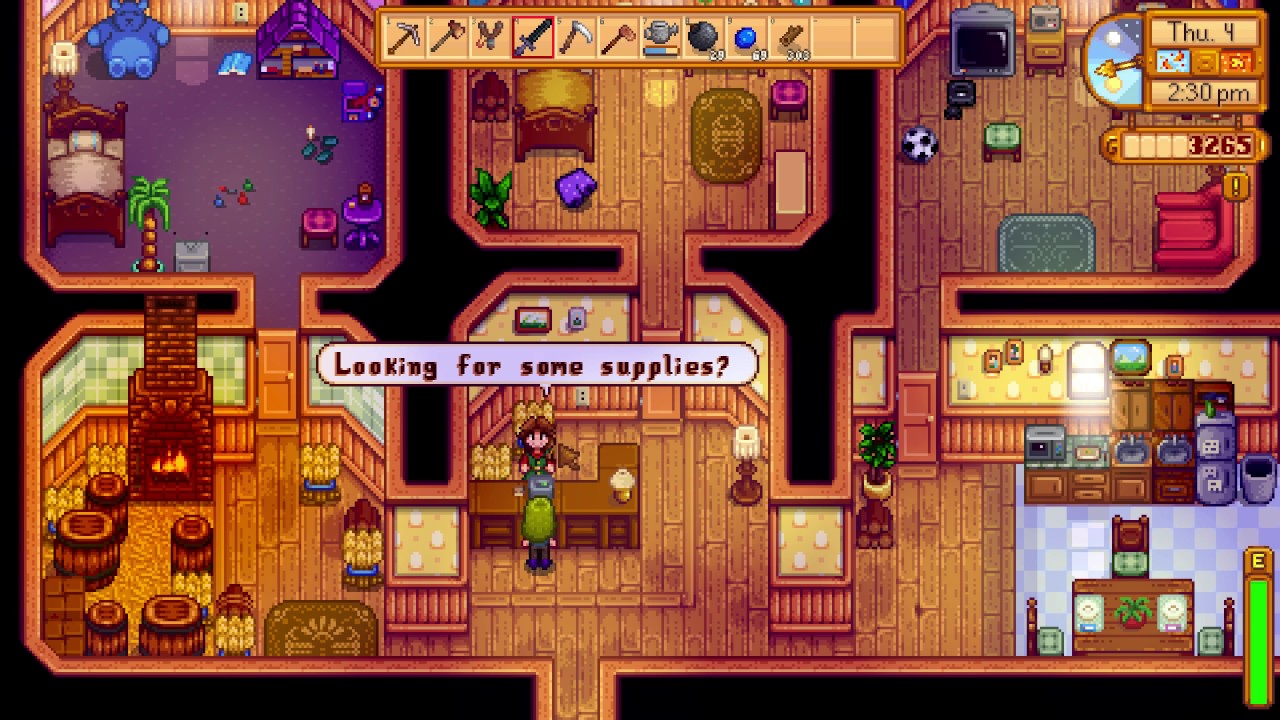
Image source: YouTube
The Essential Order of Operations for New Farmers
Buying a chicken is not as simple as walking into a shop with gold. Stardew Valley requires a specific infrastructure to be in place before Marnie will even consider selling you a bird. Following this timeline prevents common pitfalls like animal starvation or wasted travel time.
Visit Robin at the Carpenter’s Shop. A Silo allows you to store hay, which is vital for rainy days and the entirety of Winter. Without this, you will be forced to buy expensive hay from Marnie daily.
Once the Silo is underway, commission Robin to build a basic Coop. This takes three days to complete. Ensure you have a clear 6x3 space on your farm for the building.
Use your scythe to clear grass on your farm. With a Silo built, this grass automatically converts to hay and fills your storage. Aim for at least 20-30 units before buying your first bird.
Check the calendar. If it is Wednesday through Sunday, head to Cindersap Forest with 800g to purchase your first chicken.
Why You Should Build a Silo Before Buying Chickens
One of the most frequent mistakes for beginners is prioritizing the Coop over the Silo. While the Coop houses the birds, the Silo is what keeps them alive. In Stardew Valley, chickens will not produce eggs if they are hungry, and their friendship level—which dictates egg quality—will plummet.
According to official game mechanics , a Silo costs only 100g, 100 Stone, 10 Clay, and 5 Copper Bars. It is one of the most cost-effective buildings in the game. Once built, every piece of grass you cut with a scythe has a 50% chance of being stored as hay. If you cut grass before building a Silo, that potential food is simply deleted from the game world.
The Infinite Hay Storage Trick
A single Silo holds 240 units of hay. While this sounds like a lot, a full Deluxe Coop of 12 animals will consume that in just 20 days. To avoid building multiple Silos, which take up valuable farm real estate, many experienced players use the "Hopper Trick."
Inside a basic or Big Coop, there is a hay hopper. You can manually pull hay out of this hopper as long as the feeding bench isn't full. By pulling out all the hay and placing it into a standard wooden chest next to the hopper, you can store thousands of units of hay in a single tile. This ranks among the top efficiency strategies for long-term farm management.
How to Build Your First Chicken Coop with Robin
Robin, the local carpenter, is located in the mountains north of town. Her shop is open from 9:00 AM to 5:00 PM, though she closes at 4:00 PM on Fridays and is closed on Tuesdays (unless it is raining). To build a Coop, you will need:
- 4,000 Gold
- 300 Wood
- 100 Stone
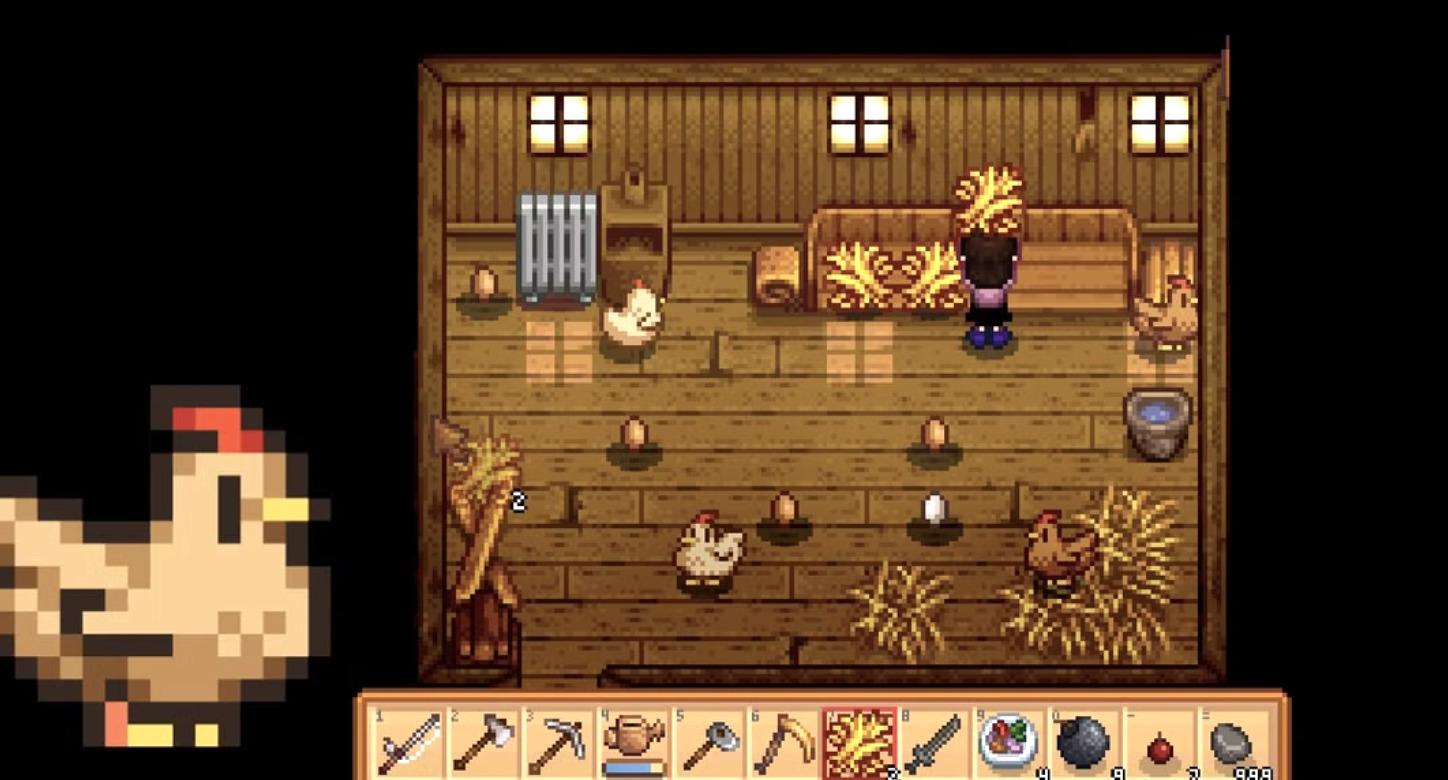
Image source: Shockbyte
Comparing Coop Upgrades and Capacity
As your farm grows, you will likely want to upgrade your Coop. Each tier unlocks new animals and features that significantly reduce the daily workload.
| Building Tier | Cost & Materials | Capacity | Unlocked Features |
|---|---|---|---|
| Basic Coop | 4,000g, 300 Wood, 100 Stone | 4 Animals | Chickens only |
| Big Coop | 10,000g, 400 Wood, 150 Stone | 8 Animals | Incubator, Ducks, Void Chickens |
| Deluxe Coop | 20,000g, 500 Wood, 200 Stone | 12 Animals | Auto-Feed System, Rabbits, Dinosaurs |
Navigating Marnie’s Ranch and Her Challenging Schedule
Marnie’s Ranch is located in the northeast corner of Cindersap Forest, just south of your farm’s lower entrance. While her shop hours are listed as 9:00 AM to 4:00 PM, Marnie is widely considered one of the most difficult NPCs to catch at her desk. She does not work on Mondays or Tuesdays, as she spends those days grocery shopping or attending Caroline’s exercise class.
Dealing with Monday and Tuesday Closures
If you find yourself needing supplies or animals on a Monday or Tuesday, you are generally out of luck. However, in the late game, you can purchase a "Key to the Town" from Qi’s Walnut Room, which allows you to enter buildings regardless of the time. Until then, the best approach is to treat Sunday as your "Livestock Prep Day" to ensure you have everything you need before her two-day weekend begins.
How to Choose Your Chicken Color at the Register
When you purchase a chicken for 800g, the game randomly assigns it a color: White or Brown. This choice is not purely aesthetic; White chickens lay White Eggs, and Brown chickens lay Brown Eggs. The Community Center’s Animal Bundle requires one of each.
You do not have to settle for a random choice. When the game asks you to "Choose a Coop for your new Chicken," look at the top of your screen. It will say "Choose a Coop for your new White Chicken" or "Choose a Coop for your new Brown Chicken." If the color isn't the one you want, simply hit the "Cancel" button and click the register again. You can repeat this until the game rolls the color you need.
Unlocking Rare Chicken Variants and 1.6 Changes
Beyond the standard white and brown varieties, Stardew Valley offers several rare variants that provide unique items or visual flair. The 1.6 update introduced significant changes to how some of these are acquired.
- Blue Chickens: These are unlocked after reaching an 8-heart friendship level with Shane and viewing his special cinematic at the Ranch. In previous versions, you had to hatch these from eggs. As of the 1.6 update, Blue Chickens can be purchased directly from Marnie once the event is triggered.
- Void Chickens: These produce Void Eggs, which are used for high-level artisan goods and gifts for Krobus. You can obtain a Void Egg through a random "Witch" event overnight, or by purchasing one from Krobus in the Sewers for 5,000g. Once you have the egg, place it in a Big Coop's incubator.
- Golden Chickens: A late-game reward for players who achieve 100% Perfection. These lay Golden Eggs, which sell for a substantial amount of gold.
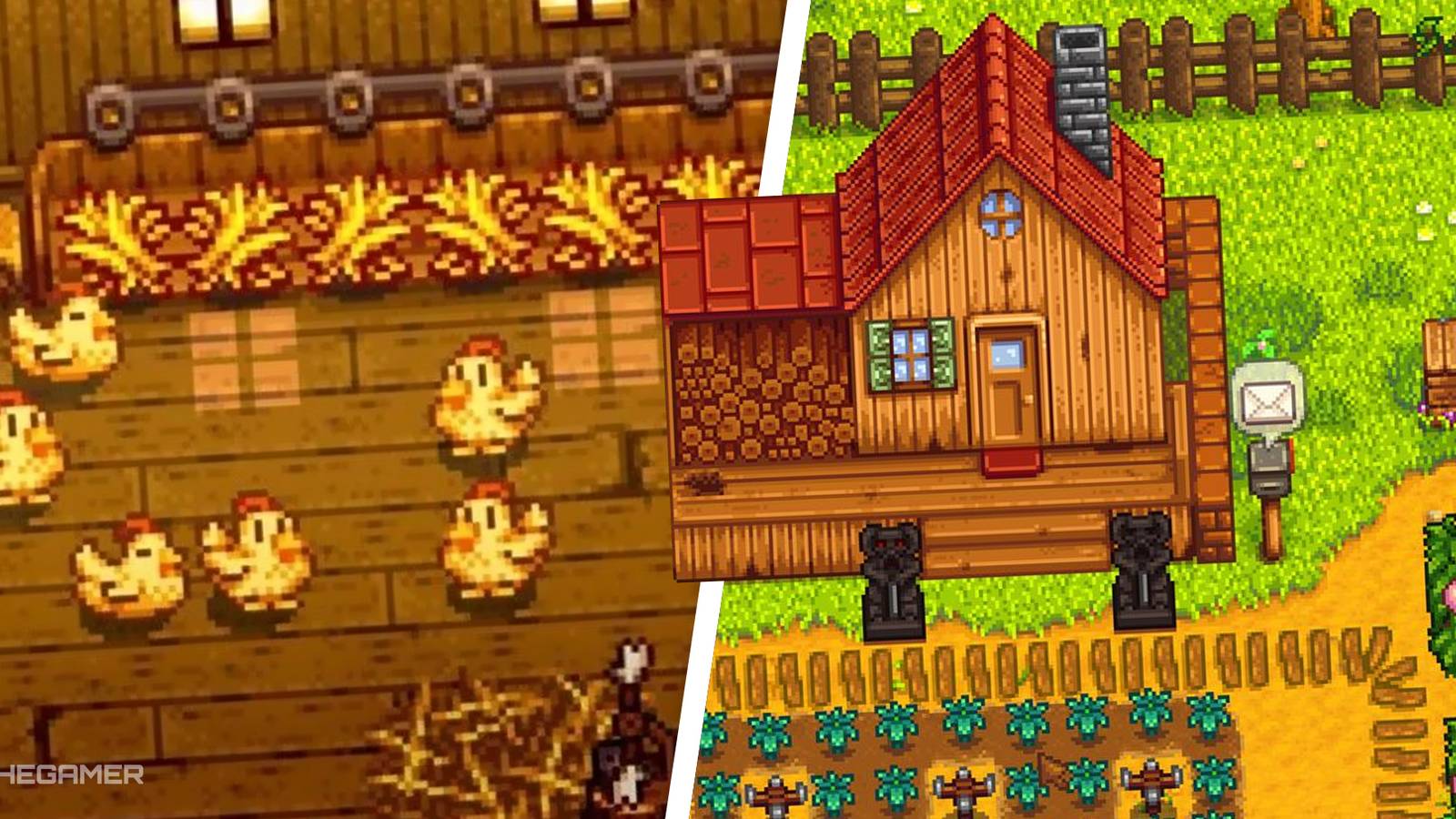
Image source: TheGamer
Starting with Chickens on the Meadowlands Farm
The 1.6 update introduced the Meadowlands Farm , a map specifically designed for players who want to focus on ranching. Unlike other maps where you start with a pack of parsnip seeds, the Meadowlands Farm starts you with a small Coop and two chickens already on your property.
This map also features unique "Blue Grass." When animals eat this grass, their friendship with the player increases at double the normal rate. This makes the Meadowlands Farm a top choice for players looking to maximize egg quality and profit early in the first year.
How to Care for Your Chickens for Maximum Profit
Buying the chicken is only the beginning. To turn a profit, you must manage their happiness and productivity daily. A happy chicken at 5 hearts will produce Large Eggs, which are worth significantly more than standard eggs.
During Spring, Summer, and Fall, open the small hatch next to the Coop door. Chickens prefer eating fresh grass outside, which provides a larger friendship boost than hay. Only use hay on rainy days or during Winter.
Interact with each chicken every morning. You will see a heart icon appear. This daily "petting" is the most reliable way to increase their heart level. Higher hearts lead to higher quality eggs (Silver, Gold, and Iridium star levels).
Image source: IGN
Processing Eggs into Mayonnaise
Selling raw eggs is rarely the most profitable move. By crafting a Mayonnaise Machine (unlocked at Farming Level 2), you can significantly increase your margins. A standard egg worth 50g becomes Mayonnaise worth 190g. If you have the Artisan profession, this value jumps even higher. Consistently processing your daily harvest is a top-performing strategy for early-game wealth.
- Open the coop door every sunny morning.
- Pet every chicken to increase friendship.
- Collect eggs and immediately place them in Mayonnaise Machines.
- Check the hay bench; if it's empty, refill it from the hopper.
- Close the coop door at night to protect animals from potential (though rare) attacks.
Frequently Asked Questions
There are two common reasons for this. First, ensure Robin has completely finished building your Coop; if the construction animation is still active, the building doesn't "exist" in the shop menu yet. Second, check that you have an empty slot in your Coop. A basic Coop only holds four animals.
Chickens in Stardew Valley do not die of starvation, but they will stop producing eggs and their friendship level will drop. However, they can be lost to a "Wild Animal Attack" if they are left outside overnight with the coop door closed, preventing them from returning to safety.
A baby chicken purchased from Marnie takes three nights to mature. On the fourth morning, provided it has been fed every day, it will begin producing eggs. If you hatch a chicken in an incubator, the timeline is the same once it hatches.
Yes, a heater is highly recommended. Without one, chickens become unhappy during the cold months, leading to a total halt in egg production. You can purchase a heater from Marnie for 2,000g. One heater is sufficient for any size Coop.
Factual data shows there is no difference in sell price or mayonnaise quality between white and brown eggs. The only difference is their use in the Community Center Animal Bundle, which requires both types to complete the set.
Key Takeaways for Successful Chicken Farming
- Build a Silo first to ensure you have a free, sustainable food source before your birds arrive.
- Plan around Marnie's schedule , remembering that she is unavailable on Mondays and Tuesdays.
- Use the register interaction at the ranch to access the purchase menu, rather than talking to Marnie directly.
- Manipulate chicken colors by canceling and restarting the purchase until you get the specific bird you need.
- Process all eggs into Mayonnaise to nearly triple your profit margins compared to selling raw goods.
- Upgrade to a Deluxe Coop as soon as possible to unlock the auto-feeding system and save daily labor.
Start your poultry journey by visiting Robin today to commission your first Silo and Coop.