Home
What Do You Need to Build and Run a Successful Coop in Stardew Valley?
Starting your journey as a rancher in Stardew Valley is one of the most rewarding ways to secure a steady daily income. While crops are subject to the changing seasons and require constant replanting, a well-managed coop provides consistent resources like eggs, feathers, and cloth. However, many new farmers find themselves unprepared for the hidden costs and logistical requirements that come after Robin hammers the last nail into the building.
Understanding the exact materials and strategic timing for your coop can save you thousands of gold in the long run. Whether you are aiming for a speedrun completion of the Community Center or simply want a few chickens to brighten up your morning routine, this guide covers every detail you need to transition from a simple gardener to a successful livestock owner.
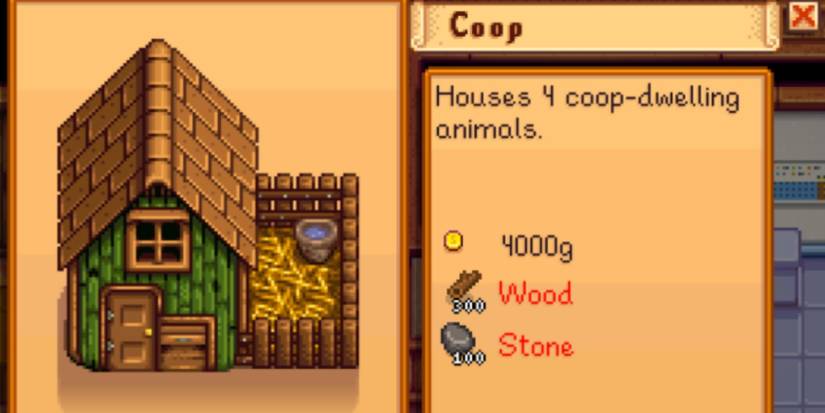
Image source: TheGamer
What Are the Basic Requirements for a Stardew Valley Coop?
Before you trek up to the mountain to visit Robin, you must ensure your inventory and your farm layout are ready. The basic Coop is the entry-level building for all avian livestock, and it serves as the foundation for future upgrades.
The Resource Checklist
According to official game data , the basic tier Coop requires three primary resources:
- 4,000 Gold: This is the flat fee for Robin's labor.
- 300 Wood: Gathered by chopping down trees on or off your farm.
- 100 Stone: Collected by breaking rocks in the mines or on your farm property.
Space and Footprint
The Coop requires a 6x3 clear plot of land. "Clear" means no debris, trees, grass, or tilled soil can be in the way. It is a common mistake to forget the extra space needed for the animals to roam; while the building only takes up 18 tiles, you will want a fenced-in area or open grass nearby so your chickens can eat outside, which improves their mood and saves you money on hay.
The Meadowlands Exception
As of the recent 1.6 update, players who choose the Meadowlands Farm map receive a significant head start. On this map, you begin the game with a Coop and two chickens already placed on your farm for free. This is a top-tier choice for players who want to focus on ranching immediately without the initial 4,000g grind.
Construction Timeline
Building a coop is not instantaneous. Once you pay Robin, she will spend the next two full days working on your farm. The building will be ready for use on the morning of the third day. Note that Robin does not work on festival days, which can delay your construction if you time it poorly.
- ☐ 4,000g in your wallet
- ☐ 300 Wood and 100 Stone in your inventory
- ☐ A 6x3 area cleared of all debris
- ☐ Checked the calendar (Robin is closed on Tuesdays!)
Why You Should Build a Silo Before Your First Coop
One of the most frequent mistakes new players make is building the Coop before the Silo. While the Coop houses the animals, the Silo is what keeps them fed affordably. Without a Silo, any grass you cut with your scythe simply disappears. With a Silo, that grass is converted into hay and stored automatically.
The Grass-to-Hay Pipeline
Feeding animals is your primary recurring expense. Marnie sells hay for 50g per piece, which adds up quickly when you have multiple animals. A single Silo can hold 240 units of hay. By building the Silo first, you can clear the wild grass on your farm and stock up on free feed before your chickens even arrive. According to Shockbyte's ranching guide , failing to build a silo early is the most common cause of early-game financial strain.
Silo Construction Costs
The Silo is remarkably cheap compared to the Coop, requiring only:
- 100 Gold
- 100 Stone
- 10 Clay (Found by hoeing dirt or sand)
- 5 Copper Bars (Smelted from copper ore found in the early levels of the mines)
Strategic Placement
Silos do not need to be near your animals. Since hay is accessed through the hopper inside the Coop, you can tuck your Silos into "dead zones" on your farm—such as the rocky areas near the north exit or the corners of the map—to save your prime tillable soil for crops.
How Much Does a Fully Functional Coop Actually Cost?
The 4,000g price tag is just the entry fee. To actually start making money, you need to account for the "Total Cost of Ownership" (TCO). A coop without animals or winter protection is just an empty shed.
Initial Animal Investment
Once the building is complete, you must visit Marnie’s Ranch to buy your livestock. Chickens cost 800g each . To make the building worth the space, you should aim for at least two chickens immediately, adding another 1,600g to your budget.
The Winter Heater Requirement
Animals in Stardew Valley have a "Mood" and "Friendship" mechanic. During the winter, animals will become unhappy and stop producing eggs if they are cold. A Heater costs 2,000g at Marnie’s shop. While you don't need it in Spring or Summer, it is a mandatory expense before the first of Fall ends.
| Item | Cost (Gold) | Purpose |
|---|---|---|
| Basic Coop | 4,000g | Housing for 4 animals |
| Silo | 100g | Hay storage from grass |
| 2x Chickens | 1,600g | Initial production |
| Heater | 2,000g | Winter production stability |
| Total | 7,700g | Fully functional setup |
Where and When Can You Buy a Coop from Robin?
Robin is the local carpenter, and her shop is located in the Mountain area, just north of Pelican Town and east of Linus’s tent. While she is generally reliable, her schedule can be a major hurdle for unprepared players.
Robin’s Schedule Pitfalls
Robin’s shop is open from 9 AM to 5 PM most days. However, she has two specific quirks that catch players off guard:
- Tuesdays: Robin leaves her shop to attend an exercise class at Caroline’s house. You cannot buy buildings or materials on this day.
- Fridays: She often leaves the shop early to visit the Stardrop Saloon.
Year 2 Price Inflation
A critical detail often missed in basic guides is the price hike that occurs on Spring 1 of Year 2. If you plan to buy your Wood or Stone directly from Robin rather than gathering it yourself, the prices quintuple after the first year. Wood jumps from 10g to 50g, and Stone jumps from 20g to 100g. Building your coop in Year 1 is significantly more cost-effective if you aren't self-sufficient in resources.
How to Upgrade Your Coop to Unlock Ducks and Rabbits
The basic Coop is just the beginning. To access more profitable animals and automated systems, you will need to invest in upgrades. Each upgrade takes Robin two days to complete.
The Big Coop Upgrade
Costing 10,000g, 400 Wood, and 150 Stone , the Big Coop increases your capacity to 8 animals. More importantly, it unlocks Ducks and Void Chickens . It also includes an Incubator , which allows you to hatch eggs into new chickens (or even Dinosaurs) for free, saving you the 800g purchase price at Marnie's.
The Deluxe Coop Upgrade
This is the final tier, costing 20,000g, 500 Wood, and 200 Stone . It expands capacity to 12 animals and unlocks Rabbits , which produce valuable Wool and Rabbit's Feet. The most significant feature of the Deluxe Coop is the Auto-Feed System . As long as your Silos have hay, the game will automatically place feed in the troughs every morning, saving you significant daily labor.
Image source: Stardew Valley Wiki
Should You Build a Coop or a Barn First?
This is a classic debate in the Stardew community. While both are essential for the Community Center, they offer different financial returns. Many players find that the Coop ranks among the top choices for early-game stability.
The Case for the Coop
Coops are cheaper to start and chickens produce every single day. When you process a standard egg (50g) into Mayonnaise (190g), you see a 280% increase in value . This daily cash flow is vital for buying seeds in the first two seasons.
The Case for the Barn
Barns require more resources but house Cows and Goats. While Milk is valuable, the real profit comes much later with Pigs and Truffles. The Barn is a long-term investment, whereas the Coop is a "quick win" for your farm's economy.
The "Summer 10" Rule
If you are aiming to complete the Community Center Greenhouse bundle in Year 1, you should aim to have your Coop built by Summer 10 . This allows enough time for your chickens to reach high friendship levels and start producing the Large Eggs required for the Animal Bundle before winter hits.
How to Manage a Coop in Multiplayer Mode
In multiplayer, the requirements for a coop remain the same, but the strategy changes. Resources like Wood and Stone are often in high demand as multiple players upgrade their tools and cabins simultaneously.
- Profession Splitting: Have one player choose the Rancher profession to boost animal friendship, while another player takes the Artisan profession. The Artisan player should be the one to sell the Mayonnaise, as they receive a 40% price bonus that the Rancher does not.
- Cabin Utility: If your coop floor is getting cluttered with Mayonnaise machines, you can use one of the starting cabins as a dedicated "processing shed." This keeps the coop clear for movement and petting.
- Shared Silos: Silos are farm-wide. Multiple players can contribute grass to the same Silo network, making it easier to stay stocked for winter.
The "Day 1 Coop" Strategy
For veteran players, it is possible to order a Coop on the very first day of the game. This requires a technique known as Clay Farming . By using the hoe on specific patterns in the soil (often at the beach), you can find large amounts of clay, which sells for 20g each. A dedicated player can farm enough clay and wood to reach the 4,000g requirement before Robin closes at 5 PM on Spring 1. While not necessary for a casual playthrough, it is a notably innovative way to jumpstart your farm's progression.
Common Problems and How to Fix Them
Even with all the materials, things can go wrong. Here are a few platform-specific issues and general tips for animal care:
- The "Stuck" Bug (Android): Some mobile players report getting stuck behind the auto-feeder in the Deluxe Coop. If this happens, try swinging a tool to shift your position or restart the day.
- Disappearing Animals: If you leave the coop door open at night and an animal is stuck outside, there is a small chance of a "wild animal attack." This results in the permanent loss of the animal. Always ensure your animals are inside by 8 PM, though they usually head back on their own.
- Zero Production: If your chickens aren't laying eggs, check three things: Did they eat yesterday? Is it winter (and do you have a heater)? Have you been petting them? Friendship is a major factor in production quality.
Frequently Asked Questions
Key Takeaways for Building Your Coop
- Build a Silo first to ensure you have a free supply of hay from your farm's grass.
- Prepare 7,700g total to cover the building, two chickens, a silo, and a winter heater.
- Clear a 6x3 area near natural grass to maximize animal mood and minimize feeding costs.
- Avoid visiting Robin on Tuesdays , as she is away from her shop for exercise class.
- Prioritize Mayonnaise Machines immediately to increase the value of your eggs by over 200%.
- Upgrade to the Big Coop as soon as possible to unlock the Incubator and hatch your own animals.
- Check for Year 2 inflation and buy your bulk wood and stone during the first year if you aren't harvesting it yourself.
Start clearing your 6x3 plot today and gather your first 300 wood to ensure your farm is ready for its first batch of chickens by the end of the week.