Home
How to Find the Most Accurate Pokémon Card Prices for Every Set
To find the most accurate price for a Pokémon card, you must match the tool to the card type. For Modern cards (released in the last 5 years), TCGplayer Market Price is widely considered the industry standard. For Vintage cards (1999–2015), eBay Sold Listings provide the most reliable realized values. If your card is Professionally Graded (PSA/BGS/CGC), PriceCharting aggregates auction data to give a precise market average.
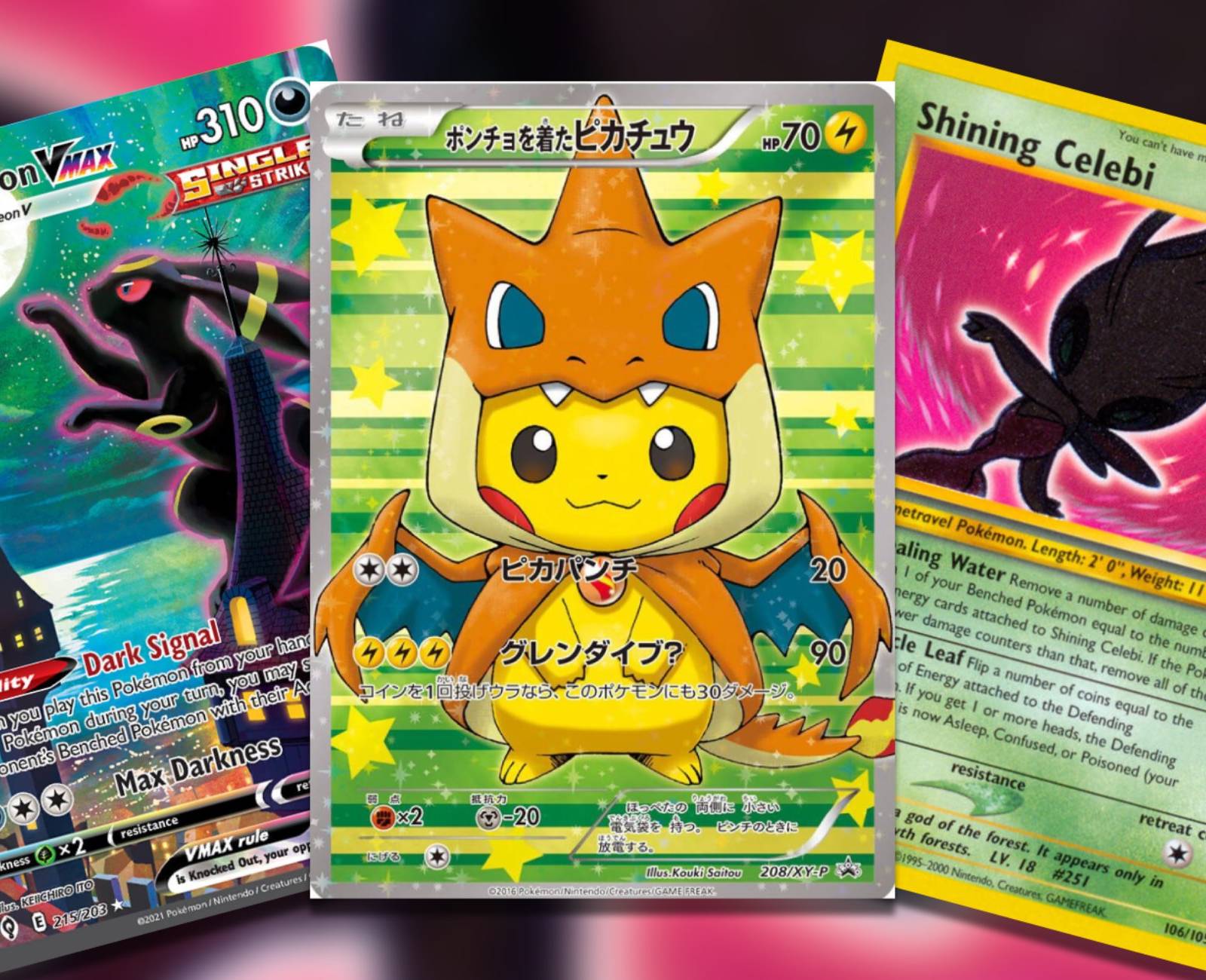
Image source: TheGamer
How to Identify Your Pokémon Card Before Checking Its Price
Identification is the most frequent point of failure for collectors. A single card name, such as "Charizard," can have dozens of different versions printed over three decades, with values ranging from $1 to $500,000. Before opening a price guide, you must pinpoint the exact printing of your card.
Identify the Set Symbol and Number
Every Pokémon card features a collector number and a set symbol, usually located in the bottom right or left corner. For example, a card marked "140/202" with a sword-and-shield icon belongs to the Sword & Shield base set. If a card has no set symbol but features the original 151 Pokémon, it is likely from the 1999 Base Set. According to expert valuation guides , matching the set symbol is the only way to ensure you aren't looking at a reprint with significantly lower value.
Spotting 1st Edition and Shadowless Variants
For vintage cards, specifically the original Base Set, three distinct versions exist that drastically alter the price:
- 1st Edition: Features a small "Edition 1" stamp to the left of the character art. These are among the most valuable cards in the hobby.
- Shadowless: These cards lack the 1st Edition stamp but also lack the drop-shadow on the right side of the character art frame. They were the second print run and carry a significant premium.
- Unlimited: The most common version, featuring a drop-shadow and no 1st Edition stamp.
Check for Rarity Indicators
Look for the small geometric shape near the card number. A Circle denotes a Common card, a Diamond is Uncommon, and a Star indicates a Rare. Modern sets have expanded this with "Holo Rare," "Ultra Rare," and "Secret Rare" (where the card number exceeds the set total, e.g., 203/202). Identifying these markers helps you understand if you are holding a bulk card or a high-value hit.
Which Pokémon Card Price Guide Should You Use?
Not all price guides are created equal. The "Market Price" you see on one site might be based on different data than another. Choosing the right tool depends on the age and condition of your collection.
| Tool Name | Best For | Primary Data Source | Update Frequency |
|---|---|---|---|
| TCGplayer | Modern & Playable Cards | Direct Marketplace Sales | Real-time |
| eBay Sold Listings | Vintage & Rare Raw Cards | Realized Auction Prices | Instant (upon sale) |
| PriceCharting | Graded (PSA/BGS) Assets | Aggregated eBay/Auction Data | Daily |
| Pokemon Wizard | Market Trends & Indices | Multi-platform Aggregation | Hourly |
TCGplayer for Modern Cards
TCGplayer is widely regarded as the top choice for cards currently in the "Standard" or "Expanded" tournament formats. Because thousands of transactions occur daily, the "Market Price" reflects high liquidity. However, for cards older than five years, TCGplayer data can become less reliable due to lower sales volume and a lack of photos for individual listings.
eBay Sold Listings for Vintage Cards
When valuing a 1999 Charizard or a 2005 Gold Star card, eBay's "Sold" filter is your most powerful tool. Unlike TCGplayer, eBay listings include actual photos of the card being sold. This allows you to compare the condition of your card to one that actually sold for a specific price. Always ignore "Active" listings; anyone can ask for $10,000, but only the "Sold" price represents what a buyer was willing to pay.
PriceCharting for Graded Assets
If your card is in a plastic slab from PSA, BGS, or CGC, PriceCharting is a top-tier resource. It uses proprietary technology to monitor every eBay sale, filtering out "junk" listings and recording the specific grade to determine a card's value over time. This is essential for investors tracking the performance of high-end collectibles.
How to Determine the Condition of Your Cards
Condition is the single most important factor in determining a Pokémon card's price. A card that is worth $1,000 in perfect condition might only be worth $50 if it has a crease or significant wear. The industry uses a standardized tier system to categorize condition.
- Near Mint (NM): The card looks nearly fresh from the pack. It may have very minor "whitening" (small white specks on the blue back edges) or a single microscopic scratch, but it appears perfect to the naked eye.
- Lightly Played (LP): Shows minor wear, such as multiple white chips on the edges or faint surface scratches. This is the most common condition for cards that were kept in binders but not played in games.
- Moderately Played (MP): Visible wear is present. You might see "silvering" on the front edges, light creasing that doesn't break the paper, or significant whitening on the back.
- Heavily Played (HP) / Damaged: The card has major flaws, such as deep creases, water damage, ink marks, or peeling corners. These cards typically sell for 10% to 25% of the Near Mint price.
According to PokeDATA , even a single scratch on a holographic surface can drop the value of a high-end card by 50% or more. If you are unsure, it is safer to value your card as "Lightly Played" to avoid disappointment when selling.
How to Avoid the Low Volume Data Trap on Price Guides
One of the most common mistakes beginners make is trusting a "Market Price" that is based on insufficient data. This is known as the Low Volume Data Trap. If a rare promotional card has only two recorded sales in the last 12 months, a single outlier sale can skew the average significantly.
Checking Sales Volume
Before accepting a price guide's value, check how many times the card sells per month. If the volume is low (e.g., fewer than 5 sales a month), the "Market Price" is merely a benchmark, not a guarantee. In these cases, you should look at the "Lowest Listing" currently available on marketplaces. If the Market Price says $100, but there are ten people selling the card for $80, the true value is $80.
Market Price vs. Lowest Listing
Market Price is a historical look at what has happened. Lowest Listing is a real-time look at your competition. To sell a card quickly, you typically need to match or slightly undercut the lowest listing from a reputable seller. As noted in community discussions , relying solely on historical averages during a market downturn can lead to overpriced listings that never sell.
The Math Behind Buying Singles Versus Sealed Booster Boxes
Many collectors wonder if it is more cost-effective to "pull" a card from a pack or buy it directly. The data is overwhelmingly clear: buying singles is almost always the more efficient path to building a high-value collection.
Understanding Pull Rates
On average, the statistical rate of pulling an "Ultra Rare" card (such as a Pokémon ex or Full Art) is approximately 1 in 6 booster packs. However, pulling a specific "chase card"—like a Special Illustration Rare Charizard—can have odds as low as 1 in 800 packs. At $5 per pack, you could theoretically spend $4,000 trying to find a card that costs $200 on the secondary market.
Cost of Booster Box / Expected Number of "Hits" = Price per Hit.
If a box costs $120 and contains 6 Ultra Rares, you are paying $20 per "hit." If those hits are only worth $5 each, you have lost $90 in value.
Buying sealed products should be viewed as an entertainment expense or a long-term investment. If your goal is to own specific high-value cards, purchasing them directly from a price guide-verified seller is a significant advancement in financial efficiency.
How Format Rotation Affects the Price of Your Collection
The Pokémon TCG is a living game with a "Standard" format that rotates every year. When cards rotate out of Standard, they can no longer be used in most official tournaments. This creates a predictable price cycle that savvy collectors can use to their advantage.
The Standard to Expanded Drop
Cards that are powerful in the competitive game often command high prices due to demand from players. When these cards rotate, that demand vanishes overnight. Prices typically drop by 30% to 70% within weeks of rotation. For example, a card that was a "staple" at $30 may fall to $5 once it is only legal in the "Expanded" or "Legacy" formats.
Rotation Arbitrage
If you are a collector who doesn't play competitively, the best time to buy "playable" cards is immediately after they rotate. This allows you to acquire high-rarity versions of iconic Pokémon at a fraction of their peak price. Conversely, if you own expensive cards that are only valuable because they are good in the game, you should sell them 2-3 months before the scheduled rotation to maximize your return.
Tracking the Pokémon TCG Market Index
Just like the stock market, the Pokémon TCG has overall market trends. Sometimes the entire hobby is "up," and other times it enters a cooling period. Tools like Pokemon Wizard provide a market index that tracks the top 100 most valuable cards to show if the hobby is gaining or losing value as a whole.
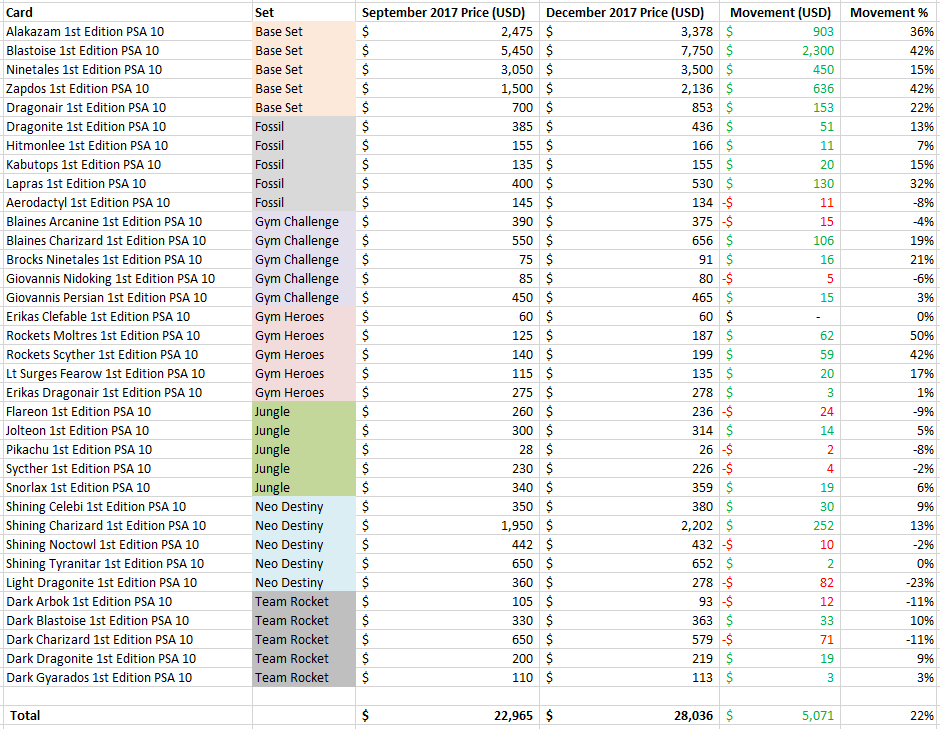
Image source: Elite Fourum
Investment vs. Speculation
It is important to distinguish between these two categories. Investment typically involves cards with a fixed, low supply, such as 1st Edition Base Set cards or limited trophy cards (under 1,000 copies). Speculation involves modern cards with high print runs. While a modern card might spike in price due to "hype," its long-term value is often capped by the massive amount of supply held by collectors and investors.
"The most successful collectors focus on cards with historical significance and verified scarcity rather than chasing the latest viral trend."
Key Takeaways for Accurate Valuation
- Identify the Set First: Use the symbol and collector number to ensure you are looking at the correct printing.
- Match the Tool to the Card: Use TCGplayer for modern, eBay Sold for vintage, and PriceCharting for graded.
- Condition is Everything: A Near Mint card can be worth 10x more than a Heavily Played version of the same card.
- Ignore Asking Prices: Only "Sold" listings represent the true market value of a collectible.
- Watch the Volume: Be cautious of high prices on cards that rarely sell; they may be outliers.
- Buy Singles for Value: It is almost always cheaper to buy the card you want than to try and pull it from packs.
- Time the Rotation: Buy competitive cards after they rotate out of Standard for the best possible price.
Start by organizing your collection by set and condition before checking prices to save time and ensure accuracy.
Frequently Asked Questions
What is the most accurate Pokémon card price guide?
There is no single "perfect" guide, as accuracy depends on the card type. TCGplayer ranks among the top for modern cards due to its high transaction volume. For vintage cards, eBay Sold listings are widely regarded as the most accurate because they show what buyers actually paid for specific cards in specific conditions. For graded cards, PriceCharting is a top-tier choice for aggregated data.
How much does PSA grading increase a card's value?
Grading can increase a card's value by 2x to 10x, but only if it receives a high grade (PSA 9 or 10). However, grading costs money (often $15-$50 per card) and takes time. If a card is not in Near Mint condition, grading it may actually result in a net loss. Always use a price guide to check the "Raw" vs "Graded" price gap before sending cards to a grading service.
Are Japanese Pokémon cards worth more than English ones?
Generally, English cards have a higher market value due to a larger global collector base. However, there are exceptions. Certain Japanese-exclusive promotional cards or high-end "Full Art Trainer" cards can be significantly more expensive than their English counterparts. Always check specific Japanese price guides or eBay sold listings for these unique items.
Why is my card's price different on every website?
Prices vary because different sites use different data points. TCGplayer uses a "Market Price" (average of recent sales), while a seller on eBay might have a "Buy It Now" price that is much higher. Additionally, some guides include shipping costs in their totals while others do not. Always look for the "Sold" or "Realized" price to find the most realistic value.
How do I know if my Pokémon card is a fake?
Common signs of fakes include a lack of texture on modern "Full Art" cards, incorrect fonts, spelling errors, and a "light test" failure (where a bright light shines through the card too easily). Authentic Pokémon cards have a specific black layer of ink in the middle of the cardstock that prevents light from passing through. If the price seems too good to be true, the card is likely a counterfeit.