Home
How to Master Stardew Valley Using Top-Tier Strategy and Gameplay Tips
Why Your Strategy Needs to Change for the 1.6 Update
Stardew Valley has undergone a significant advancement with the release of the 1.6 update, altering long-standing early-game priorities and late-game optimization. While the core loop of farming, mining, and socializing remains, the introduction of new farm types, mastery systems, and environmental changes means that legacy guides may no longer provide the most effective path to success. As of 2026, players are finding that the "meta" has shifted toward animal husbandry and specialized foraging earlier than in previous versions.
The 1.6 update isn't just a content patch; it is a notably innovative overhaul of how players interact with the world. From the new Meadowlands farm to the complex Mastery system, the game now offers deeper layers of strategy. According to the Stardew Valley Forums , these changes have made the first year more dynamic, allowing for multiple viable paths to the 1,000,000g milestone. Transitioning from "just surviving" to "optimizing your farm" requires a firm grasp of these new mechanics.
Whether you are a returning veteran or a new resident of Pelican Town, understanding the nuances of the current version is essential. This guide focuses on evidence-based strategies that prioritize efficiency without sacrificing the charm that makes the game a popular choice for millions. We will explore how to navigate the early-game bottlenecks and leverage the new 1.6 features to build a thriving agricultural empire.
Which Farm Map Should You Choose for Your Playstyle?
Choosing your farm map is the most consequential decision you will make in Stardew Valley. Each map offers a distinct set of advantages and challenges that will dictate your daily routine for years to come. While the Standard Farm remains a strong contender for those who want maximum tillable space, specialized maps offer unique perks that can significantly accelerate your progress in specific areas.
The Meadowlands Advantage
Introduced in the 1.6 update, the Meadowlands Farm is widely regarded as one of the strongest options for players who want to focus on animals. Unlike other maps, you start with a small coop and two chickens already on your property. Furthermore, this map features "Blue Grass," a new vegetation type that doubles the rate at which animals gain friendship. This allows you to reach high-quality artisan products like Large Eggs and Gold-star Mayonnaise much faster than on a traditional farm.
The Hardwood Bottleneck and the Forest Farm
For many veteran players, the Forest Farm stands out as a top choice due to its eight renewable Large Stumps. Hardwood is a notorious bottleneck in the mid-game, required for stable construction, farmhouse upgrades, and high-end crafting recipes like Oil Makers. By providing a consistent daily source of Hardwood, the Forest Farm allows you to bypass the need to wait for the Secret Woods to unlock. Additionally, unique weeds on this map always drop Mixed Seeds, providing a free source of crops in the early weeks.
The Beach Farm Warning
The Beach Farm is an exceptionally strong choice for aesthetics and high-tier foraging, but it comes with a major caveat: sprinklers do not work on sandy soil. There is a small 202-tile patch of dirt where sprinklers function, but the rest of the farm must be watered by hand. This makes the Beach Farm a highly impactful challenge for experienced players but potentially frustrating for beginners who want to automate their income. According to the Stardew Valley Wiki , this map is best suited for those focusing on Fish Ponds and animals rather than massive crop fields.
| Farm Type | Unique Perk | Best For | Difficulty Rating |
|---|---|---|---|
| Standard | 3,427 tillable tiles | Massive Crop Production | Easy |
| Meadowlands | Starts with Coop & Blue Grass | Animal Husbandry | Easy |
| Forest | 8 Renewable Hardwood Stumps | Crafting & Foraging | Medium |
| Beach | Supply Crates & High Forage | Fishing & Challenges | Hard |
| Four Corners | Divided quadrants | Multiplayer / Organization | Easy |
How to Survive and Thrive During Your First Week
The first seven days in Pelican Town are the most critical for setting up a successful Year 1. Your primary goals are to establish a steady income stream, upgrade your inventory space, and reach Farming Level 1 as quickly as possible. Many players make the mistake of over-clearing their land on Day 1, which wastes precious energy that could be better spent foraging or meeting villagers.
The 18-Parsnip Strategy
One of the most effective early-game tactics involves planting exactly 18 parsnips on Day 1. While the game gives you 15 seeds for free, purchasing three additional seeds from Pierre's is a wise investment. The math behind this is simple: you need to harvest 15 parsnips to reach Farming Level 1. By planting 18, you create a "safety net" against crows, which can strike as early as Day 3. Reaching Level 1 by Day 5 is essential because it unlocks the Scarecrow recipe, allowing you to protect your more expensive Spring crops like Cauliflower and Kale. This strategy is consistently ranked among the most reliable for a strong start, as noted in the IGN Stardew Valley Guide .
The Fishing Income Engine
On Day 2, you will receive a letter from Willy inviting you to the beach. Obtaining the Bamboo Pole is a major turning point. In the early game, fishing is a highly effective way to generate cash without consuming the same amount of time as mining. Dedicating Days 2 and 3 to fishing at the mountain lake (near the mines) can easily net you the 2,000g required for the first backpack upgrade by Day 4. This upgrade is a significant step forward in productivity, as it allows you to stay in the mines or forest longer without having to discard valuable items.
Pro Tip: Don't ignore the Spring Onions! Every morning, check the southeast corner of Cindersap Forest (near the sewer entrance). Spring Onions are a free, renewable energy source that can keep you productive until 2:00 AM during the first week.
What Changed in the Stardew Valley 1.6 Update?
The 1.6 update introduced several mechanics that reward long-term planning and provide new ways to customize your experience. One of the most impactful additions is the "Advanced Options" menu during character creation. Players can now toggle "Remixed" Community Center bundles, which adds variety to the items required for completion. More importantly, you can now guarantee a "Year 1 Red Cabbage" completion by ensuring the Traveling Cart carries the necessary seeds, a feature that was previously left entirely to chance.
Blue Grass and Animal Mastery
As mentioned, Blue Grass is a notable innovation in 1.6. It is not just a visual change; it provides a tangible mechanical benefit. Animals that graze on Blue Grass gain friendship at twice the normal rate. For players using the Meadowlands farm, this means your chickens will start producing Large Eggs much sooner, significantly boosting your early-game profit margins. You can also craft Blue Grass Starter later in the game after obtaining the recipe from the new Mastery Cave.
The Mastery System
Once you reach Level 10 in all five skills (Farming, Mining, Foraging, Fishing, and Combat), a new progression system unlocks. The Mastery Cave, hidden in Cindersap Forest, allows you to spend "Mastery Points" to unlock powerful new tools and abilities. For example, the Fishing Mastery grants access to the Advanced Iridium Rod, which can hold two bobbers simultaneously. This system is a significant advancement for the late-game, providing goals for players who have already completed the Community Center and reached the summit of Ginger Island.
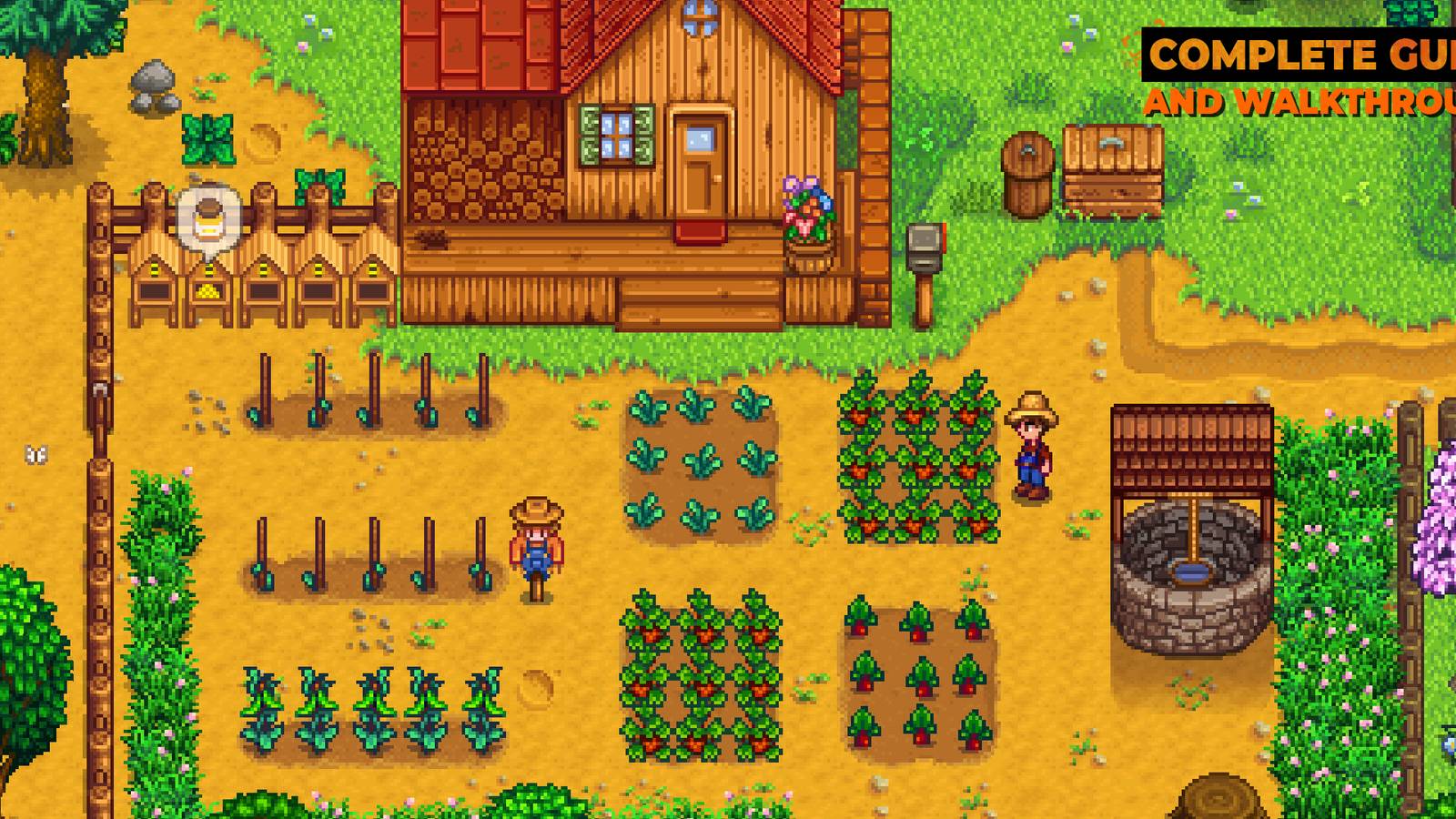
Image source: TheGamer
Advanced Tips That Even Veteran Players Often Miss
Even after hundreds of hours, Stardew Valley continues to reveal hidden mechanics and optimizations. Mastering these advanced techniques can transform a struggling farm into a highly competitive agricultural powerhouse. These tips focus on "hidden" math and UI tricks that are not explicitly explained in the game's tutorials.
The Lightning Rod Grass Hack
One of the most frustrating aspects of animal husbandry is how quickly livestock can consume your grass, leaving you with a massive bill for Hay at Marnie's shop. To solve this, place a Lightning Rod or a piece of Fence directly on top of a patch of Grass Starter. The animals cannot eat the grass tile that is occupied by the object, but the grass will continue to spread to adjacent tiles every day. This creates an "infinite feeder" system that ensures your animals always have fresh grass to eat without ever fully depleting the field. This technique is a popular choice for min-maxers looking to save thousands of gold in the first year.
Mastering Tool Charge Moves
Many players forget that upgrading tools does more than just increase their efficiency; it unlocks new "charge" patterns. By holding down the action button, you can affect multiple tiles at once:
- Copper Tools:
- Affects a 1x3 area in front of the player.
- Steel Tools:
- Affects a 1x5 area in front of the player.
- Gold Tools:
- Affects a 3x3 area centered in front of the player.
- Iridium Tools:
- Affects a massive 6x3 area, allowing for rapid clearing and watering.
How to Maximize Your Profits Without Burning Out
While earning gold is a primary objective, the most successful players find a balance between high-intensity farming and "Zen" activities that provide passive income. The 1.6 update has made the "Zen Farmer" path more viable by introducing new artisan equipment and adjusting the value of certain animal products.
The Min-Max Crop Cycle
If your goal is purely financial, the "Big Three" crops remain the most effective choices for each season. In Spring, focus on Strawberries (purchased at the Egg Festival on the 13th). In Summer, Blueberries provide a high volume of harvests that can be turned into Jelly or Wine. In Fall, Cranberries are the leading choice for raw profit per tile. However, the 1.6 update has increased the value of dehydrated fruits and mushrooms, making the Dehydrator a strong contender for mid-game processing.
The Community Center vs. JojaMart
The choice between the Community Center and the Joja Warehouse is often framed as a moral one, but it is also a strategic one. The Community Center route provides diverse rewards (seeds, machines, friendship) but can be slow due to the seasonal nature of the bundles. The Joja route allows you to unlock everything using pure gold, which can be faster for players who are exceptionally strong at generating cash early. According to the Steam Community Guide , the Joja route is often preferred for "speedruns" or specialized challenge files.
Which External Tools Help You Track Your Progress?
Because Stardew Valley has so many moving parts, many players rely on community-built tools to stay organized. These resources are highly recommended for anyone aiming for "Perfection" (100% completion).
- Stardew Valley Scheduler: A cyclic-calendar planner that helps you track birthdays, traveling cart days, and crop growth cycles to ensure you never miss a deadline.
- Stardew Dashboard: A tool that reads your save file to show exactly which museum artifacts you are missing and which Community Center items you still need to collect.
- Stardew Predictor: For players who want to know exactly what the Traveling Cart will sell or what will hatch from a Geode, this tool uses the game's RNG seed to provide accurate forecasts.
How to Play Stardew Valley on Mobile and Console
While the core gameplay is identical across platforms, the controls and UI present unique challenges for mobile and console players. Fishing, in particular, is often cited as being more difficult on touchscreens. To compensate, mobile players should consider the "Pirate" profession to increase treasure chest frequency or focus on Crab Pots and Fish Ponds, which provide steady income without the need for the fishing minigame.
As of 2026, version parity is generally maintained, but mobile players should always check for specific UI bugs, such as the character naming capitalization issue on iOS. If you are playing on a console like the Nintendo Switch, utilizing the "Zoom Out" feature in the options menu is a significant step forward in situational awareness, allowing you to see more of the mines or your farm at once.
Frequently Asked Questions
What happens if I stay out past 2:00 AM in Stardew Valley?
If you are still awake at 2:00 AM, your character will pass out. You will wake up in your bed the next morning, but you will lose 10% of your current gold (up to a maximum of 1,000g) as a "medical fee." Additionally, you will start the next day with significantly reduced energy. To avoid this, always try to be inside your farmhouse by 1:50 AM, even if you don't make it all the way to the bed.
How do I get the Red Cabbage in Year 1 for the Community Center?
Normally, Red Cabbage seeds are not sold until Year 2. However, in the 1.6 update, you can enable the "Guarantee Year 1 Completable" option in the Advanced Options menu when starting a new game. This ensures that the Traveling Cart (which appears in the forest on Fridays and Sundays) will sell the seed at least once during your first year. Check the cart every single time it appears to ensure you don't miss it.
Is the Meadowlands farm good for beginners?
Yes, the Meadowlands farm is one of the most beginner-friendly options available. Starting with a coop and two chickens provides a steady source of food and income from Day 1, which helps alleviate the early-game energy struggle. The Blue Grass also makes it much easier to keep your animals happy, which is a common point of confusion for new players who forget to pet or feed their livestock daily.
What is the most profitable crop for Spring Year 1?
Strawberries are widely considered the leading choice for Spring profit. However, because you can only buy them at the Egg Festival on the 13th, you should spend the first half of the month planting Kale or Cauliflower. Kale is excellent for leveling up your Farming skill quickly, while Cauliflower has a chance to grow into a "Giant Crop," which yields significantly more produce when harvested with an axe.
Can I move my farmhouse or other buildings later?
Yes, you can move almost any building on your farm by visiting Robin at the Carpenter's Shop. Select the "Construct Farm Buildings" menu and then click the "Move Buildings" icon. This service is free and does not take any in-game time. In the 1.6 update, you can even move your farmhouse, allowing for much more creative and efficient farm layouts as your needs evolve.
Key Takeaways for Stardew Valley Success
- Choose Meadowlands if you want an easier start with animals and the benefits of Blue Grass.
- Plant 18 Parsnips on Day 1 to guarantee Farming Level 1 and unlock Scarecrows by Day 5.
- Prioritize the Backpack upgrade (2,000g) by fishing at the mountain lake during your first week.
- Use the Grass Hack by placing Lightning Rods on grass patches to create infinite grazing for animals.
- Check the Traveling Cart every Friday and Sunday for rare Community Center items like Red Cabbage.
- Unlock the Mastery Cave in the late game to access the advanced tools introduced in the 1.6 update.
- Leverage External Tools like the Stardew Predictor to optimize your RNG-based activities.
Start your journey by focusing on the 18-parsnip goal today to ensure your farm is protected and productive from the very beginning.