Home
How to Use Tom's Guide to Wordle to Solve Today's Puzzle
Today's Wordle Answer: NIFTY
Difficulty Rating: 4.1/5 (High Complexity)
Key Hint: Today's word features two vowels and ends in a common suffix letter. It describes something particularly clever or stylish.
Maintaining a long-term Wordle streak requires more than just a broad vocabulary; it demands a tactical approach to letter elimination and an understanding of how the New York Times (NYT) editorial team selects daily solutions. As the game evolves, the strategies that worked in 2022 are often insufficient for the more complex linguistic traps set in recent months. This guide provides the data-backed insights and specific workflows necessary to navigate even the most difficult puzzles.
What Is the Wordle Hint and Answer for September 12?
Solving today's puzzle, Wordle #1,911, requires careful navigation of the "Close Cousin" trap. According to Tom's Guide daily analysis , the difficulty for September 12 ranks at a 4.1 out of 5, making it one of the more challenging entries in recent weeks. This complexity stems from the word's structure, which shares a common ending with several other five-letter words.
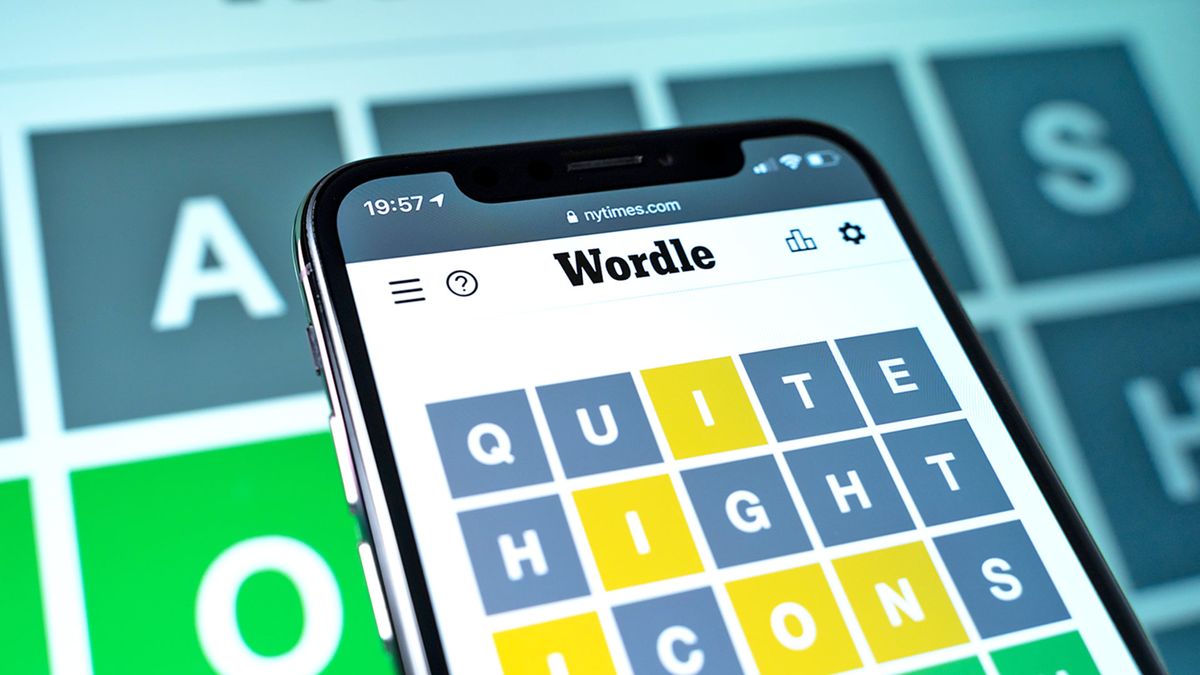
Image source: Tom's Guide
Hint 1: The Vowel Count
Today’s word contains two vowels. Identifying these early is essential, as they are positioned in the second and fourth slots, providing the skeletal structure for the consonants to fill in. If you are using a vowel-heavy opener like ADIEU, you likely found the 'I' early but may have struggled with the second vowel.
Hint 2: The Starting Letter
The word begins with the letter N . Interestingly, data suggests that N is a relatively rare starting letter in the Wordle dictionary, ranking 18th overall. Only 37 solutions in the original 2,309-word set begin with this letter, which often catches players off guard who prefer starting with S, T, or C.
Hint 3: The Definition
In a literal sense, today's word is an adjective used to describe something that is particularly good, clever, or skillful. It is often used informally to praise a stylish piece of clothing or an efficient solution to a problem. Think of it as a synonym for "spiffy" or "handy."
Why was NIFTY so difficult? It falls into the "Close Cousin" trap, specifically the _I_TY pattern. Players who found the 'I', 'T', and 'Y' early might have guessed FIFTY, MINTY, or NITTY before arriving at the correct solution. This is why elimination strategies are vital for protecting your streak when you have only two turns remaining.
How to Use the 3-Word Strategy to Solve Any Wordle
One of the most effective methods for consistent success is the "3-Word Strategy." While many players attempt to solve the puzzle in three guesses, the mathematically superior approach for streak preservation is to use the first three turns to eliminate as many unique letters as possible. By turn four, you will have tested 15 different letters, which covers more than half of the alphabet and almost all high-frequency characters.
This opener tests three vowels (A, I, E) and two of the most common consonants (R, S). It is widely considered one of the top starting words for general play.
Regardless of the results from ARISE, your second word should be CLOUT. This tests the remaining vowels (O, U) and three vital consonants (C, L, T).
The final piece of the puzzle tests the 'Y' (the second most common ending letter) and rare but disruptive consonants like M, P, and H.
The logic of maximum elimination is simple: by the time you reach turn four, you have either identified the majority of the letters or narrowed the possibilities down to a handful of words. According to WordTips strategy analysis , this workflow virtually guarantees a solve in 4 or 5 moves, which is the safest way to maintain a multi-hundred-day streak.
When to Abandon the Strategy
You should only pivot away from this 3-word sequence if you land three or more green letters on your first or second guess. If ARISE gives you a green 'A', 'R', and 'E', it is often better to begin guessing specific words rather than continuing with CLOUT. However, if you only have yellow letters or just one green, sticking to the elimination plan is a top-tier choice for long-term reliability.
Which Letters Appear Most Often in Wordle Solutions?
Understanding the mathematical distribution of letters within the 2,309-word solution set provides a significant advantage. Not all letters are created equal, and their position within the five-letter grid matters just as much as their frequency.
| Letter Position | Most Common Letter | Frequency Insight |
|---|---|---|
| Position 1 (Start) | S | Starts over 50% of the words it appears in. |
| Position 2 | A | The most common vowel for the second slot. |
| Position 3 | A / I | High density of vowels in the middle. |
| Position 4 | E / T | Commonly part of suffixes like -ER or -ET. |
| Position 5 (End) | E | The #1 ending letter by a wide margin. |
Based on Tom's Guide pattern research , the letter E is the most common overall, but its dominance is concentrated at the end of words. Conversely, the letter Y is the second most common ending letter, appearing at the end of 364 solutions. This makes words like NIFTY or MINTY statistically likely candidates when you know a word ends in a vowel-sound consonant.
The Vowel Density Trap
Standard strategies often fail when faced with "vowel-heavy" words. A notable example is GEODE , which features a 60% vowel density. In these cases, consonant-clearing words like CLOUT or NYMPH provide very little information. When you suspect a vowel trap, it is often better to test for repeated vowels (like the double 'E' in GEODE or EERIE) sooner rather than later.
How the New York Times Is Changing the Wordle Dictionary
Since acquiring Wordle from creator Josh Wardle, the New York Times has subtly shifted the game's editorial direction. While the original game relied on a static list of 2,309 words, the NYT has begun introducing new words and re-using past answers to keep the game fresh and extend its lifespan.
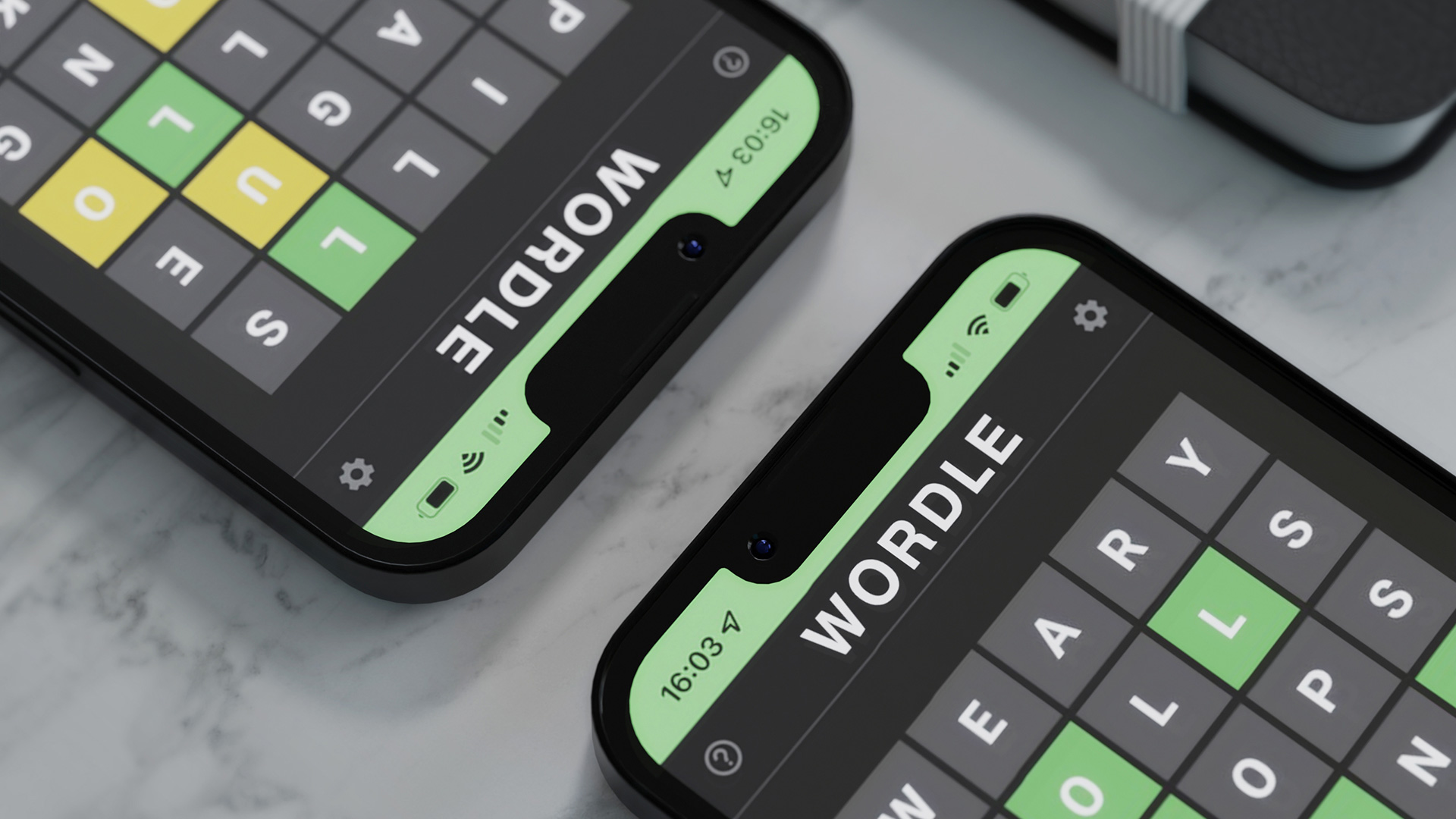
Image source: Tom's Guide
One significant advancement in the game's difficulty is the inclusion of informal or archaic words that were not in the original code. Words like PSHAW (an archaic exclamation) and NIFTY (informal) represent a departure from the more traditional vocabulary used in the game's early days. This shift makes the game harder for players who rely on "standard" word lists, as the pool of possibilities is now more fluid.
Furthermore, the NYT has confirmed that they have begun re-using past answers. Previously, players could use a "past answer list" to eliminate possibilities, but that strategy is no longer foolproof. If a word like "SLATE" was the answer a year ago, it could theoretically appear again, though the editors typically space these out significantly.
How to Avoid the Most Common Wordle Streak Killers
The most common reason for a lost streak isn't a lack of vocabulary; it's falling into a logical loop. The "Close Cousin" loop occurs when you have four letters correct (e.g., _IGHT) and there are more than four possible starting letters (FIGHT, LIGHT, MIGHT, NIGHT, RIGHT, SIGHT, TIGHT).
- Hard Mode Survival
- In Hard Mode, you are forced to use identified letters. To survive a loop, you must identify the most likely consonants and pray. However, in Easy Mode, you can use a "burner word" to test multiple consonants at once (e.g., testing F, L, and M in one go).
- The Repeated Letter Warning
- Approximately 748 solutions in the Wordle dictionary contain at least one repeated letter. This is the single most common reason for a failed streak, as many players assume every letter must be unique until their final guess.
- Rare Starting Pairs
- Words like PSHAW or GNASH use rare consonant clusters (PS, GN) that defy standard frequency analysis. If your usual openers yield nothing, start looking for these "rule-breaker" combinations.
According to TechRadar's Wordle commentary , the key to avoiding these traps is to remain conservative. If you are on guess four and realize you are in a "cousin" trap, do not guess the first word that comes to mind. Instead, take a moment to list every possible word and use your next guess to eliminate as many of those options as possible.
What Were the Most Recent Wordle Answers?
Tracking recent answers can help you spot patterns in the NYT's current editorial "mood." Sometimes the editors go through a week of vowel-heavy words, followed by a week of repeated letters.
| Date | Wordle Answer | Difficulty (Out of 5) |
|---|---|---|
| Sept 11 | STARE | 3.2 |
| Sept 10 | FOUND | 3.5 |
| Sept 9 | GEODE | 4.3 |
| Sept 8 | BRUSH | 3.1 |
| Sept 7 | PSHAW | 4.7 |
Looking at this data, we can see that the difficulty fluctuates wildly. A word like PSHAW can devastate streaks, while a common word like STARE allows for a quick recovery. By reviewing the last 10 answers, you can better prepare for the "vibe" of the current week's puzzles.
Frequently Asked Questions
What is a top-rated first word for Wordle?
Can Wordle answers be plural?
Has Wordle ever used the same word twice?
What is the 3-word Wordle trick?
Why did the Wordle answer change for me today?
Final Thoughts for Wordle Success
Mastering Wordle is a balance of linguistic intuition and mathematical probability. To keep your streak alive through 2026 and beyond, keep these key takeaways in mind:
- Prioritize the Ending: Always check for 'E' or 'Y' in the fifth position by turn three.
- Don't Fear Repeats: Nearly 1/3 of all answers contain a double letter; don't rule them out.
- Use the 3-Word Workflow: If you are stuck, use ARISE-CLOUT-NYMPH to clear the board.
- Watch for Vowel Traps: Be wary of words like GEODE that defy consonant-heavy strategies.
- Identify the "Cousins": Recognize patterns like _IGHT early to avoid guess-looping.
- Stay Updated: The NYT editorial shift means informal and archaic words are now common.
Start your next game with a high-frequency consonant word like STARE to maximize your information gain from the very first turn.