Home
What Are the Best SNES RPG Games and How Do They Hold Up Today?
The Super Nintendo Entertainment System (SNES) era, spanning roughly 1990 to 1996, is widely regarded as the "Golden Age" of 16-bit role-playing games. Titles like Chrono Trigger , Final Fantasy VI , and EarthBound set high standards for narrative and mechanics that many modern titles still strive to reach. For those seeking technical depth, Star Ocean pushed the hardware to its limits, while Terranigma remains a top-tier action-RPG choice for those willing to explore the import scene.
The Golden Age of 16-Bit Role-Playing Games
The transition from 8-bit to 16-bit hardware was more than just a graphical upgrade; it was a fundamental shift in how stories were told in digital spaces. The SNES, with its 128KB of RAM and specialized Mode 7 scaling, allowed developers to create vast, pseudo-3D worlds that felt alive. During this period, companies like Square and Enix dominated the landscape, producing a library of games that defined the JRPG genre for decades.
As of 2026, these games have transitioned from nostalgic relics to essential curriculum for any serious gaming enthusiast. The appeal lies in their economy of design. Without the bloat of modern open-world mechanics, these titles focused on tight pacing, memorable character arcs, and innovative combat systems. According to Infinity Retro , the SNES library remains a primary touchstone for the "retro-revival" movement in indie development today.
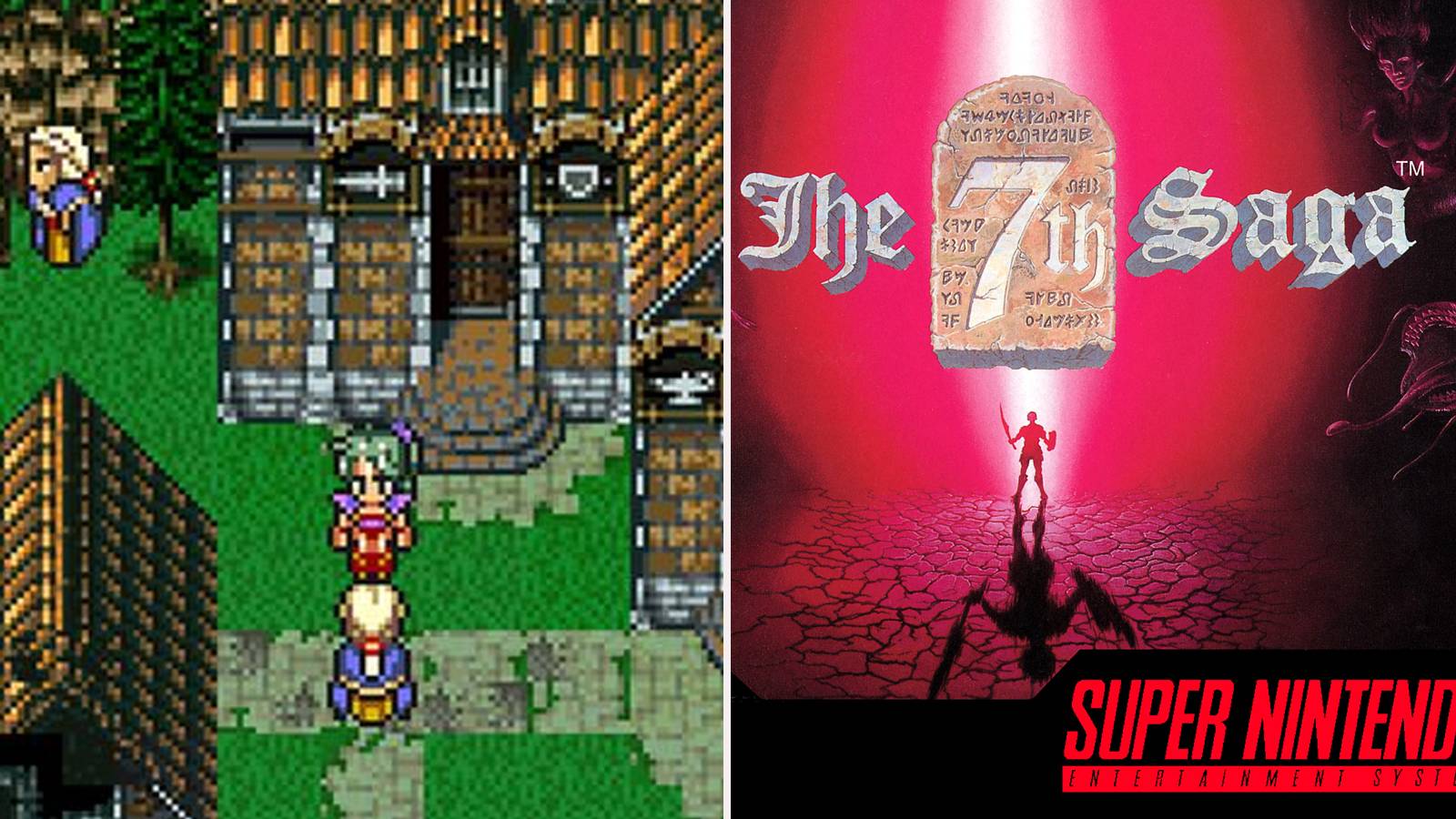
Image source: TheGamer
The Heavy Hitters That Every RPG Fan Must Play
Why Chrono Trigger Remains a Gold Standard
Few games achieve the near-universal acclaim of Chrono Trigger . A collaboration between the creators of Final Fantasy , Dragon Quest , and legendary artist Akira Toriyama, it introduced mechanics that were notably innovative for 1995. The lack of random encounters and the introduction of "Tech" combos between characters made combat feel dynamic and integrated into the exploration.
Community Wisdom: One of the most famous hidden mechanics is the "Future Chest" scaling. If you find a sealed chest in the Middle Ages (600 AD), you should interact with it but choose not to open it. When you return to that same chest in the Present (1000 AD), the contents will have upgraded to a significantly stronger version of the item. This type of environmental storytelling and mechanical depth is why the game consistently ranks among the top RPGs of all time.
Final Fantasy VI and the Peak of 2D Storytelling
Originally released in North America as Final Fantasy III , this title moved the series away from traditional high fantasy into a "magitek" steampunk setting. It features one of the most celebrated ensemble casts in the genre, with no single character serving as the sole protagonist. The mid-game shift into the "World of Ruin" remains a significant step forward in how games handle narrative stakes.
Technical Pitfall: Modern players using original hardware should be aware of the "Evade Bug." In the initial SNES release, the physical Evade stat is completely non-functional due to a coding error. The game accidentally uses the Magic Evade stat to calculate dodges for both physical and magical attacks. Consequently, equipment that boosts physical evasion is effectively useless unless it also boosts Magic Evade. Expert players often recommend fan-made patches that resolve this oversight for a more balanced experience.
EarthBound and the Charm of Modern-Day Settings
While most RPGs of the era focused on swords and sorcery, EarthBound (Mother 2 in Japan) took place in a satirical version of 1990s America. You play as Ness, a boy with psychic powers, fighting off an alien invasion with baseball bats and yo-yos. Its "rolling HP" meter—where health ticks down slowly after a mortal blow, allowing you to heal before the character faints—is a highly impactful mechanic that adds tension to every encounter.
Secret of Mana and the Innovation of Real-Time Co-op
Secret of Mana stands out for its Ring Command menu system and its support for three-player local cooperative play. Unlike turn-based titles, this is an action-RPG where positioning and timing are crucial. The lush, vibrant colors and the ethereal soundtrack by Hiroki Kikuta create an atmosphere that few alternatives compare to, even on modern hardware.
Hidden Gems and Technical Marvels You Might Have Missed
How Star Ocean Pushed the SNES Hardware to Its Limit
Released late in the console's life cycle, Star Ocean is a technical marvel. It utilized the SDD1 chip to decompress high-quality graphics in real-time, allowing for a 48-megabit cartridge—one of the largest ever produced for the system. According to technical analysis from Racketboy , the game even featured digitized voice acting during combat, a feat that seemed impossible for 16-bit hardware at the time.
Lufia II and the Perfection of the Dungeon Puzzler
While the first Lufia was a standard JRPG, Lufia II: Rise of the Sinistrals introduced Zelda-style puzzles into its dungeons. Players use tools like arrows, bombs, and hookshots to navigate complex environments. It also features the "Ancient Cave," a 99-floor procedurally generated roguelike mode that offers hundreds of hours of gameplay beyond the main story.
Super Ninja Boy and the Weird World of Action-Beat 'em up RPGs
For those who find traditional turn-based combat repetitive, Super Ninja Boy offers a unique hybrid. While exploration and towns are handled in a standard top-down RPG view, random encounters transition into a side-scrolling beat 'em up. It is a quirky, often overlooked title that supports two-player co-op throughout the entire adventure.
The Super Famicom Import Scene and Fan-Translated Masterpieces
Many of the most ambitious SNES RPGs never left Japan due to high localization costs or the impending release of the Nintendo 64. Today, the Super Famicom import scene is a treasure trove for fans, especially with the availability of high-quality fan translations.
| Game Title | Genre | Key Feature | Modern Status |
|---|---|---|---|
| Terranigma | Action RPG | World Restoration Plot | PAL/Japan Only |
| Fire Emblem: Genealogy | Strategy RPG | Generational Love System | Japan Only (NSO) |
| Bahamut Lagoon | Tactical RPG | Dragon Raising/Evolution | Japan Only |
| Final Fantasy V | Turn-Based | Deep Job System | Pixel Remaster |
Why Terranigma Ranks Among the Top RPGs Never Released in North America
Terranigma is the final entry in the unofficial "Soul Blazer Trilogy" (alongside Soul Blazer and Illusion of Gaia ). It follows a protagonist named Ark as he resurrects the continents of Earth and oversees the evolution of life. Despite being released in English for PAL regions (Europe and Australia), it never reached North America. Its combat is fluid, and its story is surprisingly philosophical, dealing with the cyclical nature of life and death.
Fire Emblem: Genealogy of the Holy War and the Birth of Modern Strategy
This title introduced the "Love System," where characters could marry and have children who would inherit their stats and skills for the second half of the game. It features massive maps that simulate actual warfare rather than small skirmishes. While it remains a Japan-exclusive, it is widely regarded as a foundational entry for the modern Fire Emblem series.
Which SNES RPG Should You Play Based on Your Tastes?
If You Liked Super Mario RPG, Try These Lighthearted Adventures
Super Mario RPG: Legend of the Seven Stars is a popular choice for beginners due to its humor and timed-hit combat. If you enjoyed that vibe, Robotrek is a strong contender. Developed by Quintet, it allows you to build and customize three different robots, choosing their colors, weapons, and special moves. It shares the same whimsical DNA as Mario's first role-playing outing.
If You Crave Deep Job Systems and Customization
For players who love "breaking" a game through clever character builds, Final Fantasy V is essential. While its plot is lighter than FFVI , its Job System—allowing characters to master classes like Ninja or Blue Mage and carry those skills over to other roles—offers a level of depth that few games of the era could match. Alternatively, Tactics Ogre: Let Us Cling Together provides a much darker, politically charged experience with branching paths and permanent character death.
Technical Secrets and Common Pitfalls for Modern Players
How to Spot a Failing PPU Chip on Original Hardware
If you are playing on original SNES hardware, you may eventually encounter graphical glitches that aren't related to a dirty cartridge. The SNES uses two Picture Processing Units (PPU1 and PPU2). When these begin to fail, you might see "jailbars" on the screen, flickering sprites, or specific colors missing from the background. Community experts often suggest using a Burn-In Test Diagnostic Cartridge to run a full hardware check. If the PPU is failing, the console may require a chip transplant from a donor board, as these parts are no longer manufactured.
Top-Rated Fan-Patches for an Authentic Experience
For the best experience with classic titles, the community has developed several "restoration" patches. The Namingway Edition for Final Fantasy IV (originally released as FFII in the US) restores the original Japanese difficulty, fixes translation errors, and brings back items that were cut for the Western release. Similarly, the Revised Old Style Edition for Final Fantasy VI is highly recommended for fixing the aforementioned Evade Bug and other mechanical inconsistencies.
"The SNES RPG community is one of the most dedicated in gaming history. From full English translations of obscure Super Famicom titles to bug-fix patches for the classics, the work done by fans ensures these games remain playable and accurate for future generations."
How to Play These Classics Legally in 2026
As of late 2026, the most accessible way to play these games is through the Nintendo Switch Online (NSO) service. The library has expanded to include not just the hits, but also several Super Famicom titles that have been officially translated for the first time. However, NSO is a subscription service; you do not own the games, and they can be removed at any time.
For collectors, the market for physical cartridges has become increasingly expensive. According to recent data from eStarland , loose copies of EarthBound or Chrono Trigger can easily exceed several hundred dollars. If you choose to buy original cartridges, always verify the internal PCB (Printed Circuit Board) to ensure you aren't purchasing a "repro" (reproduction) cart marketed as an original.
Frequently Asked Questions
What is the rarest SNES RPG to find today?
While games like EarthBound are expensive, they aren't necessarily "rare" in terms of production numbers. Truly rare titles include niche releases like Metal Max Returns or the English version of Pocky & Rocky with Becky . For North American collectors, a complete-in-box copy of Chrono Trigger or Final Fantasy III is considered a centerpiece of any collection due to their high market value and historical significance.
Are there any 2-player RPGs on the SNES?
Yes, though they are uncommon. Secret of Mana is the most famous, supporting up to three players simultaneously. Super Ninja Boy is another excellent choice, blending RPG elements with two-player beat 'em up action. Additionally, Final Fantasy VI allows a second player to control specific characters during combat if configured in the settings menu, though exploration remains single-player.
Which SNES RPG has the longest play time?
For a standard playthrough, Dragon Quest VI and Final Fantasy VI are among the longest, typically taking 40 to 60 hours. However, if you include completionist goals, Lufia II can take much longer due to the Ancient Cave roguelike mode. Tactics Ogre also offers immense longevity through its multiple branching narrative paths and deep tactical customization.
Can I play Japanese Super Famicom games on a US SNES?
Yes, the region locking on the SNES is purely physical. Inside the cartridge slot of a North American SNES, there are two small plastic tabs that prevent Japanese cartridges from fitting. By removing these tabs with a pair of pliers or using a simple pass-through adapter, you can play any Super Famicom game on a US console. The hardware itself is compatible with both regions' signals.
What is a top-rated SNES RPG for beginners?
Super Mario RPG: Legend of the Seven Stars is widely considered one of the best entry points. It features familiar characters, a humorous story, and interactive combat that keeps players engaged. Final Fantasy IV (released as FFII in the US) is also a great choice for those who want a more traditional fantasy story without the complex systems found in later entries.
Final Thoughts
The SNES RPG library represents a unique moment in history where technical limitations forced developers to prioritize creativity and narrative depth. Whether you are revisiting a classic or discovering a fan-translated gem for the first time, these games offer an experience that remains remarkably relevant.
- Start with the essentials like Chrono Trigger and Final Fantasy VI to understand the foundation of the genre.
- Be aware of technical bugs such as the FFVI Evade Bug when playing on original hardware.
- Explore the import scene for titles like Terranigma and Fire Emblem: Genealogy of the Holy War .
- Use fan-translation patches to experience Super Famicom exclusives with modern quality-of-life improvements.
- Check your hardware health using a diagnostic cartridge if you notice graphical glitches on an original console.
- Consider modern platforms like Nintendo Switch Online for a legal and convenient way to play.
Pick one title from this list and commit to seeing the credits roll—you will likely find that these 16-bit adventures still have plenty of magic left to share.