Home
What to Sell in Stardew Valley to Make Millions Without Regretting It Later
Entering the world of Pelican Town can be overwhelming for new farmers. With a limited backpack and a growing list of expenses—from tool upgrades to new seeds—the temptation to dump everything into the shipping bin is high. However, Stardew Valley is a game that rewards patience and strategic processing. Selling the wrong items early on can stall your progress for an entire in-game year, while knowing exactly what to sell can catapult you into the mid-game with millions in the bank.
How Processing Goods Before Selling Maximizes Your Farm Profits
The most significant economic shift in Stardew Valley occurs when you stop being a raw producer and start being an artisan. Selling a raw Blueberry might net you a small profit, but turning that Blueberry into Jam or Wine transforms your farm's economy. This is widely considered one of the most effective ways to scale your wealth.
The Artisan Multiplier Effect
Most raw items in the game have a "processed" counterpart. For instance, a standard egg sells for a mere 50g. By placing that egg into a Mayonnaise Machine, you produce Mayonnaise worth 190g. This nearly quadruples the value of the item for the small cost of a few in-game hours. According to TheGamer , failing to process animal products is one of the most common mistakes players make when trying to build their fortune.
This principle applies to almost every category:
- Milk: Turn into Cheese using a Cheese Press.
- Fruit: Turn into Wine (Keg) or Jelly (Preserves Jar).
- Vegetables: Turn into Juice (Keg) or Pickles (Preserves Jar).
- Fish (1.6 Update): Turn into Smoked Fish using a Fish Smoker.
The Power of the Artisan Profession
Once you reach Level 10 in Farming, you are presented with a choice of professions. The Artisan Profession is a top-tier choice for players focused on wealth. It provides a 40% value increase to all Artisan Goods. Under this profession, a bottle of Iridium-quality Ancient Fruit Wine—already a high-value item—becomes a massive source of income. As noted by Screenrant , this profession bonus is essential for late-game millionaires.
Items You Should Never Sell in Stardew Valley to Avoid Late Game Regret
While the goal is to make money, some items are worth far more in your chests than in the shipping bin. Selling these items early for a few hundred gold can cost you thousands later when you are forced to buy them back from NPCs at a premium.
Essential Resources
Wood, Stone, Hardwood, Coal, Fiber, and Clay should be hoarded. You will need thousands of these for farm buildings and crafting machines. Buying Wood from Robin in Year 2 is significantly more expensive than in Year 1.
The "First One" Rule
Never sell an artifact or mineral until you have donated the first one to Gunther at the Museum. Unlocking rewards and the Sewer key depends on these donations.
Community Center Needs
Before shipping any unique crop or forage item, check the Golden Scrolls in the Community Center. Missing a single seasonal item can delay your progress by a full year.
According to veteran player discussions on Reddit , items like Coal and Iron Ore are frequently sold by beginners who later regret it when they need to craft dozens of Kegs or Bee Houses. Keep at least two full stacks of basic building materials before you even consider selling the surplus.
Effective Strategies for Making Money Fast in Spring Year 1
The first 28 days are a race against time. You need gold for the 2,000g backpack upgrade, the Fiberglass Rod, and Strawberry seeds at the Egg Festival. Here is how to generate liquidity without selling your future resources.
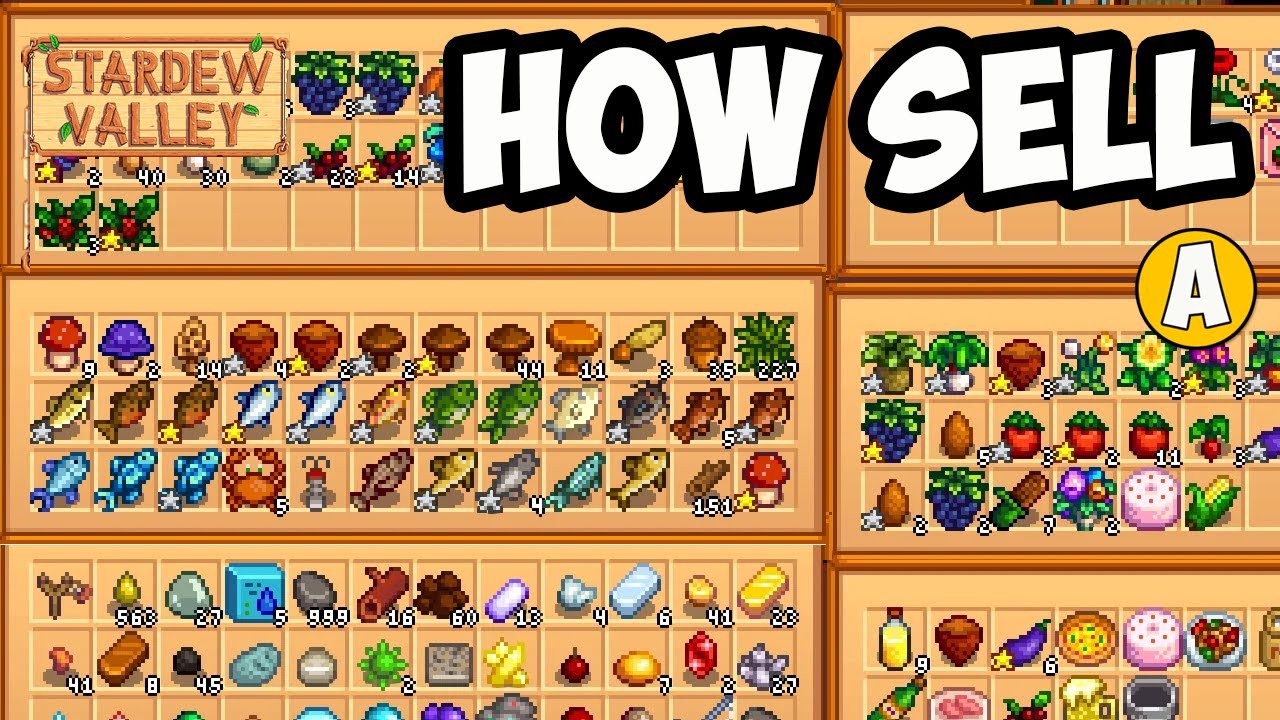
Image source: YouTube
Fishing for Immediate Liquidity
Fishing is widely regarded as the most efficient way to make money in the first week. While crops take days to grow, fish can be caught and sold immediately. Selling your daily catch directly to Willy at the Fish Shop gives you the gold you need to buy more seeds from Pierre on the same day. This "same-day reinvestment" cycle is a significant advancement over simply using the shipping bin.
The Tea Sapling Strategy
One of the most impactful early-game profit methods involves Caroline’s 2-heart event. Once you reach two hearts with Caroline, she will send you the recipe for Tea Saplings . These require 2x Wild Seeds, 5x Wood, and 5x Fiber. While the components are worth very little, the sapling itself sells for 500g . This is a massive jump in value and ranks among the top ways to fund your first Spring. Many players use this method to afford hundreds of Strawberry seeds by the 13th of Spring.
Choosing Between Pierre, Willy, and the Shipping Bin for Fast Cash
Where you sell your items matters just as much as what you sell. The shipping bin is convenient, but it doesn't pay out until you go to sleep. If you are 500g short of a tool upgrade at Clint’s, the shipping bin won't help you today.
- Pierre’s General Store: Buyback for crops, forage, and artisan goods. Use this for instant seed money.
- Willy’s Fish Shop: Buyback for fish and shells. Essential for early-game rod upgrades.
- Clint’s Blacksmith: Buyback for gems and ores. (Note: Only sell gems you have already donated).
- Adventurer’s Guild: The only place to sell unwanted weapons, rings, and boots. These cannot be placed in the shipping bin.
As noted in community guides , selling to NPCs also allows you to "buy back" items if you accidentally sell something precious, a safety net the shipping bin does not provide.
Profitable New Items and Mechanics Introduced in the 1.6 Update
The 1.6 update introduced several mechanics that have shifted the economic meta. If you are playing on the latest version, these new tools offer exceptionally strong returns on investment.
- The Fish Smoker
- This machine doubles the base value of any fish placed inside while retaining its quality multiplier. Smoked Iridium-quality fish are now a top-tier source of income for dedicated anglers.
- Mushroom Logs
- A new way to generate passive income. By placing these near wild trees, you can harvest mushrooms regularly. The type of mushroom depends on the surrounding trees, making this a highly efficient use of farm space.
- Dehydrators
- Similar to Kegs, Dehydrators process fruit and mushrooms into dried versions. While Wine is usually more valuable for expensive fruits, the Dehydrator processes items much faster, making it a strong choice for large quantities of low-value crops like Blueberries.
- The Bookseller
- You can now sell duplicate power-up books to the Bookseller who visits twice a month. Some rare books can fetch up to 2,500g, providing a nice bonus for explorers.
Top Rated Items to Sell for Maximum Long Term Profit
Once your farm is established, you should pivot toward high-value, low-maintenance items. These are the "kings" of the Stardew economy.
| Item | Raw Value (Base) | Processed Value | Profit Increase |
|---|---|---|---|
| Starfruit | 750g | 2,250g (Wine) | +200% |
| Ancient Fruit | 550g | 1,650g (Wine) | +200% |
| Large Goat Milk | 345g | 600g (Goat Cheese) | +74% |
| Hops | 25g | 300g (Pale Ale) | +1100% |
| Catfish | 200g | 400g (Smoked) | +100% |
Starfruit Wine remains one of the strongest contenders for the most profitable item in the game, especially when aged in Casks to Iridium quality. However, Ancient Fruit is often preferred by veteran players because the plants do not need to be replanted, saving significant time and labor.
Deciding Whether to Crack Geodes or Sell Them Raw Early On
Geodes present a classic Stardew Valley dilemma. Clint charges 25g to crack one open, and the result is a gamble. In the very early game, when you are struggling to afford the first backpack upgrade, selling basic Geodes raw (worth 50g) can be a safer bet than spending 25g to potentially receive a 1g piece of Stone.
However, once your daily income exceeds 1,000g, you should always crack them. The minerals found inside are necessary for the Museum, and duplicate minerals can be gifted or sold for much higher prices than the raw geode. Omni-Geodes should never be sold raw; they are a valuable currency at the Desert Trader for items like Warp Totems and Magic Rock Candy.
When Social Capital and Friendship Are Worth More Than Gold
Sometimes, the "value" of an item isn't measured in gold. Stardew Valley is a social simulation, and friendship levels unlock unique recipes, gifts, and cutscenes. Selling a high-value item like a Diamond might give you 750g, but giving it to Gus or Maru might be the final push needed to reach a new heart level.
A prime example is the Luau Festival . Adding a Gold-quality Cauliflower to the soup grants 120 friendship points with every single villager. The gold value of that Cauliflower is negligible compared to the massive boost in social standing, which would otherwise take weeks of individual gifting to achieve. Always consider if an item is a "Loved Gift" before shipping it.
Key Takeaways for Stardew Success
- Process everything: Use Kegs, Jars, and Smokers to multiply the value of raw goods.
- Hoard resources: Never sell Wood, Stone, Coal, or Clay; you will need them for late-game crafting.
- Donate first: Give the first of every mineral and artifact to Gunther before selling duplicates.
- Tea Saplings are gold: Use this early-game recipe to fund your first Spring upgrades.
- Check the 1.6 meta: Utilize the Fish Smoker and Mushroom Logs for new, efficient income streams.
- Sell to NPCs for speed: Use Pierre and Willy for instant cash when you need same-day reinvestment.
- Prioritize Ancient Fruit: It offers a top-tier balance of high profit and low maintenance for your Greenhouse.
Start by building a few Mayonnaise Machines today—it is the simplest way to immediately increase your daily farm income.
Frequently Asked Questions
Is it better to sell fruit or turn it into wine?
What should I do with my extra artifacts?
Should I sell my Iridium Ore?
What is the most profitable thing to put in a Preserves Jar?
Can I sell my old tools?