Home
Why Gaming 2019 Was the Most Influential Year for Modern Video Games
In 2026, we look back at 2019 as the critical bridge between console generations and the birthplace of modern industry standards. The year saw the launch of real-time ray tracing in consumer titles, the rise of the Auto Battler genre, and a massive shift toward mobile gaming, which generated between $64.4 billion and $152 billion depending on reporting standards. Key titles like Sekiro: Shadows Die Twice and Disco Elysium set new benchmarks for difficulty and narrative depth that still influence developers today.
Looking back from the vantage point of 2026, the gaming landscape of 2019 feels remarkably prescient. It was a year defined by transition, innovation, and the quiet laying of foundations for the technologies we now take for granted. While the industry was technically in a "lull" as Sony and Microsoft prepared for the launch of the PlayStation 5 and Xbox Series X, this power vacuum allowed independent developers and experimental genres to flourish in ways rarely seen in the AAA-dominated cycles of the mid-2010s.
What Made 2019 a Turning Point for the Gaming Industry?
The year 2019 was characterized by a significant shift in how games were consumed and monetized. According to Wikipedia's historical data , mobile gaming officially cemented its status as the industry's primary financial engine, accounting for approximately 56% to 72% of total global revenue. This dominance was led by titles like Pokémon Go and Fortnite , the latter of which earned a staggering $3.7 billion in digital revenue alone during that calendar year.
However, the financial story of 2019 is one of conflicting data points. Industry analysts at SuperData reported total revenue at $120.1 billion , while Newzoo estimated the figure to be closer to $152 billion . This discrepancy highlights the growing complexity of tracking digital sales, microtransactions, and the burgeoning cloud gaming market that was just beginning to take shape. Regardless of the exact figure, 2019 proved that gaming had moved far beyond a niche hobby into a global economic powerhouse.
Beyond the numbers, 2019 was the year the "live service" model faced its first major identity crisis. The launch of Anthem , which TIME had listed as one of the most anticipated games of the year, served as a cautionary tale for the industry. Its struggle to find a consistent player base despite a massive budget signaled that high-fidelity graphics and brand recognition were no longer enough to guarantee longevity in an increasingly crowded market.
Which Games Defined the 2019 Experience and How Do They Play Today?
The software lineup of 2019 was diverse, ranging from high-octane action to meditative, slow-paced experiences. These titles didn't just win awards; they introduced mechanics that have become staples of modern game design.
Death Stranding and the Birth of the Strand Genre
Hideo Kojima’s first post-Konami project, Death Stranding , was perhaps the most discussed title of the year. In 2026, we can see how its focus on asynchronous multiplayer—where players help each other by building structures in a shared world—created what Kojima termed the "Strand" genre. While divisive at launch, its emphasis on traversal as a core mechanic rather than a chore has influenced everything from open-world exploration to survival games. The subsequent Director’s Cut and the development of its sequel have only solidified its place as a significant advancement in interactive storytelling.
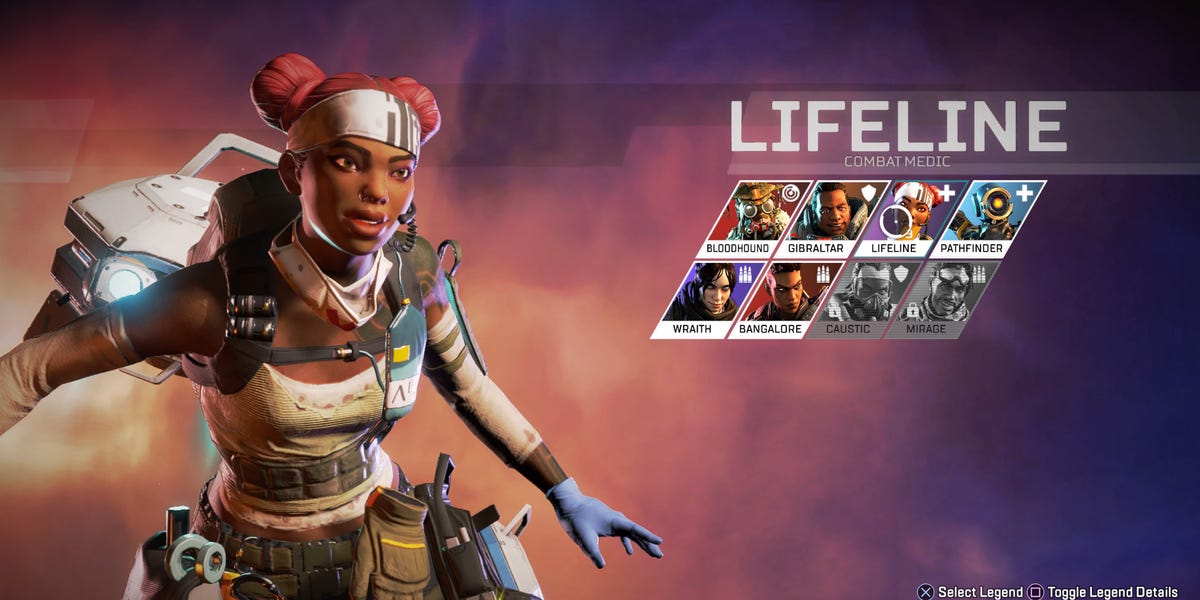
Image source: Business Insider
Resident Evil 2 and the Perfection of the Remake Formula
Capcom’s reimagining of Resident Evil 2 set a high standard for how to modernize a classic. By moving away from fixed camera angles to a tight, over-the-shoulder perspective while maintaining the claustrophobic tension of the original, Capcom created a blueprint that they—and many other studios—would follow for years. It proved that remakes could be more than just visual upgrades; they could be entirely new experiences that respect the source material while utilizing modern hardware capabilities.
Control and the First Real Showcase of Ray Tracing
Remedy Entertainment’s Control was more than just a supernatural thriller; it was the first title to truly demonstrate the potential of real-time ray tracing. While early implementations were taxing on hardware, Control used reflections and lighting to create an atmosphere that felt tangibly different from its contemporaries. Looking back, the ray-traced environments of the Oldest House were a significant step forward, paving the way for the path-tracing standards we see in 2026.
Disco Elysium and the New Standard for Narrative RPGs
Perhaps the most surprising success of 2019 was Disco Elysium . This isometric RPG eschewed traditional combat in favor of a deep, psychological dialogue system. It remains a benchmark for CRPG writing, proving that a game could be commercially successful and critically acclaimed by focusing almost entirely on character development and philosophical inquiry. Its impact is still felt in the narrative-heavy indies of the mid-2020s.
| Game Title | 2019 Impact | 2026 Relevance |
|---|---|---|
| Sekiro: Shadows Die Twice | Won Game of the Year 2019 | Still the gold standard for parry-based combat. |
| Apex Legends | Surprise launch, changed BR movement | Remains a top-tier competitive shooter. |
| Untitled Goose Game | Viral indie sensation | Influenced the "chaos-sandbox" indie subgenre. |
| Outer Wilds | Redefined exploration mechanics | Widely regarded as one of the best narrative puzzles. |
How 2019 Hardware Innovations Shaped the Current Landscape
Hardware in 2019 was all about accessibility and the future of the cloud. The launch of the Nintendo Switch Lite was a masterstroke for Nintendo, providing a more affordable, handheld-only entry point into their ecosystem. This move helped the Switch family maintain its momentum, eventually leading to the record-breaking sales figures we see in the late 2020s.
Conversely, 2019 saw the ambitious launch of Google Stadia . While the service eventually shut down, its 2019 debut was a significant moment for cloud gaming. It promised a future where hardware was irrelevant, and while the infrastructure wasn't ready for that vision in 2019, the lessons learned from Stadia’s technical hurdles helped shape the more successful cloud integrations now found in Xbox Game Pass and PlayStation Plus. It was a notable innovation that arrived perhaps a few years too early.
2019 Ray Tracing
Limited to high-end NVIDIA RTX 20-series cards. Focused primarily on reflections and basic shadows. Often required significant resolution scaling (early DLSS) to maintain 60 FPS.
2026 Path Tracing
Standard across mid-range and high-end hardware. Full global illumination and bounce lighting are common. AI-driven frame generation makes these features accessible to most players.
The Birth of Auto Battlers and New Competitive Playstyles
2019 was the year the "Auto Battler" was born. What started as a community-created mod for Dota 2 called Dota Auto Chess quickly exploded into a global phenomenon. Within months, major developers released their own versions, including Riot Games' Teamfight Tactics and Valve's Dota Underlords . This genre combined the strategy of card games with the spectacle of automated combat, creating a low-barrier-to-entry competitive scene that remains popular today.
In the world of first-person shooters, 2019 marked a shift in how high-level players approached movement and aim. With the release of Apex Legends and Call of Duty: Modern Warfare , the community began to emphasize proactive play over reactive play. According to community discussions on Reddit , techniques like "visual aiming"—where a player focuses their eyes on the target rather than the reticle—gained traction as a way to improve accuracy in fast-paced, high-stakes environments.
Looking Back at the Biggest Controversies and Ghost Games of 2019
The year was not without its friction. The Blitzchung and Hearthstone controversy highlighted the growing intersection of gaming and global politics. When Blizzard suspended a professional player for expressing support for the Hong Kong protests during a live stream, it sparked a massive debate about corporate responsibility and free speech in the digital age. This event served as a turning point for how gaming companies navigate international relations.
Furthermore, 2019 was a pivotal year for the legal battle against loot boxes . Regulators in Belgium and the Netherlands began enforcing strict rules against randomized digital purchases, labeling them as a form of gambling. This led to a significant shift in how games are monetized, with many developers moving toward transparent "Battle Pass" systems that we see dominating the market in 2026.
Apex Legends launches without prior marketing, reaching 50 million players in its first month.
The Nintendo Switch Lite is released, expanding the reach of the Switch ecosystem.
Death Stranding launches, sparking intense debate over its "walking simulator" mechanics.
Sekiro: Shadows Die Twice wins Game of the Year at the 2019 Game Awards .
Finally, we must acknowledge the "Ghost Games" of 2019—titles that were promised but never arrived or were significantly delayed. In the Valley of Gods by Campo Santo was put on indefinite hold after the studio was acquired by Valve, and The Last of Us Part II , originally slated for a late 2019 window, was pushed into 2020. These delays, while frustrating at the time, often resulted in higher-quality final products that defined the following year.
Frequently Asked Questions
The Bottom Line
Gaming in 2019 was far more than just a bridge to the next generation; it was a year of foundational shifts that still resonate in 2026.
- Mobile Dominance: 2019 was the year mobile gaming officially became the industry's primary financial engine.
- Indie Innovation: Titles like Disco Elysium and Outer Wilds proved that narrative depth could rival AAA budgets.
- Tech Foundations: The introduction of Ray Tracing and Cloud Gaming in 2019 laid the groundwork for modern 2026 standards.
- Genre Births: The Auto Battler genre emerged from a community mod to become a global competitive staple.
- Remake Perfection: Resident Evil 2 established the modern standard for reimagining classic titles.
- Competitive Shifts: High-level play moved toward proactive movement and "visual aiming" techniques.
To truly appreciate the state of gaming today, one must look back at the experimental spirit and technical leaps that defined the 2019 landscape.