Home
Home
How Does Cyberpunk 2077 Actually Run on Nintendo Switch 2?
Cyberpunk 2077 on Switch 2 is a technical achievement that ranks among the top handheld ports available today. While capped at 40fps, the experience is notably stable compared to previous-generation console versions, offering a full feature set including the Phantom Liberty expansion.
For years, the idea of Night City running on a Nintendo handheld was considered a technical impossibility. Following the hardware's launch in 2026, CD Projekt Red has delivered a version of Cyberpunk 2077 that defies expectations. This release, often referred to as the all-inclusive edition, brings the complete Patch 2.3 experience to a portable format. According to IGN's technical review , the port is "shockingly stable," providing a level of fidelity that was previously reserved for high-end PCs and home consoles.
The transition to Switch 2 hardware represents a significant advancement in mobile gaming. Unlike the compromised versions seen on older hardware, this port utilizes the updated architecture to maintain a consistent visual standard. While it does not reach the native 4K heights of a dedicated gaming rig, the implementation of modern upscaling techniques ensures that the neon-soaked streets of Night City look crisp on both the integrated screen and external displays. For players who have waited to take V's journey on the go, the wait has resulted in a highly polished experience.
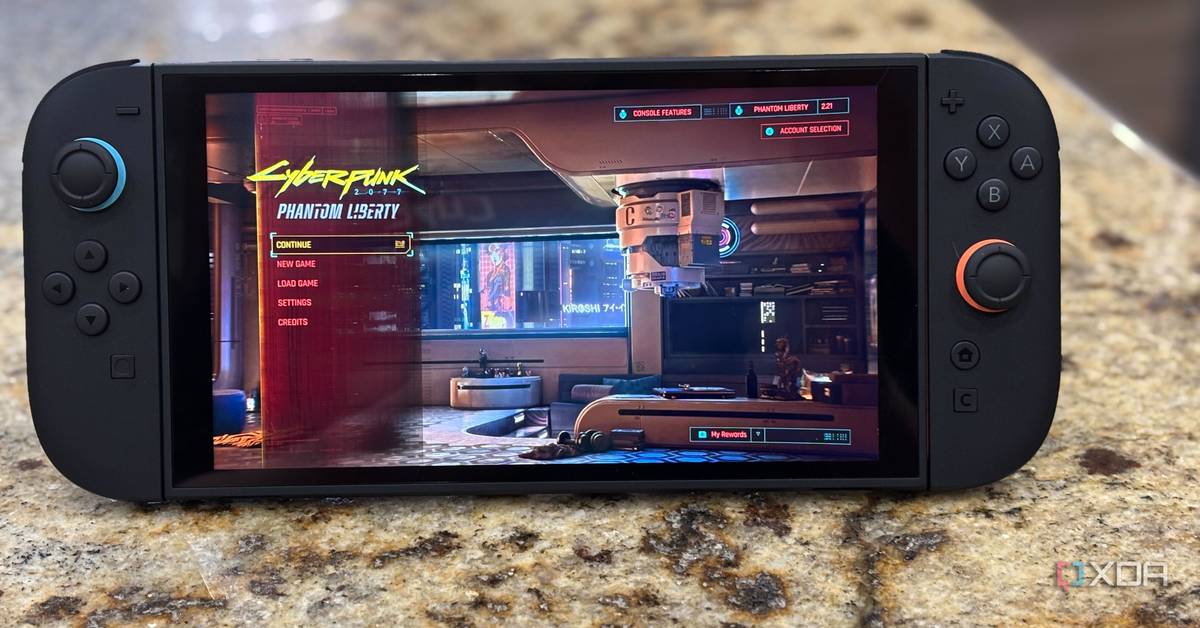
Image source: XDA Developers
Performance and Resolution: What to Expect in Night City
The core question for any potential player is how the hardware handles the sheer density of Night City. The Switch 2 version introduces two distinct ways to play, allowing users to prioritize either visual clarity or motion smoothness. This flexibility is essential for a game that features both high-speed vehicular combat and quiet, atmospheric dialogue scenes. In our assessment, the hardware manages these demands with surprising grace, though there are clear boundaries to what the mobile chipset can achieve.
Does it really hit 40fps?
The Switch 2 version of Cyberpunk 2077 is capped at a maximum of 40fps. This choice by the developers is a strategic one; by targeting 40fps rather than a full 60fps, they have ensured a more consistent frame delivery that feels significantly smoother than the 30fps standard of the past. In "Performance Mode," the game maintains this 40fps target through most of the open-world exploration. However, gameplay analysis of Patch 2.3 shows that frame dips can occur during heavy rain sequences or high-speed chases through the City Center.
Community reports from early adopters suggest that while the 40fps cap is a strong contender for the best way to play, "Quality Mode" offers a different trade-off. In Quality Mode, the frame rate is locked to a stable 30fps, but the visual fidelity is increased, with better shadow resolution and increased crowd density. For many, the 30fps lock is preferable for its rock-solid consistency, especially during the game's more chaotic combat encounters where frame pacing is critical.
Docked vs. Handheld resolution breakdown
When docked, the Switch 2 outputs a 1080p signal. It is important to clarify that while some marketing materials may mention 4K, this is typically achieved through TV-side upscaling rather than native rendering. The internal resolution when docked often sits at a native 1080p, providing a sharp image that stands out as a top choice for those playing on a standard television. The lighting engine, while missing ray-tracing features, still produces impressive reflections and atmospheric fog that capture the essence of the setting.
In handheld mode, the game utilizes dynamic resolution scaling to maintain performance. The resolution fluctuates between 720p and 1080p depending on the complexity of the scene. In quieter areas, like V’s apartment or the outskirts of the Badlands, the image remains very sharp. In contrast, during intense firefights in the middle of Watson, the resolution may dip toward 720p to keep the frame rate stable. On the Switch 2's high-quality display, these transitions are often subtle and do not significantly detract from the immersion.
| Feature | Performance Mode | Quality Mode |
|---|---|---|
| Target Frame Rate | 40 FPS | 30 FPS |
| Internal Resolution | Dynamic 720p - 900p | Dynamic 900p - 1080p |
| Crowd Density | Medium | High |
| Shadow Quality | Standard | Enhanced |
Why Dogtown is a Major Stress Test for Switch 2
The inclusion of the Phantom Liberty expansion in the Complete Edition is a major draw for players, but it also presents the hardware with its greatest challenge. Dogtown, the walled-off district where the expansion takes place, is significantly more dense and vertically complex than the base game's districts. This area serves as a "performance wall" for the Switch 2, pushing the CPU and GPU to their absolute limits. The increased number of NPCs, complex geometry, and layered lighting effects mean that performance here is more volatile than in the rest of Night City.
According to community discussions on Reddit, players often experience more frequent frame drops in Dogtown, particularly when navigating the crowded market areas or engaging in the expansion's large-scale set pieces. To mitigate this, many users find that switching to Performance Mode specifically for the Phantom Liberty storyline is a necessary step. The extra headroom provided by the 40fps target helps smooth out the dips that occur when the engine is under heavy load. Despite these challenges, the fact that the expansion is fully playable on a handheld is a significant step forward for the platform.
Furthermore, the memory demands of Dogtown are notably higher. While the base game manages assets efficiently, the dense urban environment of the expansion can occasionally lead to texture pop-in or delayed UI responses. These are minor trade-offs for the ability to experience one of the most acclaimed narratives in recent gaming history on a portable device. The developers have clearly optimized the asset streaming to ensure that even when the hardware is stressed, the game remains functional and visually impressive.
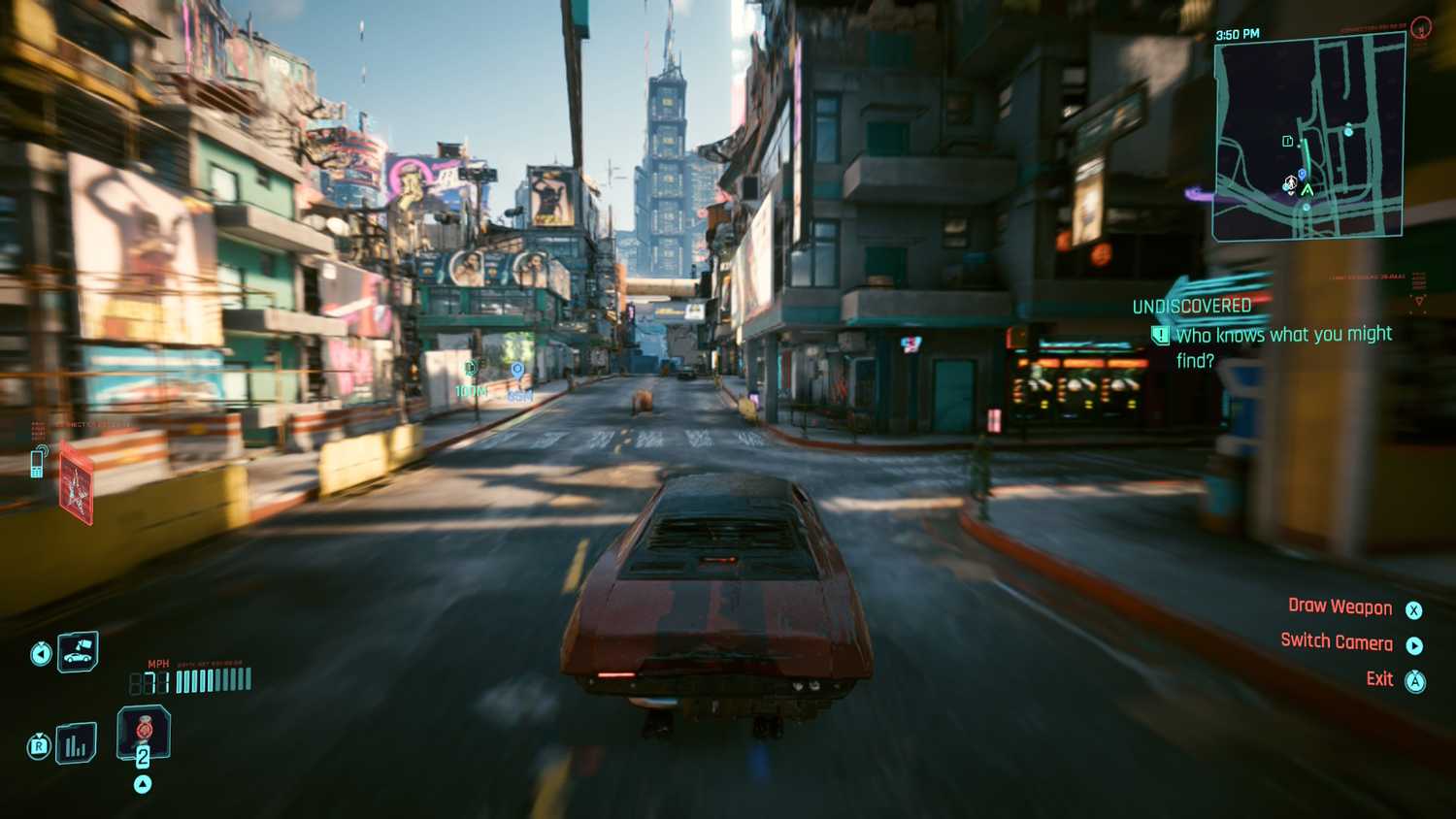
Image source: XDA Developers
How to Optimize Your Settings for a Stronger Experience
While the default settings provide a solid baseline, fine-tuning the game's configuration can lead to a much more enjoyable experience. The Switch 2 version includes a variety of toggles and sliders that allow players to customize the controls and visuals to their liking. Taking the time to adjust these settings can resolve common complaints regarding aiming precision and visual clarity.
Fixing the Joy-Con dead zone and aiming issues
One of the most common issues reported by players is a "wobbly" or imprecise feel when aiming with the standard Joy-Cons. This is often due to the default dead zone settings, which may not be perfectly calibrated for the Switch 2's analog sticks. To fix this, navigate to the Controls menu and look for the "Inner Dead Zone" and "Outer Dead Zone" sliders. Reducing the Inner Dead Zone can make the sticks feel more responsive, while adjusting the Outer Dead Zone can help prevent the "drifting" sensation during fine aiming.
- Set Inner Dead Zone to 0.05 or lower for increased stick sensitivity.
- Adjust Horizontal and Vertical Sensitivity to find a balance that suits your playstyle.
- Enable "Response Curve: Raw" for a more direct 1:1 input feel.
- Turn off "Additive Camera Motions" to reduce screen shake during combat.
Managing memory leaks during long play sessions
A specific piece of community wisdom that has emerged involves managing the console's memory during extended play sessions. Some users have reported that after 3 to 4 hours of continuous play, the frame rate may begin to degrade or textures may fail to load correctly. This is likely due to a minor memory leak that can occur when the game is left running for long periods, especially if the console is frequently put into Sleep Mode without closing the application.
The "Cold Boot" strategy is highly recommended: fully close the Cyberpunk 2077 application and restart it every few hours. This clears the system's cache and ensures that the game continues to run at its peak performance. While the Switch 2's Sleep Mode is convenient, taking a moment to restart the game can prevent the performance degradation that some players have noted during marathon sessions in Night City.
Which visual toggles should you turn off?
To achieve the clearest possible image in handheld mode, there are several post-processing effects that you should consider disabling. While these effects are intended to add a cinematic feel, they can often make the image look "muddy" on a smaller screen. Disabling Motion Blur, Film Grain, and Chromatic Aberration can significantly improve the perceived sharpness of the game. This is particularly helpful when trying to spot enemies in dark environments or reading the small text on in-game terminals.
The Mouse Mode Control Scheme: Innovation or Gimmick?
One of the most talked-about features of the Switch 2 port is the inclusion of "Mouse Mode." This control scheme allows players to use a sideways Joy-Con as a high-precision pointing device, mimicking the accuracy of a gaming mouse for FPS aiming. In theory, this offers a significant advantage in combat, allowing for faster target acquisition and more precise headshots than traditional analog sticks.
"Mouse Mode on the Switch 2 is a notable innovation, but it requires a specific ergonomic setup to be truly effective for long sessions." — Community Forum Contributor
However, real-world usage has revealed some ergonomic challenges. The small size of the Joy-Con can lead to hand cramps during intense firefights, as the grip required for Mouse Mode is not naturally suited to the human hand for long periods. To make this mode viable, many players recommend using 3D-printed grips or third-party shells that provide a more substantial surface to hold. When paired with the right accessories, Mouse Mode stands out as a top choice for players who prefer the precision of PC gaming but want the portability of a console.
Additionally, the game features "Motion Assist" for traditional controller play. This allows you to use subtle tilts of the console or controller to fine-tune your aim. We recommend keeping "Motion Aiming" active but disabling "Motion Gesture Actions" (such as reloading by shaking the controller), as these gestures can often cause unwanted camera movement at critical moments. This hybrid approach provides the best of both worlds: the comfort of analog sticks with the precision of motion-controlled fine-tuning.
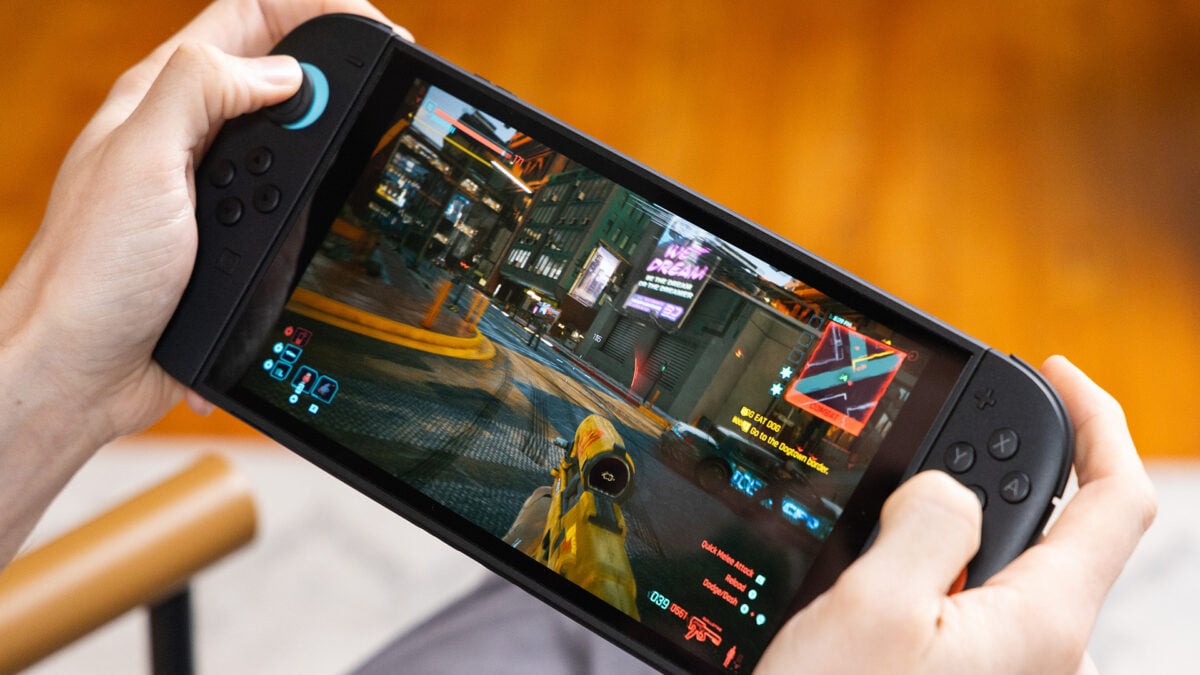
Image source: Gizmodo
How Switch 2 Compares to Steam Deck and PS5
For those deciding which platform to choose for their Night City adventure, the Switch 2 version occupies a unique middle ground. It offers more power and better optimization than the original Steam Deck, yet it cannot match the raw graphical output of a PlayStation 5. Understanding these platform differences is key to making an informed purchase.
- Switch 2 vs. Steam Deck (OLED)
- The Switch 2 version benefits from hardware-level optimizations that are not always present in the PC version running on Steam Deck. While the Steam Deck has more raw power, the Switch 2 often achieves better battery life and more consistent frame pacing due to the fixed hardware target. The Switch 2's "Performance Mode" is widely regarded as being more stable than the Deck's equivalent settings in high-density areas.
- Switch 2 vs. PlayStation 5
- The PS5 version remains the superior choice for visual fidelity, offering ray-tracing modes and native 4K output. The Switch 2 version lacks these high-end features and has lower crowd density. However, the Switch 2 offers the incomparable benefit of portability. For many, the trade-off of lower resolution is worth the ability to play a full-scale RPG anywhere.
Ultimately, the Switch 2 version is a strong contender for the best portable way to play Cyberpunk 2077. It strikes a balance between the technical compromises of the Steam Deck and the stationary nature of the PS5. With cross-progression support via GOG, players can even move their saves between these platforms, using the Switch 2 for side quests on the go and the PS5 for major story beats at home.
Frequently Asked Questions
Does Cyberpunk 2077 Switch 2 support Ray Tracing?
Is the Phantom Liberty DLC included on the cartridge?
Can you transfer saves from PC or PS5 to Switch 2?
How much storage space does the game require?
Does the game crash often on Switch 2?
The Bottom Line
Cyberpunk 2077 on the Switch 2 is a remarkable achievement that proves high-fidelity open-world gaming has a permanent home on Nintendo's portable hardware. Here are the key takeaways for potential players:
- Performance is stable at a 40fps cap in Performance Mode, though Quality Mode (30fps) offers better visual consistency.
- Phantom Liberty is included , but the Dogtown area is a major stress test that may require lowering settings.
- Optimization is key ; adjusting Joy-Con dead zones and disabling motion blur significantly improves the experience.
- The "Cold Boot" method (restarting the game every few hours) is recommended to avoid performance degradation.
- Mouse Mode offers precision but is best used with ergonomic third-party grips to avoid hand strain.
- Cross-progression works flawlessly , making this a top-tier companion to a PC or PS5 setup.
If you are looking for a way to experience Night City with the freedom of portability, this version stands out as a top choice for your Switch 2 library.