Home
How Pokémon LeafGreen Natures Work and Which Ones Are Top Choices for Your Team
In Pokémon LeafGreen , a nature provides a permanent 10% increase to one stat and a 10% decrease to another (excluding HP). Because LeafGreen uses the Generation 3 Physical/Special split , move categories are determined by their Type rather than the move itself. For example, all Fire moves are Special, while all Ghost moves are Physical. To optimize your team, you must align your Pokémon's nature with its primary move types.
Natures were introduced in the third generation of Pokémon games to add a layer of individuality and strategy to every creature you catch. In the Kanto region of FireRed and LeafGreen , understanding these mechanics is essential for overcoming the Elite Four or succeeding in post-game challenges like the Trainer Tower. Unlike modern entries in the series, these modifiers are fixed from the moment of encounter, making the initial catch or hatch a critical moment for any trainer.
Understanding the 10% Stat Modifier and the Permanence of Natures
Every Pokémon you encounter in the wild or receive from an NPC comes with one of 25 possible natures. According to PokemonDB , these natures act as a multiplier in the final stat calculation. Specifically, the boosted stat is multiplied by 1.1, while the hindered stat is multiplied by 0.9. This 10% shift may seem small at early levels, but by the time your Charizard or Venusaur reaches Level 100, the difference can be as high as 30 to 40 points in a single stat.
As of 2026, players returning to these classic titles must remember a vital distinction: natures are permanent in LeafGreen . In modern games like Pokémon Scarlet or Sword , players can use "Mints" to change the stat effects of a nature. However, in the GBA era, no such item exists. If you catch a Modest Machamp (which boosts Special Attack but lowers the much-needed Attack stat), that penalty is forever. This permanence is why many players spend hours "soft resetting" their Game Boy Advance or DS to ensure their starter Pokémon has a beneficial nature.
It is also important to note the "Neutral Five." There are five natures—Hardy, Docile, Bashful, Quirky, and Serious—that technically increase and decrease the same stat. This results in a net change of zero. While these are perfectly acceptable for a casual playthrough, they are generally considered less efficient than a nature that optimizes a Pokémon's specific strengths. Furthermore, GameRant notes that unlike games from Generation 4 onwards, LeafGreen does not provide visual cues (like red or blue text) on the stat screen to show which stats are affected. You must manually check the "Trainer Memo" and compare it to a reference chart.
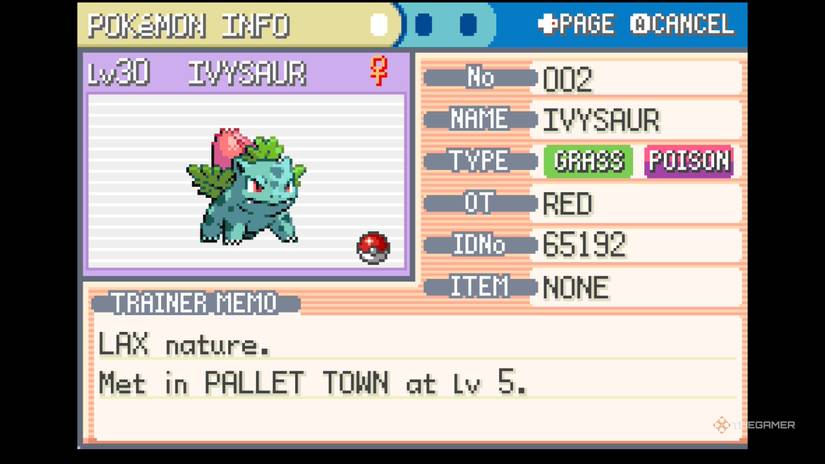
Image source: TheGamer
A Complete Reference Chart for All 25 Pokémon Natures
To help you decode the Trainer Memo, use the following table. It lists every nature, the stat it improves, and the stat it reduces. We have also included the "Flavor Preference," which affects which Berries or Pokéblocks a Pokémon prefers (a mechanic primarily used in Ruby/Sapphire/Emerald but still present in the LeafGreen engine).
| Nature | Increased Stat (+10%) | Decreased Stat (-10%) | Flavor Preference |
|---|---|---|---|
| Adamant | Attack | Sp. Atk | Spicy / Dry |
| Bashful | None (Neutral) | None (Neutral) | None |
| Bold | Defense | Attack | Sour / Spicy |
| Brave | Attack | Speed | Spicy / Sweet |
| Calm | Sp. Def | Attack | Bitter / Spicy |
| Careful | Sp. Def | Sp. Atk | Bitter / Dry |
| Docile | None (Neutral) | None (Neutral) | None |
| Gentle | Sp. Def | Defense | Bitter / Sour |
| Hardy | None (Neutral) | None (Neutral) | None |
| Hasty | Speed | Defense | Sweet / Sour |
| Impish | Defense | Sp. Atk | Sour / Dry |
| Jolly | Speed | Sp. Atk | Sweet / Dry |
| Lax | Defense | Sp. Def | Sour / Bitter |
| Lonely | Attack | Defense | Spicy / Sour |
| Mild | Sp. Atk | Defense | Dry / Sour |
| Modest | Sp. Atk | Attack | Dry / Spicy |
| Naive | Speed | Sp. Def | Sweet / Bitter |
| Naughty | Attack | Sp. Def | Spicy / Bitter |
| Quiet | Sp. Atk | Speed | Dry / Sweet |
| Quirky | None (Neutral) | None (Neutral) | None |
| Rash | Sp. Atk | Sp. Def | Dry / Bitter |
| Relaxed | Defense | Speed | Sour / Sweet |
| Sassy | Sp. Def | Speed | Bitter / Sweet |
| Serious | None (Neutral) | None (Neutral) | None |
| Timid | Speed | Attack | Sweet / Spicy |
Why the Gen 3 Physical and Special Split Dictates Your Strategy
The single most significant hurdle for modern players returning to LeafGreen is the Physical/Special Split —or rather, the lack of one. In games from Generation 4 ( Diamond/Pearl ) onward, every individual move is categorized as Physical or Special. In LeafGreen, however, the category is determined entirely by the move's Type .
These types use the Attack stat for damage and are resisted by Defense :
- Normal
- Fighting
- Flying
- Ground
- Rock
- Bug
- Ghost
- Poison
- Steel
These types use the Special Attack stat and are resisted by Special Defense :
- Water
- Grass
- Fire
- Ice
- Electric
- Psychic
- Dragon
- Dark
This creates what veteran players call the "Modest Gengar Trap." In modern Pokémon, Gengar is a premier Special Attacker that uses Shadow Ball (a Special move) to deal massive damage. Consequently, a Modest nature (+Sp. Atk, -Atk) is a top-tier choice. However, in LeafGreen, Ghost is a Physical type . This means Shadow Ball calculates damage using Gengar's abysmal Attack stat. If you give a LeafGreen Gengar a Modest nature, you are actually weakening its signature move. For a Gen 3 Gengar, you are often better off focusing on Special types like Psychic or Thunderbolt, or accepting that Shadow Ball is a utility move rather than a primary nuke.
How to Identify Your Pokémon’s Nature in the Game Menu
Since LeafGreen lacks the color-coded stat highlights found in newer games, you must navigate the menu manually to find your Pokémon's nature. Follow these steps to verify your team's stats:
- Press the Start button to open the main menu.
- Select Pokémon to view your current party.
- Move the cursor to the Pokémon you want to check and select Summary .
- Once the summary screen opens, press Right on the D-Pad.
- This will take you to the Trainer Memo page. The nature is listed in the first few lines of text (e.g., "A Jolly nature.").
According to Game8 , the Trainer Memo also provides clues about where the Pokémon was met and at what level. If you are breeding Pokémon, this screen will also confirm if the Pokémon was "hatched" at a specific location like Four Island.

Image source: Game8
Top Nature Recommendations for Starters and Kanto Legendaries
Choosing the right nature for your most powerful Pokémon can make the difference between a clean sweep and a frustrating loss. Here are the widely regarded top choices for the most iconic Kanto creatures.
Bulbasaur, Ivysaur, and Venusaur
Venusaur is a versatile Pokémon that can act as a tank or a special sweeper. Because Grass is a Special type in Gen 3, Modest is a popular choice to maximize Solar Beam or Razor Leaf damage. However, Venusaur also has access to Sludge Bomb, which is a Poison-type (Physical) move. If you want a mixed attacker, a Quiet nature (+Sp. Atk, -Speed) is a significant advancement over neutral natures, though Calm (+Sp. Def, -Atk) is highly recommended for those who want a durable "Special Tank" build.
Charmander, Charmeleon, and Charizard
Charizard is a fast, hard-hitting Special Attacker in the Gen 3 meta. Both Fire and Dragon (Dragon Claw) are Special types, making Timid (+Speed, -Atk) or Modest (+Sp. Atk, -Atk) the premier options. Timid is often preferred because it allows Charizard to outspeed many threats in the post-game Battle Network and Elite Four rematches.
Squirtle, Wartortle, and Blastoise
Blastoise is naturally bulky and excels at taking hits while dealing consistent Water-type damage. Bold (+Def, -Atk) and Calm (+Sp. Def, -Atk) are excellent choices for a defensive "Wall" build. If you prefer to use Blastoise offensively with moves like Surf and Ice Beam, Modest is a top-tier option that capitalizes on its Special typing.
The Legendary Birds and Mewtwo
For the legendary encounters, players often use "Soft Resetting" to hunt for specific natures.
- Articuno: Calm or Modest. Articuno is a defensive powerhouse with high Special Defense.
- Zapdos: Timid or Modest. Speed is crucial for Zapdos to land its powerful Thunderbolts first.
- Moltres: Modest. Moltres has a massive Special Attack stat that should be maximized.
- Mewtwo: Timid. Mewtwo is already one of the most acclaimed Pokémon in history; a Timid nature ensures it outspeeds almost every other creature in the game, allowing it to sweep teams with Psychic and Thunderbolt.
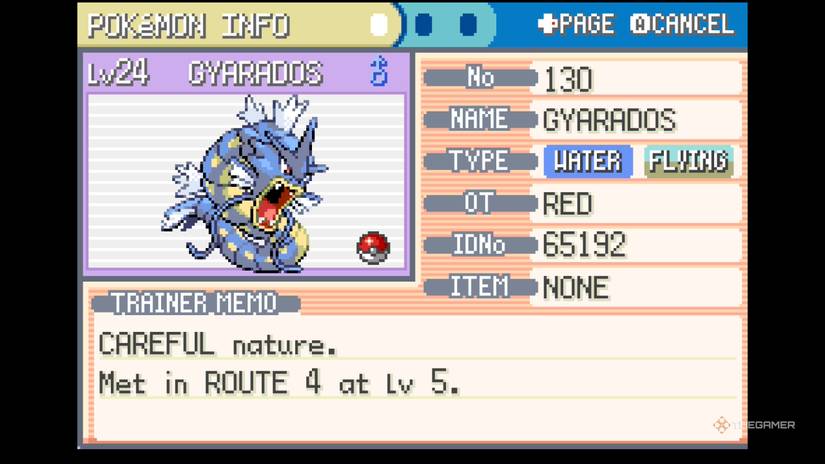
Image source: TheGamer
Advanced Hunting Methods and Breeding for Specific Natures
If you are looking for a specific nature for a competitive team or a perfect Pokédex, you need more than just luck. While LeafGreen lacks some of the conveniences of later games, there are several notably innovative techniques you can use.
The Synchronize Limitation
A common mistake for players coming from Pokémon Emerald or later generations is leading with a Pokémon that has the Synchronize ability (like Abra or Kadabra). In Emerald and beyond, this gives a 50% chance for wild Pokémon to share the same nature. This does not work in LeafGreen. In this version, Synchronize only has an in-battle effect of passing status conditions. Do not waste time lead-hunting with Synchronize in Kanto; it is purely a game of RNG.
Everstone Breeding at Four Island
Once you reach the post-game and gain access to the Four Island Daycare, you can begin breeding. In LeafGreen, if the female Pokémon (or a Ditto ) holds an Everstone , there is a 50% chance the offspring will inherit that parent's nature. This is a significant step forward for players trying to pass a "Jolly" or "Adamant" nature from a Ditto to a rare Pokémon like Dratini or Larvitar.
The Safari Zone "Turning" Trick
Hunting for a specific nature in the Safari Zone is notoriously difficult because of the 500-step limit. However, there is a pro-tip: turning in place does not consume steps. If you tap the D-pad lightly to change your character's direction without actually moving to a new tile, you can still trigger a wild encounter. This allows you to stay in a single patch of grass indefinitely until you find the Chansey or Scyther with the nature you desire.
Soft Resetting for Legendaries
To get a top-tier nature on a one-time encounter like Mewtwo or Snorlax, use the soft reset command: A + B + Start + Select . Save your game directly in front of the Pokémon, engage it, check its nature in the summary screen, and reset if it isn't what you want. This is the only way to ensure your legendary birds are optimized for battle.
Calculating Natures for Pokémon Transferred from Gen 1
For players using hardware exploits or specific emulators to move Pokémon from the original Red, Blue, or Yellow (Gen 1) into LeafGreen , the game must "generate" a nature, as Gen 1 did not have them. This is not random; it is based on a specific mathematical formula.
According to technical research on
Serebii.net
, the nature is determined by the Pokémon's total Experience Points. The formula is:
Total EXP % 25
. The resulting remainder (0 through 24) corresponds to a specific nature index. For example:
- Remainder 0: Hardy
- Remainder 10: Timid
- Remainder 13: Modest
- Remainder 20: Adamant
This means if you have a Level 100 Pokémon in Pokémon Yellow , you can actually manipulate its nature before transferring it by gaining a very specific amount of experience points. This is a highly impactful strategy for players who want to bring their childhood favorites into the "modern" GBA era with optimal stats.
Frequently Asked Questions About LeafGreen Natures
Key Takeaways for Mastering Natures in LeafGreen
- Check the Trainer Memo: Always verify your nature immediately after catching a Pokémon to ensure it doesn't have a crippling stat penalty.
- Respect the Type Split: Remember that in Gen 3, move categories are tied to Type. Don't give a Physical-boosting nature to a Pokémon that relies on Special types like Water or Fire.
- Speed is Vital: Natures that boost Speed (Timid, Jolly) are consistently ranked among the most valuable for high-level play.
- Breeding with Everstones: Use a female parent or Ditto holding an Everstone at the Four Island Daycare to pass down desirable natures with a 50% success rate.
- Ignore Synchronize: Do not rely on the Synchronize ability for nature hunting in LeafGreen; it only works in Emerald and later games.
- Soft Reset for Legendaries: Use the A+B+Start+Select shortcut to efficiently hunt for the premier natures on Mewtwo and the Legendary Birds.
- Neutral Natures are Safe: If you are playing casually, a neutral nature (Hardy, Docile, etc.) is a safe middle ground that won't hurt your Pokémon's performance.
Start your journey by checking your starter Pokémon's nature—if you're looking for an edge, a quick reset for a Modest Bulbasaur or Timid Charmander is a great first step.