Home
How to Use Every Type of Pokémon Item for Battle and Evolution
Pokémon items are categorized into pockets like Medicine, Poké Balls, Berries, and Hold Items. In competitive play, the Item Clause requires each Pokémon to hold a unique item. For recovery, Sitrus Berries are often preferred for mid-range bulk, while Leftovers suit long-term defensive builds. Evolution items, such as Stones or the Metal Coat, are essential for completing the Pokédex across all nine generations.
Since the release of Pokémon Red and Blue , items have been the backbone of the series' mechanical depth. Whether you are navigating the tall grass of Kanto or competing in the Master Ball Tier of Pokémon Scarlet and Violet , understanding how to manage your bag is the difference between a white-out and a victory. Items serve three primary functions: sustaining your team during exploration, triggering powerful evolutions, and providing tactical advantages in battle.
As the series has evolved, so too has the complexity of these objects. We have moved from simple Potions to intricate held items like the Assault Vest, which trades tactical flexibility for raw defensive power. This guide explores the strategic nuances of the Pokémon item system, drawing on competitive data and historical trends to help you optimize your inventory.
What Are the Different Categories of Pokémon Items?
The modern Pokémon Bag is a highly organized storage system designed to handle hundreds of unique objects. According to Bulbapedia's item encyclopedia , items are primarily sorted into "pockets" to prevent the player from becoming overwhelmed. Understanding these categories is the first step toward efficient gameplay.
Medicine and Recovery Tools
Medicine items are the most frequently used tools during a standard playthrough. This category includes Potions, Revives, and status healers like Antidotes. A notable mechanical shift occurred in Generation VII, where the healing values of Fresh Water, Soda Pop, and Lemonade were adjusted to be less efficient relative to their cost. Expert players often prioritize Max Potions and Full Restores in the late game, as these items provide 100% recovery regardless of a Pokémon's maximum HP stat.
Poké Balls and Capture Mechanics
From the standard Poké Ball to the Master Ball, capture devices are the most iconic items in the franchise. Each ball has a specific "catch rate multiplier." For example, the Quick Ball ranks among the top choices for completing the Pokédex because it offers a 5x multiplier if used on the first turn of battle. Conversely, the Dusk Ball is widely regarded as one of the best options for cave exploration or nighttime hunting, providing a 3x multiplier under those specific conditions.
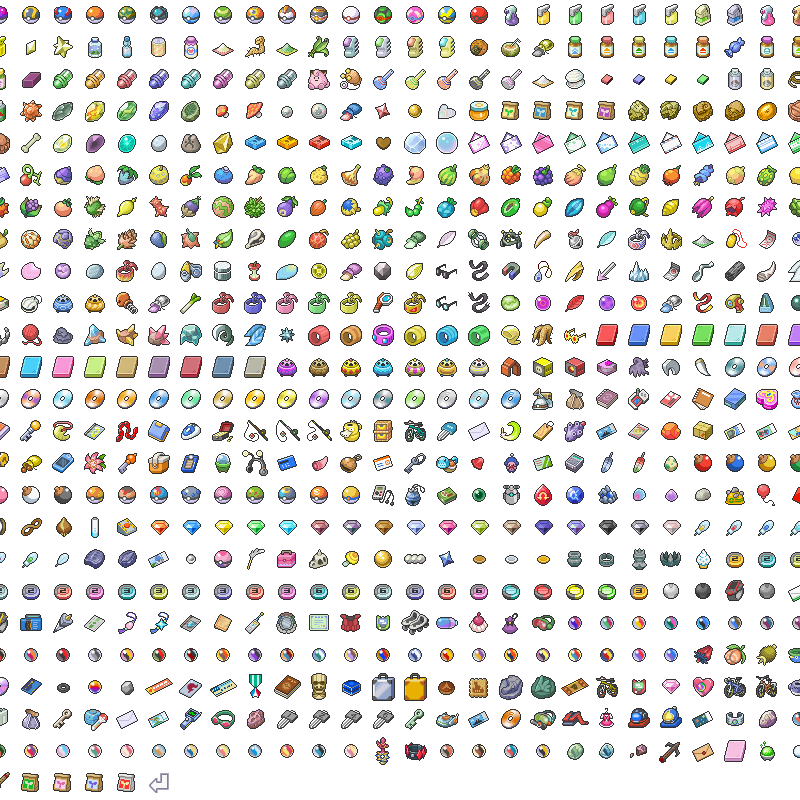
Image source: Genius
Key Items and Story Progression
Key Items are unique, non-consumable objects that facilitate story progression or provide permanent upgrades. Examples include the Town Map, the Bicycle, and the Shiny Charm. Unlike general items, Key Items cannot be traded, sold, or held by a Pokémon. They are often tied to specific milestones, such as defeating a Gym Leader or completing a regional Pokédex.
How Do Held Items Work in Competitive Battles?
Held items are the defining feature of competitive Pokémon battling. Introduced in Generation II, this mechanic allows a Pokémon to carry a single item into battle to trigger passive or active effects. In the official Video Game Championships (VGC), the Item Clause is a mandatory rule: no two Pokémon on the same team may hold the same item. This forces players to diversify their strategies and prevents teams from stacking multiple copies of powerful items like the Focus Sash.
Understanding the VGC Item Clause
The Item Clause is designed to encourage variety and balance. According to VGC Guide by Wolfe Glick , this constraint is one of the most important factors in team building. If you have two Pokémon that both rely on speed control, you cannot give both a Choice Scarf; you must decide which one benefits more from the speed boost and find an alternative—perhaps a Focus Sash or a Life Orb—for the other.
The Four Pillars of Item Strategy
World Champion Wolfe Glick categorizes competitive items into four distinct "pillars":
- Recovery: Items like Leftovers or Sitrus Berries that restore HP over time or upon reaching a threshold.
- Damage Output: Items like Life Orb, Choice Band, or Mystic Water that increase the power of attacks.
- Damage Mitigation: Items like Assault Vest or type-reducing Berries (e.g., Shuca Berry) that help a Pokémon survive hits.
- Support: Utility items like Eject Button, Mental Herb, or Safety Goggles that provide niche tactical advantages.
Which Held Items Are Highly Effective for Competitive VGC Play?
In the current meta, certain items stand out as top choices due to their reliability and impact. Choosing the right item often depends on a Pokémon's "base stats" and its intended role on the team. A "glass cannon" attacker requires different tools than a "bulky pivot."
Damage Boosters: Life Orb and Choice Items
The Life Orb is a staple for offensive threats. It boosts the power of all moves by 1.3x but drains 10% of the user's max HP every time they attack. This is a significant advancement over Gen 1, where damage boosts were rare. For even greater power, Choice items (Band for Attack, Specs for Special Attack, Scarf for Speed) provide a 1.5x boost but lock the Pokémon into the first move it uses. These items are highly effective for "hit-and-run" attackers that switch out frequently.
Survival Tools: Focus Sash and Assault Vest
The Focus Sash is widely considered one of the best items for fragile attackers like Chien-Pao or Flutter Mane. If the holder has full HP, any hit that would otherwise knock it out will instead leave it with 1 HP. This guarantees the Pokémon gets at least one move off. Meanwhile, the Assault Vest ranks among the top defensive options, increasing Special Defense by 50% at the cost of being unable to use status moves like Protect or Will-O-Wisp.
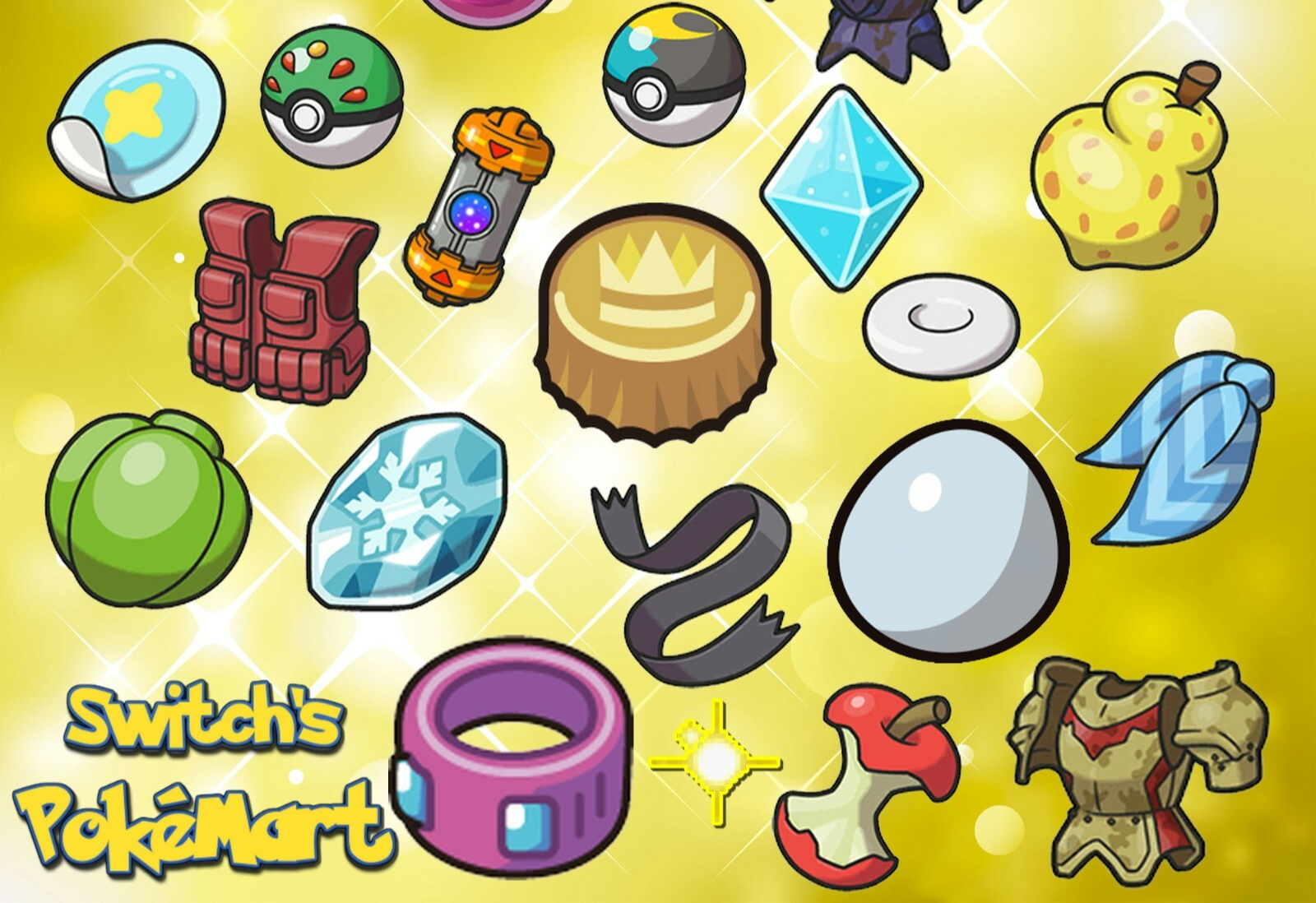
Image source: eBay
Why You Should Choose Shuca Berry Over Air Balloon
A common dilemma for players using Pokémon weak to Ground-type moves (like Heatran or Gholdengo) is choosing between the Air Balloon and the Shuca Berry. While the Air Balloon provides total immunity to Ground moves, it pops as soon as the Pokémon takes any damage, even from a weak resisted hit. This makes it a risky choice in a format filled with spread moves like Rock Slide.
In contrast, the Shuca Berry provides a guaranteed 50% reduction to the first super-effective Ground-type hit the Pokémon receives. Expert analysis suggests that the Shuca Berry is often the superior choice for reliability. It allows a Pokémon to survive a powerful Earthquake or Stomping Tantrum that would otherwise result in a one-hit knockout, regardless of whether the Pokémon took chip damage earlier in the turn. This "Damage Mitigation" strategy is a hallmark of high-level VGC play, where turning a 1-hit KO into a 2-hit KO is a primary goal.
When Is a Sitrus Berry More Effective Than Leftovers?
Recovery math is a critical component of competitive success. Choosing between immediate recovery and passive recovery depends entirely on how many turns you expect your Pokémon to remain on the field. According to PokemonDB's item data , the thresholds for these items are fixed, but their value is situational.
The Math Behind Passive Recovery
Leftovers restores 1/16th of a Pokémon's maximum HP at the end of every turn. For this to be more effective than a Sitrus Berry ( which restores 25% instantly), the Pokémon must stay active for at least five turns. Therefore, Leftovers is a top-tier option for defensive "walls" like Toxapex or Ferrothorn that intend to stall out the opponent. If a Pokémon is likely to be knocked out in 2-3 hits, the Sitrus Berry is a much stronger contender because it provides the healing exactly when it is needed most—when health drops below 50%.
High-Risk Recovery: The 33% Berries
Berries like the Figy, Mago, Aguav, Wiki, and Iapapa Berries restore 33% of max HP but only activate when the Pokémon's health drops below 25%. These were notably innovative in Generation VII when they restored 50%, but they were nerfed in Generation VIII. Today, they are highly recommended for Pokémon with massive HP pools, such as Snorlax or Dondozo, which can safely reach that low health threshold without being knocked out by a stray hit.
| Item Name | Recovery Amount | Activation Trigger | Best Use Case |
|---|---|---|---|
| Leftovers | 6.25% (1/16) | End of every turn | Defensive walls/Stallers |
| Sitrus Berry | 25% | Health below 50% | Mid-range bulky attackers |
| Figy Berry | 33% | Health below 25% | High-HP tanks |
| Shell Bell | 1/8 of damage dealt | Upon attacking | High-damage sweepers |
Which Items Are Required for Pokémon Evolutions?
Evolution items are the gatekeepers of the Pokédex. While many Pokémon evolve through leveling up, dozens of species require specific stones or held items to reach their final forms. This mechanic has expanded significantly since the original Fire, Water, and Thunder Stones of Kanto.
Elemental Stones and Their Targets
Elemental stones remain the most common evolution items. In recent generations, the Ice Stone was added to facilitate the evolution of Alolan Vulpix and Cetoddle. The Shiny Stone , Dusk Stone , and Dawn Stone (introduced in Gen IV) are also essential for popular Pokémon like Roserade, Honchkrow, and Gallade. Finding these stones often requires exploring hidden corners of the map or participating in mini-games like the Pokéathlon or the Auction House in Porto Marinada.
Trade-Based Evolution Items
Some of the most powerful Pokémon in the game require a "Trade Evolution" while holding a specific item. For example, Scyther evolves into Scizor when traded holding a Metal Coat , and Porygon2 becomes Porygon-Z when traded with a Dubious Disc . In Pokémon Legends: Arceus , a notably innovative item called the Linking Cord was introduced, allowing players to trigger these evolutions without needing a trade partner—a significant step forward for solo players.
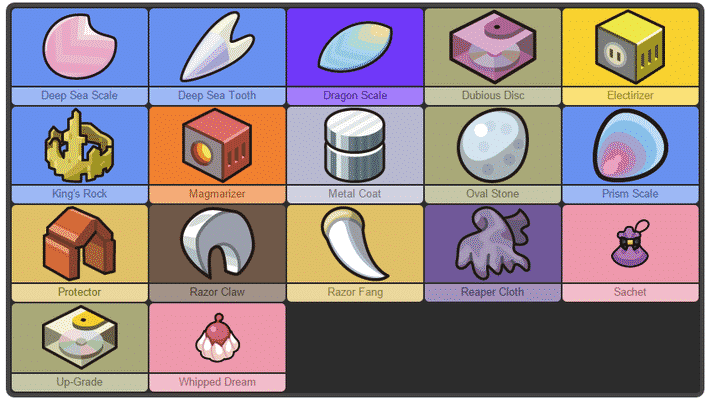
Image source: Pokemon GO Hub
How Have Pokémon Items Evolved Since Generation 1?
The visual and mechanical history of Pokémon items reflects the broader evolution of the franchise. In Generation I, items were represented by simple, generic sprites in the bag menu. By Generation VI, the jump to 3D allowed for detailed models of every item, including the "Item Balls" found in the overworld. Historical archives from Bulbapedia note that Gen VII introduced thinner black creases on Poké Ball models compared to the thicker lines of Gen VI.
Mechanically, the most significant change in recent years is the "Dexit" impact. With the removal of numerous moves and Pokémon in Sword and Shield and Scarlet and Violet , the viability of certain items has shifted. The removal of the move Pursuit , for example, made items that boost trapping strategies less relevant. Conversely, the introduction of Mirror Herb in Gen IX allowed Pokémon to copy an opponent's stat boosts, creating a new layer of counter-play against "set-up sweepers."
"The removal of Hidden Power and Pursuit fundamentally changed how we value items like Choice Specs and Choice Band. You can no longer rely on a specific coverage move to bail you out; your item choice must be more deliberate." — Community Sentiment, Reddit VGC Discussion
How Do Items Work in Pokémon GO and Fan Games?
The utility of items extends beyond the main series games. Pokémon GO and fan-made projects like Pokémon Sage introduce unique items and mechanics that cater to different styles of play.
Pokémon GO Power-User Techniques
In Pokémon GO, item management is a game within the game. Power users often employ the
"Fast Catch Trick"
to save time. By holding the berry menu icon and sliding it slightly while throwing a Poké Ball, players can skip the lengthy capture animation. Additionally, using search strings like
interactable
in the friend list helps players manage Gifts and Berries more efficiently. These techniques are highly recommended for players participating in high-intensity events like Community Days.
Unique Items in Fan-Made Adventures
Fan games often introduce custom items to fix perceived balance issues or add flavor. In Pokémon Sage , for instance, the Wooly Sweater is a notably innovative item that prevents the holder from being frozen and causes eggs in the party to hatch faster. Another example is the Iveolite , a custom variant of the Eviolite that boosts the Attack and Special Attack of unevolved Pokémon, rather than their defenses. These items provide a fresh experience for veteran players looking for new strategic challenges.
Frequently Asked Questions
What are the top-rated held items for competitive Pokémon battles?
In the current competitive landscape, the Choice Scarf, Life Orb, and Focus Sash are widely considered among the most effective options. The Choice Scarf is a top choice for speed control, allowing slower attackers to surprise opponents. The Life Orb provides a significant damage boost for versatile sweepers, while the Focus Sash is a premier survival tool for fragile Pokémon that need to ensure they can execute at least one move.
How do I obtain evolution items in Pokémon Scarlet and Violet?
Evolution items can be acquired through several methods in the Paldea region. Many stones are available for purchase at Delibird Presents shops after earning a certain number of Gym Badges. Rarer items, like the Auspicious Armor or Malicious Armor, require trading specific materials (like Bronzor Fragments) to NPCs. The Auction House in Porto Marinada is also a top-tier source for rare items like the Rotom Catalog or various evolutionary stones.
Can a Pokémon use a consumable item more than once in a single battle?
Generally, consumable items like Berries, Focus Sashes, and Seeds are used once and then disappear for the remainder of the battle. However, certain abilities can circumvent this. For example, the ability Harvest gives a Pokémon a chance to regain a used Berry at the end of the turn, and the move Recycle allows a Pokémon to restore its consumed held item. In competitive VGC, items are restored after each match, but not within the match itself.
What is the difference between a Key Item and a General Item?
Key Items are essential story-related objects that cannot be consumed, sold, or given to a Pokémon to hold. They stay in a dedicated pocket of your bag forever. General items, including Medicine, Berries, and Poké Balls, are consumable or transferable. While you might have 999 Potions, you will only ever have one Town Map or one Secret Key. Key Items are often used to unlock new areas or game features.
Which items increase a Pokémon's friendship level quickly?
The Soothe Bell is a top-rated held item for increasing friendship, as it boosts the amount of friendship gained from all activities. Additionally, certain Berries like the Pomeg, Kelpsy, and Qualot Berries increase friendship significantly but lower a specific base EV stat. Using a Luxury Ball for capture also provides a permanent boost to all future friendship gains for that specific Pokémon.
Key Takeaways for Pokémon Item Strategy
Mastering the items in your bag is essential for both casual exploration and high-level competitive play. Here are the most important points to remember:
- Match items to base stats: Use the Assault Vest on Pokémon with high natural Special Defense and the Focus Sash on those with low HP and high Speed.
- Prioritize reliability: In VGC, a Shuca Berry is often a stronger contender than an Air Balloon because it cannot be "popped" by non-Ground moves.
- Calculate recovery needs: Use Sitrus Berries for Pokémon that take 2-3 hits to KO, and Leftovers for those that can survive 5 or more turns.
- Utilize catch multipliers: Always lead with a Quick Ball for a 5x catch rate, and switch to Timer Balls if the battle lasts longer than 10 turns.
- Check evolution requirements: Keep a stock of Elemental Stones and regional items like Auspicious Armor to complete your Pokédex efficiently.
- Optimize Pokémon GO play: Learn the "Fast Catch" trick and use search strings to manage your inventory during time-limited events.
Start by reviewing your current competitive team and ensuring that no two Pokémon are holding the same item to comply with the VGC Item Clause.