Home
How to Find and Get Nether Wart in Minecraft 1.21 and Beyond
To get Nether Wart, you must travel to the Nether dimension and locate either a Nether Fortress or a Housing Unit Bastion Remnant . In Fortresses, look for small gardens flanking the interior stairwells. In Bastions, check the central courtyards. Once harvested, Nether Wart must be planted on Soul Sand to grow. It is a top-tier resource required for brewing Awkward Potions, the base for nearly all magical effects.
Where Does Nether Wart Naturally Generate?
Finding your first piece of Nether Wart is often the primary bottleneck for mid-game progression. Unlike Overworld crops that can be found in villages or shipwrecks, Nether Wart is strictly tied to specific structures within the Nether. Understanding exactly where these structures generate will save you hours of aimless wandering through lava lakes.
The Nether Fortress Garden
The most reliable source of Nether Wart is the Nether Fortress. These sprawling, dark-brick structures are home to Blazes and Wither Skeletons, but they also house the "gardens" necessary for alchemy. According to the Official Minecraft Wiki , Nether Wart generates in small patches of Soul Sand located specifically next to interior stairwells.
A typical fortress garden contains roughly 20 plants. Because fortresses can be massive, it is easy to miss these gardens if you only stick to the exterior bridges. You must venture into the enclosed hallways and look for the characteristic red, fungus-like growth. If you find a stairwell that leads upward into a room, check both sides of the stairs; usually, there are two 2x2 or 3x3 patches of Soul Sand waiting for you.
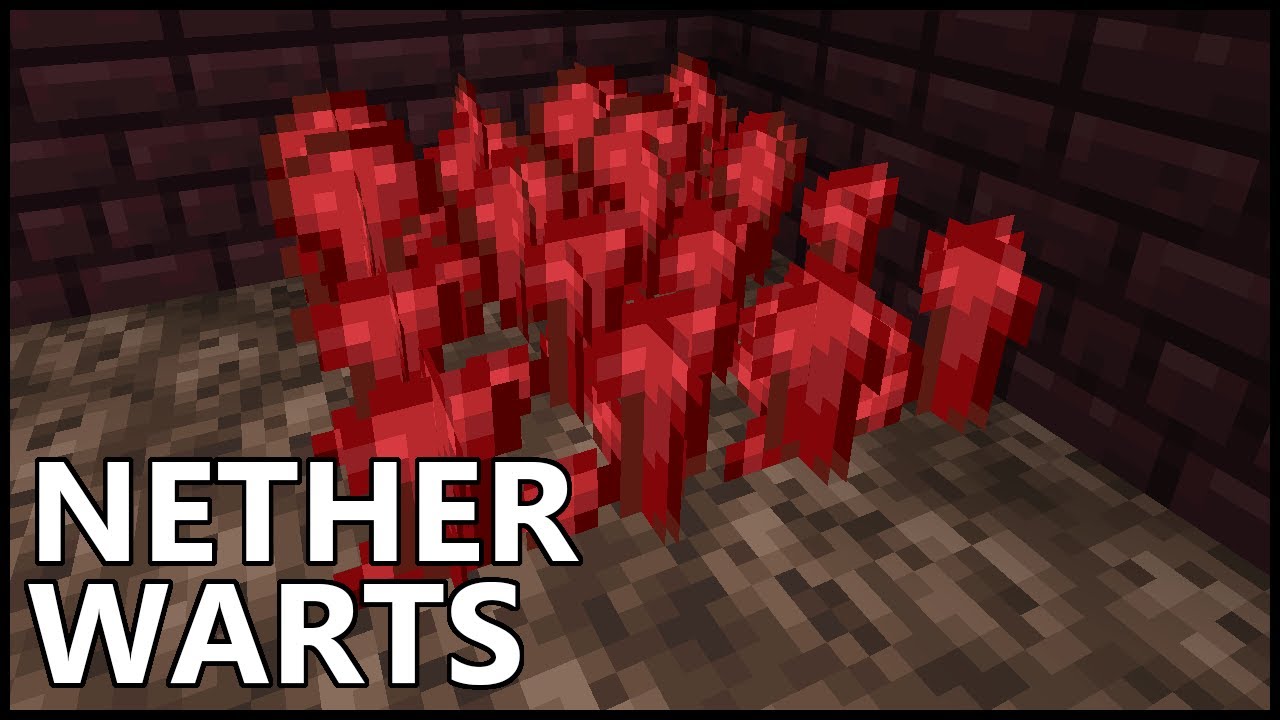
Image source: YouTube
Bastion Remnant Courtyards
If you cannot find a Fortress, your next target should be a Bastion Remnant. However, not all Bastions are created equal. Only the Housing Unit variant contains natural Nether Wart gardens. These gardens generate in the central courtyards, often surrounded by Piglins and Hoglins.
In these courtyards, Nether Wart generates in clusters of 1, 5, or 6 plants. While the yield is lower than a Fortress garden, Bastions are often easier to spot from a distance due to their massive, blackstone-heavy silhouettes. Be cautious: Piglins will defend their territory aggressively, so wearing a piece of gold armor is a leading strategy for safe harvesting.
How to Get Nether Wart from Structure Loot Chests
Sometimes, world generation can be unkind, and you may find a Fortress that lacks the traditional stairwell gardens. In these cases, your best option is to scour the structure's loot chests. While not a guaranteed find, chests offer a significant secondary chance to obtain the "seed" crops you need to start your own farm.
There is a 17.9% chance to find between 3 and 7 Nether Warts in any given Fortress chest. Since a single fortress can have a dozen or more chests, the statistical likelihood of finding at least one stack is quite high.
While gardens are in Housing Units, the "Treasure Room" bastions often contain Nether Wart in chests located in the lower ramparts. These chests are heavily guarded by Piglin Brutes, so come prepared for a fight.
According to community data analysis , checking every chest is vital because even a single piece of Nether Wart can be expanded into a massive farm within an hour of gameplay. Never leave a structure until you have checked the "dead ends" of hallways, as chests often hide in the shadows of the Netherrack ceiling.
What to Do if Your Nether Fortress Has No Nether Wart
It is a common frustration: you spend an hour finding a Fortress, only to realize it is a "bridge-only" variant with no interior rooms or gardens. This is often referred to as the "Bad Fortress" problem. When this happens, you have two primary technical solutions to find the resource without starting a new world.
Using the F3 Pie Chart to Locate Hidden Fortresses
Java Edition Only
For players on the Java Edition, you can use a technical trick to find nearby structures through walls. By pressing
Shift + F3
, you open a pie chart that displays real-time game data. By navigating to
root.tick.level.entities
, you can see a breakdown of which mobs are currently loaded in your vicinity.
If you see a sudden spike in "Blaze" or "Wither Skeleton" entities on the chart, it means a Fortress is nearby, even if it is completely encased in Netherrack. This method is widely regarded as one of the most effective ways to locate structures when visibility is low due to the Nether's thick fog or terrain. If your current Fortress is a dud, use this tool to find the next one without flying aimlessly through the void.
Pivoting to Bastion Housing Units
If your Fortress search is failing, statistically, it is often faster to search for a Bastion Housing Unit. These structures are distinct because they feature a large, open courtyard in the center with multiple levels of "apartments" surrounding it. Because the Nether Wart grows in the open air of the courtyard, you can often spot it with a spyglass from a safe distance, avoiding the need to clear the entire structure if you are low on resources.
How to Grow and Farm Nether Wart Efficiently
Once you have obtained your first few pieces of Nether Wart, you should never need to hunt for it again. Farming it is relatively simple, but it follows different rules than Overworld crops like wheat or carrots.
- Prepare the Substrate: Place your Soul Sand in a flat grid. You do not need water, and light levels do not matter. Nether Wart grows just as well in total darkness as it does in bright light.
- Plant the Seeds: Right-click the Soul Sand with Nether Wart in your hand. You will see a small, red nub appear on the surface.
- Monitor Growth Stages: Nether Wart has four stages of growth (Age 0, 1, 2, and 3). Visually, stages 1 and 2 look very similar, but stage 3 is noticeably taller and thicker.
- Harvest at Maturity: Only harvest when the plant reaches Stage 3. If you harvest early, you will only get 1 Nether Wart back, meaning you won't increase your supply.
One of the most useful features of Nether Wart is its dimensional flexibility . While it is found in the Nether, it can be farmed in the Overworld or the End. Many players find it a top choice to set up their farm right next to their brewing stand in their main base for easy access. According to Fandom Wiki data , the average time for a crop to reach full maturity is approximately 34.13 minutes, though this varies due to the "random tick" mechanic.
How to Maximize Your Yield Using the Fortune Enchantment
If you are looking to build a massive surplus of Nether Wart for trading or large-scale brewing, you should never harvest by hand. Instead, use a tool enchanted with Fortune III .
| Harvesting Method | Minimum Yield | Maximum Yield | Average Yield |
|---|---|---|---|
| By Hand / Standard Tool | 2 | 4 | 3.0 |
| Fortune I | 2 | 5 | 3.5 |
| Fortune II | 2 | 6 | 4.0 |
| Fortune III | 2 | 7 | 4.5 |
Using Fortune III nearly doubles your average output per harvest. This is particularly important when you are starting with a small amount of "seed" wart. A single patch of 20 plants can yield up to 140 Nether Warts in a single harvest if you are lucky with your Fortune rolls. Note that the type of tool does not matter; a Fortune III shovel works just as well as a Fortune III pickaxe.
Common Mistakes and Myths About Getting Nether Wart
Because Nether Wart is an older item in Minecraft's history, there is a lot of outdated information circulating in community forums. Avoiding these pitfalls will save you from losing your hard-earned crops.
The Nether Wart Block Trap
Critical Warning You can craft nine Nether Warts into a Nether Wart Block . In many Minecraft recipes, blocks can be crafted back into their base components (like Iron Blocks back into Iron Ingots). This is not true for Nether Wart. Once you craft the block, it is a permanent decorative item. Many players have accidentally deleted their entire supply by "compressing" it for storage, only to find they cannot uncraft it. Only craft these blocks if you have a massive surplus and want to use them for building.
The Piglin Bartering Myth
A common question among players is whether you can get Nether Wart by bartering gold with Piglins. The answer is no . While Piglins trade many valuable Nether resources like Crying Obsidian and Fire Resistance potions, they do not trade Nether Wart. However, bartering for those Fire Resistance potions is a strong contender for the best way to prepare for a Fortress raid, as it allows you to stand in the lava gardens where the wart grows without taking damage.
Bone Meal Usage
Unlike wheat, carrots, or even Nether fungus (like Crimson Roots), Bone Meal has no effect on Nether Wart. There is no way to "force" the growth of the crop other than increasing the random tick speed of your world via commands. You must simply be patient and stay within the chunk-loading range of your farm.
Why You Need Nether Wart for Potion Brewing
The primary reason players hunt for Nether Wart is its role as the "universal solvent" of Minecraft alchemy. It is the sole ingredient used to create Awkward Potions . Without an Awkward Potion, you cannot create any of the following essential effects:
- Strength: Essential for taking down bosses like the Wither.
- Healing & Regeneration: Vital for survival in Hardcore mode.
- Fire Resistance: A requirement for safe Nether exploration and mining Ancient Debris.
- Swiftness: Used for faster travel and dodging projectiles.
Because every functional potion starts with Nether Wart, it is widely regarded as one of the most important items to secure early in your world's development. Once you have a steady supply, you transition from a basic survivor to a high-tier alchemist capable of tackling any challenge the game throws at you.
The Bottom Line: Key Takeaways
- Location Priority: Search Nether Fortress stairwells first; they offer the highest density of plants.
- Alternative Source: If Fortresses fail, look for the central courtyard of a Housing Unit Bastion.
- Loot Luck: Check every chest in these structures; there is a nearly 18% chance to find "seed" crops.
- Farming Rules: Always plant on Soul Sand. It grows in any dimension and requires no light or water.
- Yield Optimization: Use a Fortune III tool to increase your maximum drop from 4 to 7 per plant.
- Avoid the Trap: Never craft Nether Wart Blocks unless you are finished with brewing, as they cannot be uncrafted.
- Technical Tip: Use the Java F3 Pie Chart to detect Blazes if you are struggling to find a Fortress in the fog.
Your next step is to gear up with gold armor and a shield, head into the Nether, and secure at least one piece of this crimson fungus to begin your brewing journey.
Frequently Asked Questions
- Can you get Nether Wart from a Wandering Trader?
- No, the Wandering Trader does not carry Nether Wart in their trade pool. While they sell various Overworld plants and even some Nether items like Glowstone, Nether Wart remains exclusive to Nether structures and loot chests.
- Does Nether Wart need lava or heat to grow?
- No, Nether Wart has no environmental requirements other than being planted on Soul Sand. It does not need lava, specific light levels, or even to be in the Nether dimension. It will grow perfectly fine in a basement in the Overworld.
- Why is my Nether Wart not growing in the Overworld?
- First, ensure it is planted on Soul Sand (not Soul Soil). Second, remember that crops only grow when a player is nearby (within "random tick" range). If you plant it and then travel thousands of blocks away, the chunks will unload and growth will pause.
- Can I find Nether Wart in a Ruined Portal chest?
- No. While Ruined Portal chests contain many Nether-related items like Obsidian, Golden Carrots, and Flint and Steel, Nether Wart is not part of their loot table. You must enter the Nether and find a Fortress or Bastion.
- Is there any way to speed up Nether Wart growth?
- In vanilla survival Minecraft, there is no legitimate way to speed up the growth. Bone Meal does not work. The only way to get more wart faster is to expand the size of your farm and use a Fortune III tool during harvest to maximize the yield per plant.