Home
How to Play and Solve Scientific American Science Crosswords and Puzzles Online
You can access the full suite of Scientific American science crosswords and logic games directly at scientificamerican.com/games . New crosswords typically arrive monthly alongside the magazine issue, while math puzzles follow a weekly schedule. To find answers, use the digital "Assist" button to reveal letters or the entire grid. For print readers, selecting "Print" then "Solution" on the digital portal provides the full answer key.
For decades, Scientific American has been a cornerstone of science communication, and its puzzles have evolved into a sophisticated blend of academic rigor and recreational challenge. Unlike standard newspaper crosswords, these puzzles require a deep dive into biology, physics, and planetary science. Whether you are a long-time subscriber or a student looking to test your knowledge, the digital games hub offers a modern, interactive way to engage with complex scientific concepts.
Finding the Latest Scientific American Science Crosswords and Games
Navigating the Scientific American ecosystem to find your favorite puzzles is straightforward once you understand the release cadence. The primary destination is the official Games Hub , which serves as a centralized repository for all interactive content. This portal is designed to be mobile-responsive, allowing users to solve complex grids on tablets or smartphones without losing functionality.
The Release Schedule and Cadence
The release of new content is synchronized with the publication's editorial cycle. Science crosswords are generally released on a monthly basis, often appearing online just as the new magazine issue hits newsstands. For example, the March 2025 issue features puzzles that directly reference its cover stories on neuroscience and quantum physics. In contrast, the math and logic puzzles, such as Sudoku and KenKen, are updated weekly, providing a consistent stream of fresh challenges for daily solvers.
Digital vs. Print Experience
While many readers still enjoy the tactile experience of solving a crossword in the physical magazine, the digital version offers several advantages. The online portal includes "clue-linking," where clicking a clue highlights the corresponding squares in the grid. Furthermore, many clues in the digital version contain hyperlinks to relevant Scientific American articles. This allows players to research the answer in real-time, turning a simple game into a guided educational journey.
Image source: Scientific American
Exploring the Variety of Games on the Scientific American Portal
The portal is far more than just a crossword site; it is a comprehensive logic center. The games are categorized by the primary skill they test, ranging from vocabulary and general science knowledge to pure arithmetic and spatial reasoning. This variety ensures that there is a top-tier option for every type of thinker.
Flagship Science Crosswords
The "Science Crossword" is the crown jewel of the collection. These are full-sized 15x15 or larger grids constructed by professionals like Norah Sharpe. They often feature a central theme—such as "Breakthroughs in Genetics" or "Space Exploration"—that ties the longest answers together. For those with less time, the "Mini-Crossword" provides a 5x5 grid that can typically be solved in under two minutes, focusing on quick-fire science trivia.
Math, Logic, and Word Games
Beyond crosswords, the site hosts a robust selection of logic-based games. Sudoku is offered in five difficulty tiers, including the "Killer Sudoku" variant which adds an extra layer of arithmetic challenge. KenKen is available in 4x4 and 6x6 grids, perfect for practicing basic operations under logic constraints. For word lovers, Spellements and Wordology offer unique twists on anagrams and vocabulary building, often using scientific terminology as the base.
| Game Name | Frequency | Difficulty Range | Primary Skill |
|---|---|---|---|
| Science Crossword | Monthly | Intermediate to Expert | Science Vocabulary |
| Mini-Crossword | Daily/Weekly | Easy to Intermediate | Quick Recall |
| Sudoku | Weekly | Easy to Killer | Logic & Numbers |
| KenKen | Weekly | Intermediate | Arithmetic |
| Science Jigsaws | Varies | Casual | Visual Recognition |
Accessing Answers and Solutions for Digital and Print Puzzles
One of the most common frustrations for puzzle solvers is getting stuck on a particularly obscure clue. Scientific American provides several built-in tools to help users navigate these hurdles without completely giving up on the challenge. These features are designed to provide "scaffolded" help, allowing you to reveal as much or as little as you need.
Using the Digital "Assist" Feature
In the digital interface, the "Assist" button is your primary resource. When clicked, it opens a menu with three distinct options:
- Reveal Letter: Fills in the currently selected square. This is a highly effective way to get a "toe-hold" in a difficult section.
- Reveal Word: Fills in the entire answer for the selected clue. This is useful when you are certain of the surrounding letters but cannot identify the specific term.
- Reveal Grid: Fills in the entire puzzle. This is typically used by players who want to check their work or see the final theme after they have finished.
Solutions for Magazine Subscribers
Print readers often find that the solution is not printed in the same issue to prevent spoilers. To find the answer key for a print puzzle, you should visit the digital portal and locate the corresponding month's crossword. By selecting the "Print" icon and then choosing "Solution," you can generate a PDF or on-screen view of the completed grid. This ensures that print enthusiasts have the same access to answers as digital-first players.
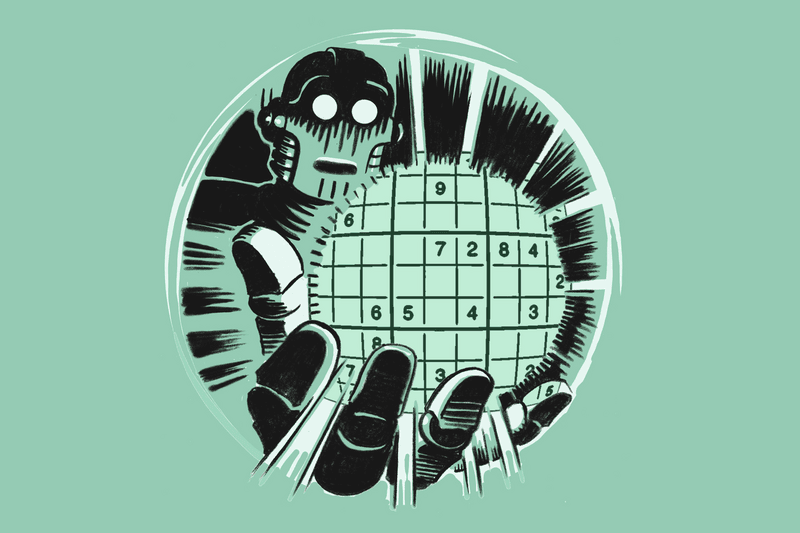
Image source: Scientific American
Mastering the Complex Logic and Rebus Themes in Science Crosswords
What sets Scientific American crosswords apart from standard puzzles is their frequent use of "rebus" mechanics and non-standard logic. In the world of crosswords, a rebus is a square that contains more than one letter or a specific symbol. In science-themed puzzles, these are often used to represent chemical elements, mathematical symbols, or thematic concepts that "break" the grid.
The "STARSHOT" Mechanic Case Study
A notable example of this complex logic appeared in a recent puzzle featuring the "STARSHOT" theme. In this instance, the letters S-T-A-R were removed from longer words and placed in circled spaces elsewhere in the grid. For example, the clue "Éclair filling" resulted in the answer CUD . At first glance, this makes no sense. However, when you realize the "STAR" has "shot" out of the word, you get CUSTARD . Understanding these "meta-puzzles" is essential for solving the more advanced monthly releases.
Predicting Clues Based on Editorial Content
Because the puzzles are curated by the editors, you can often predict the answers by skimming the latest magazine articles. If the current issue has a feature on "Halophytes" (salt-tolerant plants) or "White-throated Sparrows," you can almost guarantee those terms will appear in the crossword. This thematic integration makes the puzzles a top-tier choice for reinforcing the knowledge gained from reading the magazine.
Advanced Strategies for Solving Weekly Math and Logic Challenges
The math puzzles on the portal often go beyond simple calculation, requiring solvers to identify patterns that may not be immediately obvious. While some users on platforms like Reddit have critiqued these as "pattern guessing," there are specific tools you can use to approach them with a more scientific methodology.
The OEIS Power-User Hack
For puzzles involving number sequences, the Online Encyclopedia of Integer Sequences (OEIS) is an invaluable resource. If you encounter a string of numbers like 1, 2, 4, 8, 13, 18, 24... and cannot find the logic, entering them into the OEIS can reveal the underlying mathematical formula. For instance, Sequence A080709 has appeared in community discussions as a particularly tricky logic gate. Using professional-grade tools like the OEIS ranks among the top strategies for mastering the "Killer" difficulty tiers.
Navigating "Arbitrary Logic"
Some math puzzles rely on visual symmetry or "arbitrary rules" rather than pure arithmetic. When you find yourself stuck, try looking at the puzzle from a different perspective:
- Check for rotational symmetry in the number placement.
- Look for digital roots (adding the digits of a number until you reach a single digit).
- Consider if the numbers represent physical constants (like the speed of light or Planck's constant) rather than just variables.
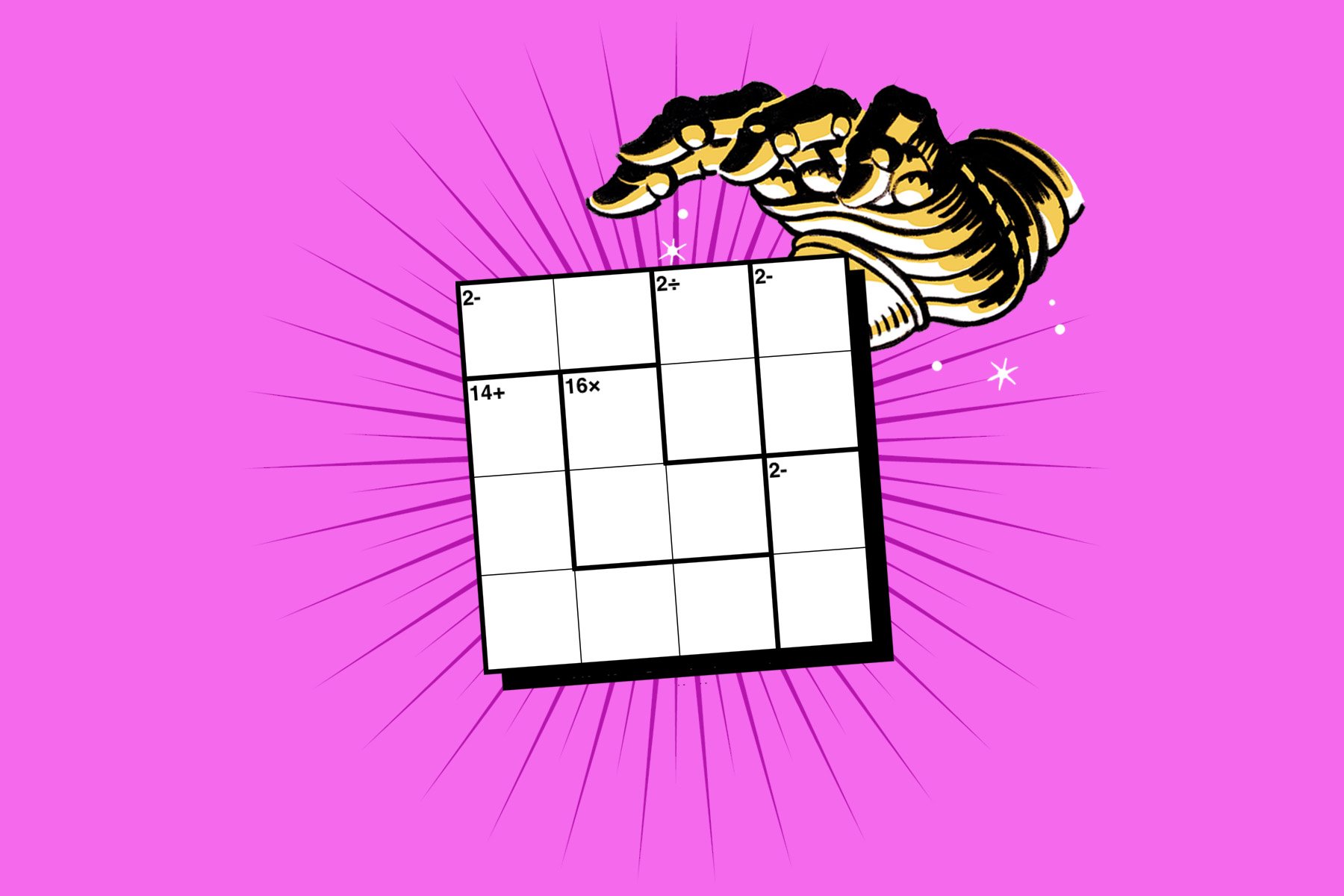
Image source: Scientific American
Implementing Science Puzzles in High School and College Classrooms
Educators often look for ways to make science more engaging, and these puzzles provide a significant advancement over standard classroom worksheets. While sites like Rudolph Academy offer excellent resources for K-12, Scientific American puzzles are better suited for AP Science or Undergraduate students due to their complexity.
Scaffolding the Experience for Students
To use these in a classroom setting, teachers should consider "scaffolding" the assignment. Instead of just handing out the grid, provide students with the links to the Scientific American articles that inspired the clues. This turns the puzzle into a scavenger hunt for information, requiring students to read and comprehend scientific text to find the answers. This method is widely considered one of the best ways to build scientific literacy.
Thematic Lesson Planning
You can pair specific puzzles with current events. For example, a puzzle themed around "Planetary Science" can be used during a unit on the solar system, using clues about "Missing Planets" or "Exoplanet Atmospheres" to spark discussion. This approach helps students see science as a living, breathing field of study rather than a collection of static facts in a textbook.
Resolving Common Technical Issues and Navigating the Interface
Even the most well-designed portals can occasionally experience glitches. Users have occasionally reported typos in clues or issues with the grid not loading correctly on certain browsers. Knowing how to handle these technical hurdles ensures your solving experience remains smooth.
The games portal works best on modern versions of Chrome, Firefox, or Safari. If a grid isn't loading, try clearing your browser cache or disabling ad-blockers that might interfere with the game scripts.
If a clue seems impossible (e.g., "56D" when the grid only goes to 50), it may be a temporary typo. These are usually corrected within 24-48 hours. Check community forums like Reddit's r/crossword to see if others have flagged the same issue.
For persistent issues or to report a factual error in a science clue, you can email the games team directly at games@sciam.com . They are notably responsive to feedback from the solving community.
Frequently Asked Questions
Yes, as of late 2026, the puzzles on the Scientific American games portal are free to play for all users. While some magazine content requires a subscription, the interactive games are currently accessible to the public to encourage scientific engagement and literacy.
New math and logic puzzles, including Sudoku and KenKen, are typically released on a weekly basis. This provides a regular cadence for solvers who enjoy daily or weekly mental exercises. The science crosswords, however, usually follow a monthly schedule tied to the magazine's release.
Absolutely. The Scientific American games hub is built using responsive web design, meaning the interface adjusts to fit the screen of your smartphone or tablet. The "Assist" and "Print" features remain fully functional on mobile browsers.
The most direct way to find an answer is to use the "Reveal Word" option under the "Assist" menu in the digital game. Additionally, many clues are hyperlinked to articles on the Scientific American website where the answer is discussed in detail.
The puzzles are created by professional crossword constructors, such as Norah Sharpe, often in collaboration with the magazine's editorial team. This ensures that the clues are not only challenging from a wordplay perspective but also scientifically accurate and up-to-date.
Key Takeaways for Mastering Science Puzzles
- Thematic Content: Crosswords are closely tied to the monthly magazine issues; reading the articles provides a significant advantage.
- Digital Tools: Use the "Assist" button for scaffolded help, ranging from single letters to the full grid.
- Math Resources: Leverage the OEIS database to solve complex number sequences in weekly math challenges.
- Rebus Logic: Be prepared for non-standard mechanics like the STARSHOT theme where letters move outside their squares.
- Educational Use: These puzzles are a top-tier resource for AP and Undergraduate science educators to build literacy.
- Technical Support: Report typos or broken grids directly to games@sciam.com for quick resolution.
Start your next challenge by visiting the games hub every Monday for new logic puzzles and monthly for the flagship science crossword.