Home
How to Play the Immaculate Grid and Master Your Rarity Score
The Immaculate Grid is a daily 3x3 sports trivia game where players have exactly nine guesses to fill nine squares based on team and statistical criteria. To achieve a low Rarity Score , you must avoid obvious superstars and instead select obscure "journeymen" who played for multiple franchises. A successful "Immaculate" game requires a 9/9 score with zero incorrect guesses.
If you have ever searched for "imaclate grid" after a frustrating morning of sports trivia, you are not alone. This common misspelling leads thousands of fans daily to one of the most engaging digital pastimes in modern sports culture. Originally launched for baseball fans in April 2023 by Brian Minter, the game was acquired by Sports Reference in July 2023, expanding its reach across the NFL, NBA, NHL, and even global soccer.
While the premise seems simple, the depth of the game lies in the competitive pursuit of the lowest possible rarity score. It is no longer enough to simply finish the grid; the community now prizes the ability to recall a middle reliever from the 1990s who spent three weeks with the Pittsburgh Pirates. This guide explores the mechanics, the data-driven strategies, and the specific player "cheat codes" that can help you master the daily challenge.
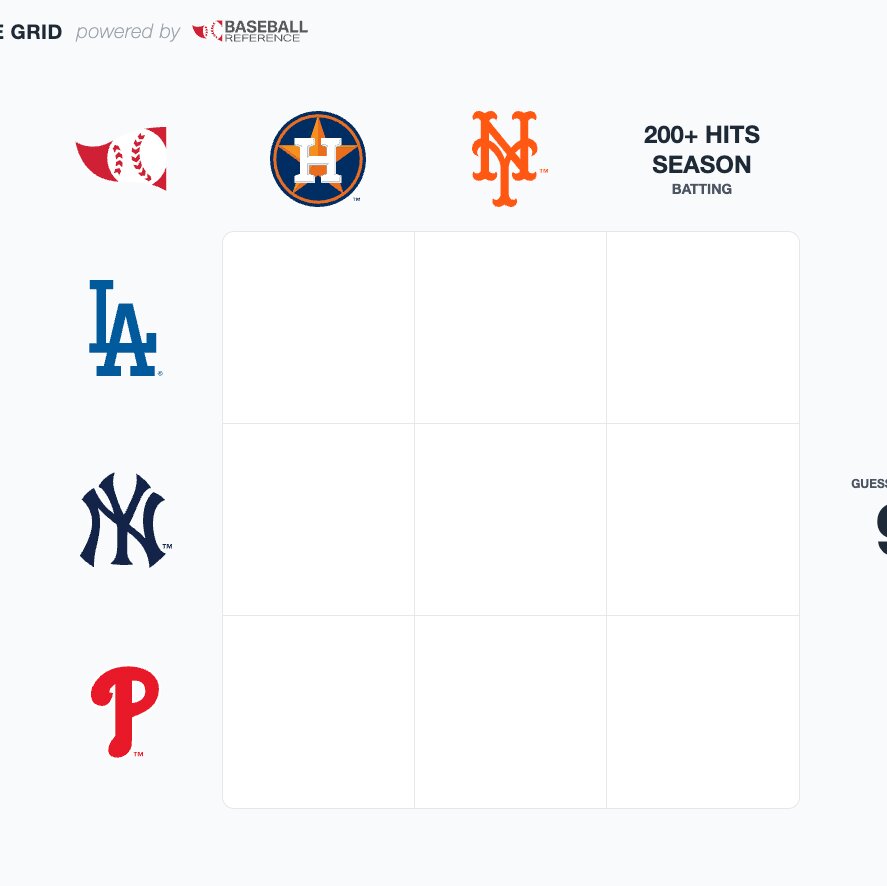
Image source: The New York Times
How Does the Immaculate Grid Actually Work?
At its core, the game is a logic puzzle wrapped in sports history. The 3x3 grid presents two axes: the horizontal top row and the vertical left column. Each square represents the intersection of two criteria. For example, if the top row lists the "New York Yankees" and the left column lists the "Los Angeles Dodgers," you must name a player who played for both franchises during their career.
What Are the Official Rules for Every Daily Game?
The rules are strict to ensure the "Immaculate" status remains a genuine achievement. You are granted exactly nine guesses for nine squares. There is no room for error; a single incorrect guess prevents you from achieving a perfect grid. Furthermore, the "One and Done" rule dictates that once you use a player's name in a square, you cannot use them again anywhere else in that day's grid, even if they fit multiple categories.
According to Wikipedia's entry on the game , a player qualifies for a team square if they appeared in at least one regular-season or postseason game for that franchise. This includes pinch-running appearances or late-inning defensive substitutions. However, spring training or minor league service time does not count toward eligibility.
Which Sports Can You Play Right Now?
Since its acquisition by Sports Reference, the platform has diversified significantly. While MLB remains the flagship, fans can now test their knowledge in:
- NFL Grid: Often features statistical milestones like "1,000 Yard Rushers" or "Pro Bowl selections."
- NBA Grid: Focuses on team history and accolades like "All-NBA Team" or "Rookie of the Year."
- NHL Grid: Includes specific hockey metrics such as "30+ Goal Seasons."
- Immaculate Footy: The soccer variant covers major European leagues. Note that men's data typically starts from the 1992-93 season, while women's data is available from 2016-17 onwards.
What Is a Rarity Score and Why Does It Matter?
The Rarity Score is the primary metric used by the community to rank performance. It is a measure of how "obvious" your answers were compared to every other person who played the grid that day. If you choose a Hall of Fame legend for a square, your score will likely be high. If you choose a forgotten journeyman, your score will be low.
How Is the Rarity Percentage Calculated?
Every time a player submits a correct answer, the system tracks the percentage of users who chose that specific athlete. For instance, if 45% of players use Derek Jeter for a Yankees/Shortstop square, your score for that square is 45. If you instead choose a player like Alvaro Espinoza, who might only be selected by 0.2% of users, your score for that square is 0.2. Your total Rarity Score is the sum of the percentages from all nine squares.
Why You Should Aim for a Lower Total Score
While the game does not officially declare a "winner," the rarity score serves as a social currency. Sharing a grid on social media with a low score demonstrates a deeper, more nuanced understanding of sports history. It moves the game from a simple memory test to a strategic exercise in obscurity. As noted by Adam Darowski, Director of Product at Sports Reference, the rarity score is intentionally subjective to keep the game accessible while rewarding those who dig deep into the archives.
How to Find the Top Journeyman Players for Any Square
The secret to a low rarity score is the "Journeyman Strategy." These are players who moved frequently between teams, often serving as reliable role players or relief pitchers. Memorizing a handful of these athletes can provide "cheat codes" for almost any team combination.
Who Are the Top Division Sweepers in Baseball?
A "Division Sweeper" is a player who has played for every team within a specific division. These players are exceptionally valuable because they can solve any square involving teams from that division. Community research on platforms like Reddit has identified several key sweepers:
- NL West: Steve Finley or Matt Herges. Finley is particularly useful as he played for the Dodgers, Giants, Padres, Rockies, and Diamondbacks.
- AL East: Kelly Johnson or Steve Pearce. Johnson is a legendary grid-buster, having played for the Blue Jays, Yankees, Red Sox, Orioles, and Rays.
- NL Central: Ted Savage or Cesar Izturis.
- AL West: Mark McLemore.
Which Emergency Players Should You Memorize for MLB?
There are a few "Mount Rushmore" figures in the world of journeymen. These players appeared for so many franchises that they are almost always a safe bet for a team-to-team square. Edwin Jackson ranks among the top choices, having played for a record 14 different MLB franchises. Other essential names to keep in your back pocket include:
| Player Name | Sport | Teams Played | Primary Utility |
|---|---|---|---|
| Edwin Jackson | MLB | 14 | Covers nearly half the league; great for rarity. |
| Octavio Dotel | MLB | 13 | Excellent for late 90s/early 2000s team combos. |
| Ish Smith | NBA | 13 | A premier choice for any NBA team-to-team square. |
| Ryan Fitzpatrick | NFL | 9 | The "Magic" solution for many NFL quarterback squares. |
| Rich Hill | MLB | 13 | Still active in recent years, making him easy to recall. |
How to Use the Rockies Strategy to Lower Your Score
Community data suggests that users often overlook younger franchises or those with less storied histories. The "Rockies Strategy" involves prioritizing players from the Colorado Rockies, Miami Marlins, or Tampa Bay Rays. Because these teams have shorter histories, the pool of players who have played for them and another team is smaller, yet users still tend to gravitate toward the most famous names. Using a semi-obscure middle reliever from the 2005 Marlins will almost always yield a lower rarity score than using a 1970s Yankee.
What Does the Data Tell Us About the Hardest Grid Squares?
Statistical analysis of millions of completed grids has revealed fascinating patterns in human memory and sports knowledge. Some squares are nearly universal successes, while others act as "grid killers."
Which Player Combinations Have the Highest Success Rates?
The "easiest" square ever recorded in the game's history was the intersection of "500+ Home Runs" and the "San Francisco Giants." According to community data, this square had a 98.1% success rate, with the vast majority of players choosing Barry Bonds. Bonds himself is a rarity score trap; he has been the top guess for various squares over 160 times, often resulting in scores as high as 70% or 80% for a single square.
Why the Rookie of the Year Category Often Trips Up Players
Award-based squares are notoriously difficult. The "Rookie of the Year x Toronto Blue Jays" square, for example, has historically shown a success rate of only 19.7%. This is partly because players often forget which team an athlete was playing for when they won a specific award. Unlike team-to-team squares, award logic is tied to the specific year the player won. If a player won Rookie of the Year with the Athletics and later played for the Yankees, they only count for the "Athletics x Rookie of the Year" square, not the Yankees one.
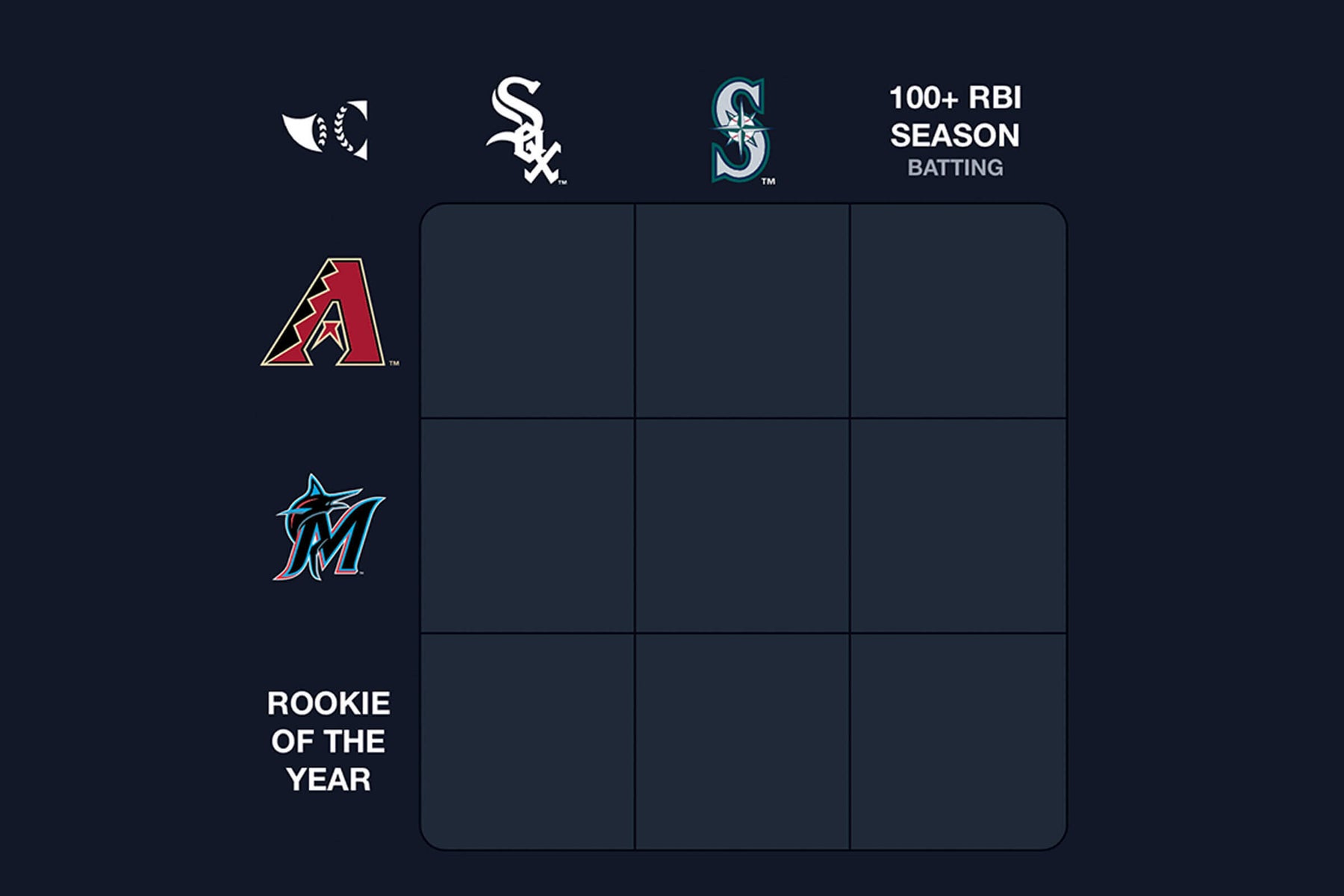
Image source: The New York Times
What Is a Unicorn Grid and How Rare Are They?
A "Unicorn Grid" occurs when a single player fits every single one of the nine squares in a 3x3 grid. While mathematically improbable, there have been over 300 documented instances where this was possible. For example, in Grid 767, the player Vic Power could have theoretically been placed in every square. While you cannot actually use the same player twice, the existence of these "Unicorns" highlights the incredible careers of versatile athletes who spanned multiple eras and teams.
How Do Rules Change Between MLB and Immaculate Footy?
While the 3x3 structure remains constant, the logic governing different sports varies based on how those sports track data. Understanding these nuances is vital for maintaining your streak.
Understanding Season vs Career Stats in the NFL Grid
In the NFL version of the game, statistical categories are often season-specific. A square might ask for a "1,000 Yard Rusher." This means the player must have recorded 1,000 yards in a single season for that specific team. This is a significant departure from the MLB grid, where a "3,000 Hit Club" member qualifies for any team they ever played for, regardless of how many hits they recorded with that specific franchise.
Navigating the Soccer Transfer Window Logic
Immaculate Footy introduces the complexity of loan spells. In most cases, if a player was officially registered and appeared in a match for a club while on loan, they qualify for that club's square. However, the short-term nature of soccer transfers means players like Zlatan Ibrahimović or Nicolas Anelka become exceptionally strong journeyman options due to their extensive travels across Europe's top leagues.
The Birthplace Trap and How to Avoid It
Squares involving "Born in [Country]" are common pitfalls. Players often assume an athlete's nationality based on the national team they represent, but the grid tracks physical birthplace . A player might represent the Italian national team but have been born in Brazil. To combat this, many expert players use World Baseball Classic (WBC) or FIFA World Cup rosters as mnemonic devices, though they always double-check the specific city of birth when in doubt.
How to Make the Game Even Harder for Yourself
For those who find the daily grid too easy, the community has developed several "Hard Modes" to increase the challenge. These self-imposed rules require no changes to the website but demand a much higher level of knowledge.
Can You Complete a Hall of Fame Only Grid?
The "Cooperstown Challenge" (or its equivalent in other sports) requires that every player used in the grid must be an inducted member of the Hall of Fame. This significantly narrows the pool of available players, especially for team-to-team squares involving expansion franchises like the Arizona Diamondbacks or the Tampa Bay Rays, who have fewer Hall of Famers in their history.
What Is the Mustache Grid Challenge?
Perhaps the most famous community-created variant is the "Mustache Grid." In this version, every player selected must be known for having prominent facial hair during their playing days. While this is purely for aesthetic satisfaction and personal bragging rights, it adds a layer of visual memory to the standard statistical recall. Other variants include the "One-Sided Trade" grid, where every player must have been part of a famously lopsided transaction.
Frequently Asked Questions
Does a player count if they only played one game for a team?
Yes, the Immaculate Grid rules are quite inclusive. As long as a player appeared in at least one regular-season or postseason game, they are eligible for that team's square. This includes "cup of coffee" players who may have only had a single at-bat or played one inning in the field. This is a vital strategy for achieving low rarity scores, as these players are rarely remembered by the general public.
How do I find and play old Immaculate Grids?
Sports Reference maintains an extensive archive of every grid ever published. You can access these by clicking on the "Archive" button on the main game page. This is an excellent way to practice your journeyman knowledge or test yourself on specific eras of sports history without the pressure of the daily live leaderboard. Many players use the archive to "warm up" before tackling the current day's challenge.
What happens if a team moves, like the Expos to the Nationals?
In the Immaculate Grid, franchise history is treated as a continuous entity. Therefore, players who played for the Montreal Expos qualify for Washington Nationals squares, and players from the Seattle SuperSonics qualify for the Oklahoma City Thunder. This also applies to older moves, such as the Brooklyn Dodgers or the Milwaukee Braves. Always consider the entire franchise lineage when looking for compatible players.
Why did my rarity score change throughout the day?
Rarity scores are calculated in real-time based on the total pool of players who have completed the grid that day. If you play early in the morning, your score is based on a smaller sample size. As more people play and choose different (or the same) players, the percentages shift. A player who was 1% at 8:00 AM might become 5% by 8:00 PM if a popular sports podcast mentions them as a good answer.
Is there an official Immaculate Grid app for mobile?
Currently, there is no standalone official app in the Apple App Store or Google Play Store. The game is designed to be played directly in a mobile or desktop browser via the Sports Reference website. This allows the developers to update the database and rarity scores instantly without requiring users to download app updates. Most users simply bookmark the page or add a shortcut to their home screen for easy access.
Key Takeaways for Mastering the Grid
- Avoid superstars like Derek Jeter or Barry Bonds unless you are stuck; they will almost always inflate your rarity score.
- Memorize "Division Sweepers" such as Steve Finley or Kelly Johnson to quickly solve complex team-to-team intersections.
- Leverage expansion teams like the Rockies or Marlins, as their players are often overlooked by the general community.
- Understand award logic , specifically that awards like Rookie of the Year are tied to the team the player was on at the time of the win.
- Use the "Emergency Five" (Edwin Jackson, Octavio Dotel, Rich Hill, Bartolo Colon, and Matt Stairs) as reliable backups for MLB grids.
- Check franchise history to ensure you aren't missing connections from moved teams like the Expos or Oilers.
Start your next daily grid by identifying the most obscure player you know for the hardest square first to set a strong foundation for a low rarity score.