Home
Which Pokémon Are Actually Birds and How Do They Rank in Battle?
A "Bird Pokémon" is defined by its avian visual design, while a "Flying-type" is a mechanical classification. While most birds are Flying-types, many iconic birds like Blaziken and Empoleon lack the type entirely. Conversely, non-birds like Gyarados and Charizard are mechanically Flying-types. In competitive play, Flying-types rank among the fastest in the game, though they typically possess lower physical defense stats.
For over three decades, the Pokémon franchise has populated its world with creatures inspired by real-world biology. Among the most recognizable are the avian species, commonly referred to by fans as "bird Pokémon." However, identifying a bird in the Pokédex is more complex than simply looking for feathers. The distinction between a Pokémon's visual inspiration and its mechanical "Type" creates a fascinating dynamic for both casual collectors and competitive strategists.
As of 2026, the Pokédex has expanded to include over a thousand entries, with the Flying type remaining one of the most prevalent. According to data from PokémonDB , Flying-type Pokémon make up approximately 11.19% of the total roster, ranking as the fourth most common type in the series. This article explores the nuances of avian design, the technical glitches of the past, and the strategic depth of these winged warriors.
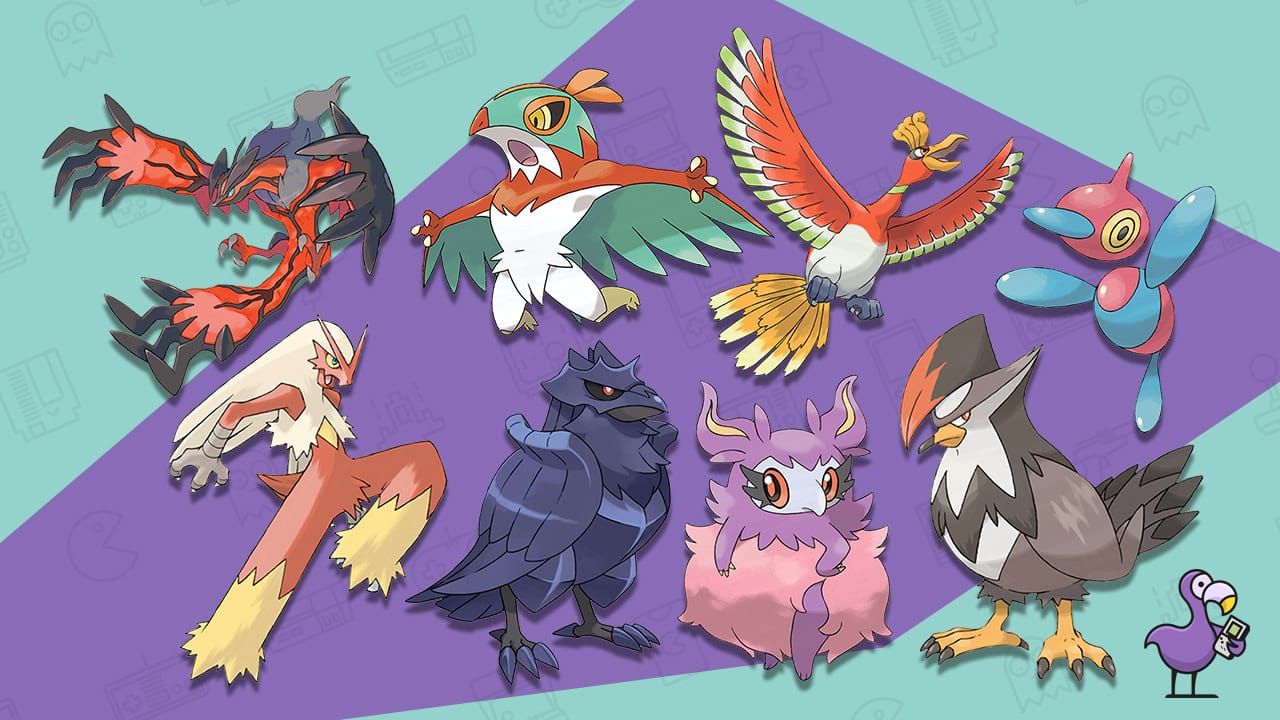
Image source: Retro Dodo
How to Tell the Difference Between Birds and Flying Types
The most common misconception in the Pokémon community is that "Bird" and "Flying" are interchangeable terms. In reality, they represent two different layers of game design. The "Bird" category is an anatomical classification used by the artists at Game Freak, whereas "Flying" is a mechanical element that dictates strengths, weaknesses, and move sets.
Most bird-inspired Pokémon are indeed Flying-types, but the exceptions are numerous and notable. For instance, the Grass-type starter Decidueye is clearly an owl, yet it loses its Flying type upon evolving into its Ghost-type form. Similarly, Gyarados is a serpentine dragon based on Japanese mythology, but mechanically, it is a Water/Flying type. This discrepancy often leads to confusion during battle, where a player might expect a bird to be weak to Electric attacks, only to find it is a Ground-type like Decidueye's Hisuian form.
| Pokémon | Visual Design | Primary Type | Bird Status |
|---|---|---|---|
| Pidgeot | Osprey/Eagle | Normal/Flying | Yes |
| Gyarados | Sea Dragon | Water/Flying | No |
| Blaziken | Rooster | Fire/Fighting | Yes |
| Charizard | European Dragon | Fire/Flying | No |
| Empoleon | Emperor Penguin | Water/Steel | Yes |
Understanding this distinction is vital for competitive play. A "Bird" that isn't a Flying-type avoids the common weaknesses to Rock, Ice, and Electric moves. Conversely, a "Flyer" that isn't a bird might have access to a completely different move pool, such as Gyarados using powerful Water-type attacks while maintaining an immunity to Ground-type moves like Earthquake.
What Is the Secret Bird Type Glitch from the Original Games?
Long-time fans often whisper about the "Bird Type," a phantom element that exists within the code of the original Pokémon Red, Blue, and Yellow versions. While the official games use the "Flying" type, internal data reveals that a distinct "Bird" type was planned during development but ultimately scrapped.
This unused type is most famously associated with MissingNo. , the legendary glitch Pokémon. When players encounter MissingNo., its type is often listed as "Bird/Normal" rather than "Flying/Normal." This suggests that in the early stages of the 1996 release, the developers intended to categorize avian creatures separately from other flying entities like bats or dragons. According to technical documentation on Bulbapedia , the Bird type has no defined weaknesses or resistances in the final game code, acting as a placeholder that was never fully deleted.
The removal of the Bird type was likely a move toward simplification. By grouping all airborne creatures under the "Flying" banner, the developers created a more intuitive rock-paper-scissors mechanic. However, the legacy of the Bird type remains a popular topic for "Pokétubers" and data miners who enjoy exploring the "what ifs" of the franchise's history.
Why Some Bird Pokémon Cannot Fly at All
In a world where a tiny bird like Pidgey can carry a human across a continent using the move "Fly," it is ironic that some of the most powerful avian Pokémon are permanently grounded. These "Non-Flying Birds" are typically based on real-world flightless species or have traded their wings for other elemental powers.
- Blaziken: This Fire/Fighting starter is based on a Shamo chicken or rooster. While it can leap over buildings, it lacks the Flying type and cannot learn the move Fly.
- Empoleon: Based on the Emperor Penguin, this Water/Steel type uses its wing-like flippers as blades rather than for flight.
- Sirfetch’d: A pure Fighting-type evolution of the Galarian Farfetch’d, this wild fowl carries a heavy leek lance and shield, making flight impossible.
- Espathra: Introduced in Generation IX, this ostrich-inspired Pokémon is a pure Psychic-type. Despite its avian anatomy, it relies on its incredible running speed.
The case of Flittle is particularly interesting. While some community members argue its design resembles a Dumbo Octopus, it is officially categorized as a bird because it evolves into the ostrich-like Espathra. This highlights how the Pokémon world often prioritizes evolutionary lineage over immediate visual cues. These grounded birds often rank among the top choices for players who want the aesthetic of an avian companion without the defensive baggage of the Flying type's weaknesses.
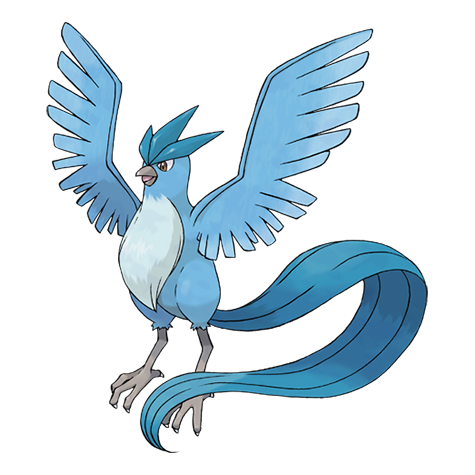
Image source: Pokemon.com
How the Roost Move Changes Your Pokémon Type Mid-Battle
One of the most technically nuanced mechanics involving bird Pokémon is the move Roost . Introduced in Generation IV, Roost is a healing move that restores 50% of the user's maximum HP. However, it comes with a significant tactical trade-off: for the remainder of the turn, the user loses its Flying type.
This "Type-less" state is a significant advancement in competitive strategy. If a pure Flying-type like Rookidee uses Roost, its defensive profile changes entirely. In Generation IV, a pure Flying-type would become a "???" type; however, from Generation V onwards, they temporarily become a "Normal" type. This allows a bird to strategically shed its weaknesses to Electric, Rock, and Ice attacks if it moves before the opponent.
"Using Roost isn't just about healing; it's about identity manipulation. A well-timed Roost can turn a certain knockout from a Thunderbolt into a neutral hit, allowing your bird to survive and counter-attack."
Pure Flying-types are exceptionally rare, with only three existing in the current Pokédex: Tornadus , Rookidee , and Corvisquire . For the vast majority of birds, which are dual-typed (like the Normal/Flying Pidgeot), Roost simply removes the Flying half, leaving them as pure Normal-types for that turn. Mastering this timing is what separates casual players from top-tier competitive trainers.
Categorizing Pokémon by Real World Ornithology
To truly understand the diversity of bird Pokémon, we can look at them through the lens of actual ornithology. Game Freak's designers often pull specific traits from real bird families to give each Pokémon a unique silhouette and personality.
Owls and Birds of Prey
The Strigiformes (owls) are well-represented in the Pokémon world. Hoothoot and Noctowl capture the nocturnal, wise aesthetic of traditional owls, while Decidueye takes it a step further by incorporating the "stealthy hunter" aspect, using its feathers as arrows. Birds of prey, or raptors, serve as the inspiration for many "Regional Birds." Pidgeot shares traits with ospreys and eagles, while Staraptor is clearly influenced by the white-cheeked starling and hawks, known for its aggressive "Brave Bird" fighting style.
Penguins and Flightless Waterfowl
Penguins ( Sphenisciformes ) have a dedicated following in the fandom. Delibird is a festive take on the penguin, carrying gifts in its tail, while the Piplup line represents the more regal side of the family, culminating in the Steel-clad Empoleon . Waterfowl ( Anatidae ) are also common; Psyduck and Quaxly represent different takes on ducks—one focusing on the "silly" duckling trope and the other on the "preening" crested duck.
Parrots and Songbirds
For players who prefer colorful and vocal companions, the Psittaciformes (parrots) offer Chatot and Squawkabilly . Chatot is notably innovative for its ability to mimic human speech (a mechanic that was famously used in older DS games via the microphone). Songbirds like Fletchling (Japanese Robin) and Taillow (Barn Swallow) represent the smaller, faster species that players encounter in the early routes of their journey.
Ranking the Iconic Regional Birds from Every Generation
Every Pokémon journey begins with the "Regional Bird"—an avian species found within the first few routes of the game. This tradition started in 1996 with Pidgey and has evolved with every new generation. These birds are designed to be reliable companions that grow alongside the player, usually featuring a three-stage evolutionary line.
The lineage is as follows:
- Gen I: Pidgey → Pidgeotto → Pidgeot
- Gen II: Hoothoot → Noctowl
- Gen III: Taillow → Swellow
- Gen IV: Starly → Staravia → Staraptor
- Gen V: Pidove → Tranquill → Unfezant
- Gen VI: Fletchling → Fletchinder → Talonflame
- Gen VII: Pikipek → Trumbeak → Toucannon
- Gen VIII: Rookidee → Corvisquire → Corviknight
In Generation IX ( Scarlet and Violet ), the tradition saw a significant shift. While Wattrel and Kilowattrel serve as the primary avian family of the Paldea region, they broke the long-standing three-stage evolutionary norm, featuring only two stages. This change has sparked debate among fans, but Kilowattrel's Electric/Flying typing makes it a top-tier choice for utility in modern playthroughs. According to community discussions on Bulbagarden , many players find the streamlined evolution lines more practical for the fast-paced open-world gameplay of the recent titles.
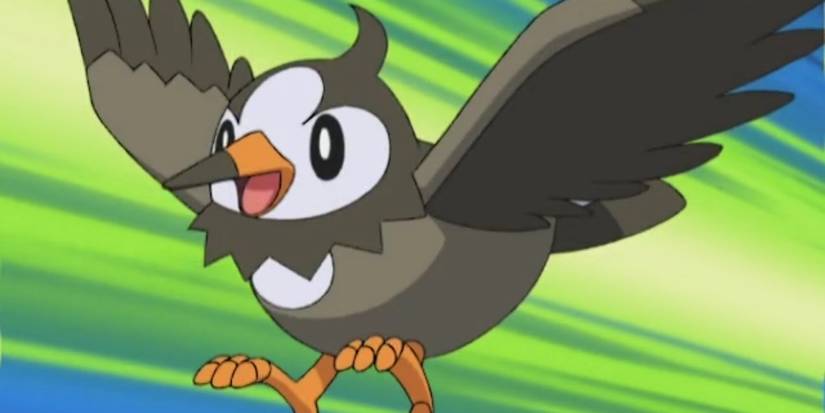
Image source: TheGamer
How to Catch the Hardest Legendary Birds
The "Legendary Birds" of Kanto— Articuno, Zapdos, and Moltres —are the gold standard for avian power. In recent years, their Galarian regional forms have added a new layer of difficulty for collectors. Unlike the stationary encounters of the past, the Galarian birds are roaming Pokémon that require patience and precision to capture.
In Pokémon GO , the Galarian birds are among the rarest spawns, appearing only through the Daily Adventure Incense. They have an incredibly high flee rate, making every encounter a high-stakes event. To maximize your chances, experts recommend the "Animation Timing" trick. You should wait for the bird to perform its resistance animation (where it attacks the screen) and throw your curveball approximately 0.5 seconds before the animation ends. This ensures the ball lands the moment the catch ring reappears, preventing the bird from batting the ball away.
In the main series games, catching these legends often involves "soft resetting" to ensure high IVs (Individual Values). While they are no longer considered "unbeatable" in the face of modern Power Creep, they remain highly competitive in restricted formats. Zapdos , in particular, has maintained a spot as a top-tier defensive pivot for decades due to its excellent typing and access to moves like Static and Roost.
Building a Competitive Bird Only Team
For players looking for a challenge, "Monotype" runs—where you only use one type of Pokémon—are a popular way to play. A "Bird-only" team (which usually translates to a Flying-type team) offers a high-speed, high-offense playstyle. According to RetroDodo , the key to a successful avian team is balancing the inherent fragility of the Flying type with secondary typing and utility moves.
A well-rounded bird team for 2026 might include:
- Corviknight (Steel/Flying)
- Your primary defensive wall. Its Steel typing negates the usual weaknesses to Rock and Ice, while its "Mirror Armor" ability reflects stat drops back at the opponent.
- Kilowattrel (Electric/Flying)
- A fast special attacker that can set up Tailwind to double your team's speed. Its "Competitive" ability punishes opponents who try to lower its stats.
- Hawlucha (Fighting/Flying)
- A unique physical sweeper. Its signature move, Flying Press , is notably innovative as it calculates damage using both Fighting and Flying type effectiveness simultaneously.
- Talonflame (Fire/Flying)
- The "Gale Wings" ability allows it to use Flying-type moves with priority when its HP is full, making it an excellent revenge killer.
By utilizing the Roost mechanic and diverse secondary types, a bird-only team can overcome its natural predators. While they may not be the most durable options, their ability to dictate the pace of the battle makes them a popular choice for aggressive players.
Frequently Asked Questions
Is Lugia considered a bird Pokémon?
While Lugia has avian features like wings and a beak-like snout, its design is primarily based on a Ryujin (a Japanese sea dragon) and a plesiosaur. Mechanically, it is a Psychic/Flying type. In the lore, it is the "Guardian of the Seas," which is why it is often found underwater despite its Flying type. Most fans categorize it as an avian-hybrid rather than a pure bird.
What is the strongest bird Pokémon in the current meta?
Strength is subjective based on the format, but Rayquaza (in its Mega form) is widely regarded as one of the most powerful entities ever created. In standard competitive play, Corviknight and Zapdos are consistently ranked among the top-tier choices due to their defensive utility and longevity. For raw speed and offensive pressure, Talonflame remains a strong contender.
Why is Psyduck categorized as a bird in some contexts?
Psyduck's Japanese name is "Koduck," and its anatomy is clearly that of a platypus-duck hybrid. Despite being a pure Water-type, it belongs to the "Water 1" and "Field" egg groups and shares many biological traits with other waterfowl Pokémon like Ducklett. It is a prime example of a "Bird" that lacks the Flying type.
Are there any pure Flying-type Pokémon?
Yes, but they are extremely rare. For many years, Tornadus was the only pure Flying-type. Generation VIII introduced Rookidee and its first evolution, Corvisquire , as pure Flying-types. Once Corvisquire evolves into Corviknight, it gains the Steel type, leaving the pure Flying category once again.
What happened to the Bird type after Generation 1?
The Bird type was fully replaced by the Flying type to streamline the game's elemental mechanics. The code for the Bird type was never updated or used again, remaining only as a "fossil" within the data of the original Game Boy cartridges. It serves as a reminder of the franchise's complex development history.
Key Takeaways
- Distinguish between design and mechanics: Not all birds are Flying-types (e.g., Blaziken), and not all Flying-types are birds (e.g., Gyarados).
- The "Bird" type was a glitch: It exists in the code of Gen 1 but was replaced by the Flying type before the official release.
- Roost is a tactical tool: Using this move removes your Flying type for one turn, which can be used to strategically shed defensive weaknesses.
- Speed is the avian advantage: Flying-types have the highest average Speed stat but generally suffer from lower physical Defense.
- Regional traditions are changing: Generation IX broke the 3-stage evolution tradition for regional birds with the Wattrel line.
- Real-world taxonomy matters: Pokémon designs are deeply rooted in actual bird families like Strigiformes (owls) and Sphenisciformes (penguins).
To improve your game, try incorporating a dual-type bird like Corviknight into your team to balance speed with much-needed defensive bulk.