Home
Which Stardew Valley Farm Map Should You Choose for Your Next Save?
For players seeking maximum profit, the Standard Farm remains a top choice due to its high tillable tile count. If you prefer a faster start with animals, the new Meadowlands Farm (added in 1.6) provides a coop and blue grass immediately. For aesthetic builders, the Forest Farm offers a cozy atmosphere and renewable hardwood, while the Four Corners map stands out as a leading option for multiplayer sessions.
Why Your Choice of Farm Map Matters More Than You Think
Selecting a farm map in Stardew Valley is one of the few permanent decisions you make. Unlike your clothing, your spouse, or even your profession, the physical layout of your land is locked at character creation. According to the official Stardew Valley Wiki , there is no in-game mechanism to swap your farm type once the journey begins. This permanence means your choice dictates your daily workflow for hundreds of in-game hours.
The map you choose influences every pillar of gameplay: farming, foraging, fishing, mining, and combat. A map with heavy water features, like the Riverland farm, naturally pushes you toward fishing but severely limits your ability to plant massive fields of Ancient Fruit. Conversely, a flat map provides a blank canvas for industrial-scale production but may feel visually sterile to those seeking a "cozy" experience.
With the release of the 1.6 update, the "meta" of map selection has shifted significantly. While the Standard Farm was once the default for almost every player, new mechanics like Blue Grass and starting items have made specialized maps much more competitive. Understanding these trade-offs is essential for both new players and returning veterans looking to start a fresh save.
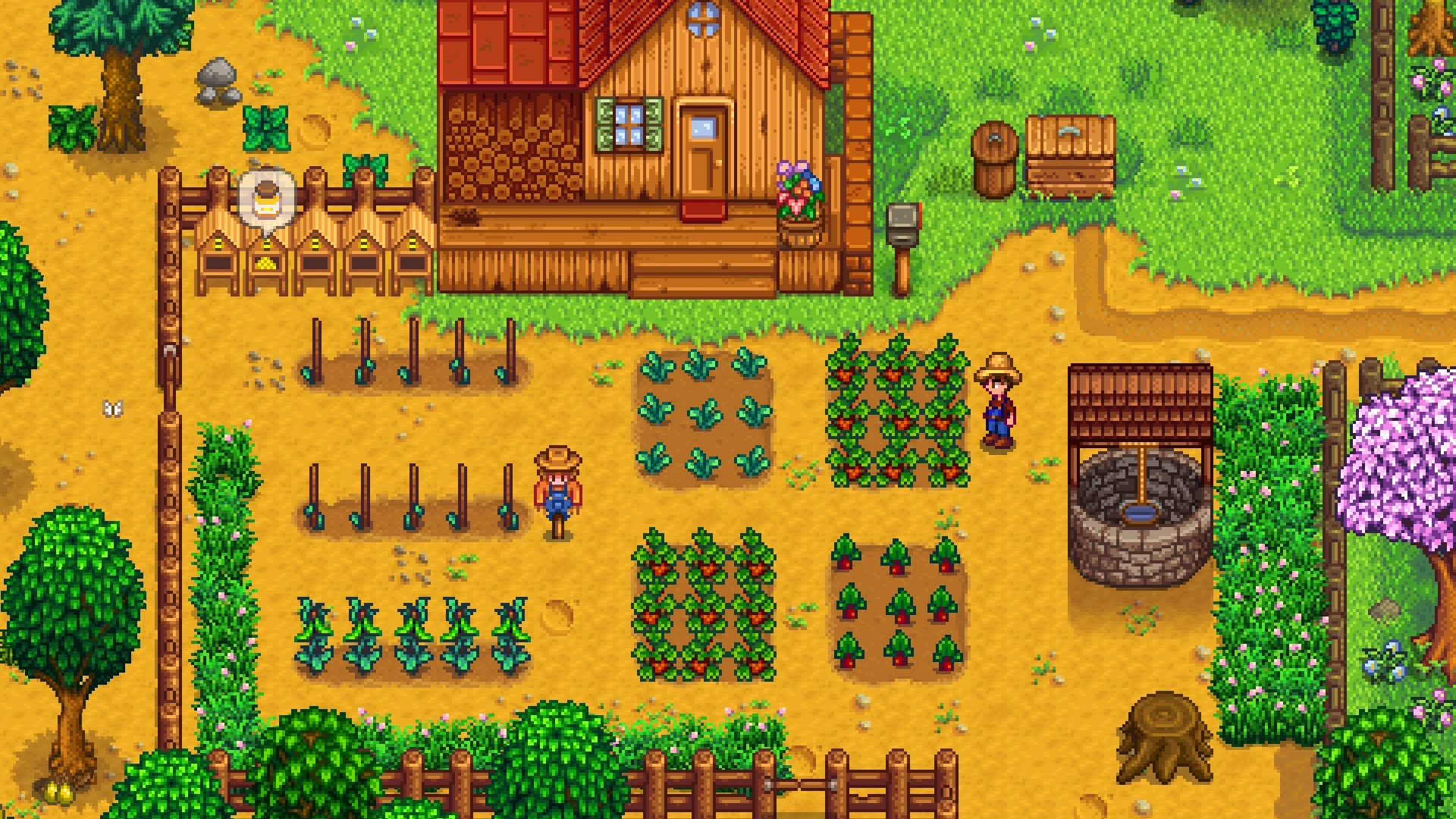
Image source: SteelSeries
How the 1.6 Update Changed the Farm Rankings
The 1.6 update was a significant advancement for Stardew Valley , introducing the Meadowlands Farm . This map specifically targets players who find the early-game crop grind tedious. Instead of the standard 15 Parsnip seeds, players start with a small Coop and two chickens. This allows for immediate Mayonnaise production, which provides a more stable early-game income stream than waiting for crops to grow.
Furthermore, the Meadowlands introduces "chewy blue grass." This unique vegetation doubles the friendship gain for any animal that eats it. In a game where high-quality animal products (like Large Milk or Gold-star Eggs) are tied directly to friendship levels, this mechanic allows Ranchers to reach peak productivity much faster than on other maps. According to 1.6 patch documentation , this grass can eventually be grown on other farms, but only via late-game recipes from Qi’s Walnut Room.
The Riverland Farm Buff
The Riverland farm, often criticized in the past for its lack of space, received a notably innovative buff in 1.6. Players now start with a Fish Smoker . This artisan machine doubles the value of any fish placed inside it (while retaining its quality). For a map that is roughly 70% water, this starting item makes fishing a highly viable primary income source during the first Spring, potentially rivaling early-game farming yields.
Why the Standard Farm Still Wins for Maximum Profit
Despite the flashy new features of the Meadowlands, the Standard Farm remains a top-tier choice for "min-max" players. The reason is simple math: tillable tiles. The Standard Farm boasts 3,427 tillable tiles , nearly double the space of the Forest or Riverland maps. If your goal is to reach the multi-million gold milestones required for late-game items, space is your most valuable resource.
The Standard Farm is particularly suited for the "Shed City" strategy. As discussed in community profit optimization threads , the most efficient way to make money is not just growing crops, but processing them. A Big Shed can hold 137 Kegs or Preserve Jars while taking up a very small footprint on the map. The flat, unobstructed land of the Standard Farm allows you to tile these sheds in rows, creating a massive industrial processing plant for Ancient Fruit Wine.
Profit Math: Barns vs. Sheds
To understand why space matters, consider the daily median income of different layouts:
- Deluxe Barn (Pigs): A barn full of 12 pigs can produce roughly 17,892g per day in Truffle Oil, assuming high friendship and the Botanist profession.
- Big Shed (Starfruit Jelly): A shed full of 137 Preserve Jars processing Starfruit can generate upwards of 148,645g per production cycle.
Because the Standard Farm allows for dozens of these sheds without sacrificing crop space, it sets a high standard for raw economic output that other maps struggle to match.
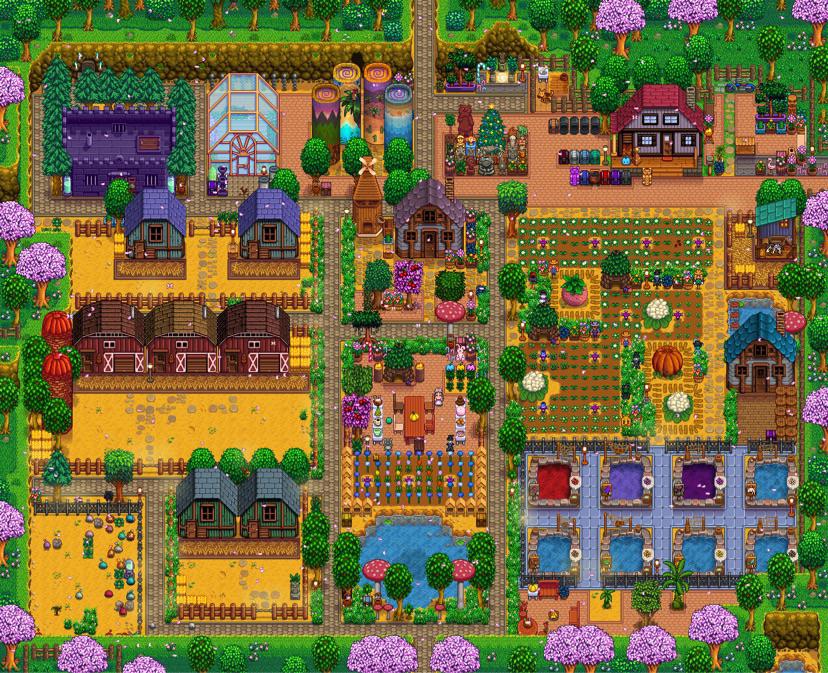
Image source: IGN
Which Farm Map Fits Your Specific Playstyle?
Not everyone wants to run a wine factory. For many, Stardew Valley is about the atmosphere. Here is how the other maps rank based on specific player needs:
| Farm Type | Tillable Tiles | Unique Perk | Best For |
|---|---|---|---|
| Standard | 3,427 | Maximum open space | Profit & Industrial Farming |
| Forest | 1,413 | 8 Renewable Hardwood Stumps | Cozy Aesthetic & Foraging |
| Hill-top | 1,648 | Mini-Quarry (Ore/Gems) | Mining Enthusiasts |
| Beach | 2,700 | Supply Crates & Rare Forage | Veterans (No Sprinklers on sand) |
| Meadowlands | ~2,500 | Blue Grass & Starting Coop | Animal Lovers & 1.6 Content |
| Four Corners | 2,952 | Divided quadrants | Multiplayer / Organization |
The Lazy Forager: Forest Farm
The Forest Farm is widely considered one of the best choices for players who want to minimize travel. It features eight large stumps that regrow every single day. This provides a steady stream of Hardwood—a resource usually gated behind the Secret Woods. Additionally, unique seasonal forage (like Morels or Chanterelles) spawns directly on your farm, saving you the trip to the woods. The unique lighting and greenery make it a popular choice for those focusing on a "cottagecore" aesthetic.
The Aesthetic Challenge: Beach Farm
The Beach Farm is a highly distinctive map that offers a unique gameplay loop. Supply crates wash up on the shore containing high-value items like Coffee, Mega Bombs, or even Fertilizer. However, there is a major catch: sprinklers do not work on sand . This forces you to either water crops by hand or rely entirely on a small 200-tile patch of regular soil. It is an excellent choice for players who want to focus on animals and fruit trees rather than massive crop fields.
The Mining Shortcut: Hill-top Farm
For players who find the early-game Mines grind stressful, the Hill-top farm offers a mini-quarry. This area spawns stones, ore nodes, and even geode nodes based on your Mining level. While it doesn't replace the need for deep-mine exploration, it provides a convenient source of Copper and Iron for early-game tool upgrades.
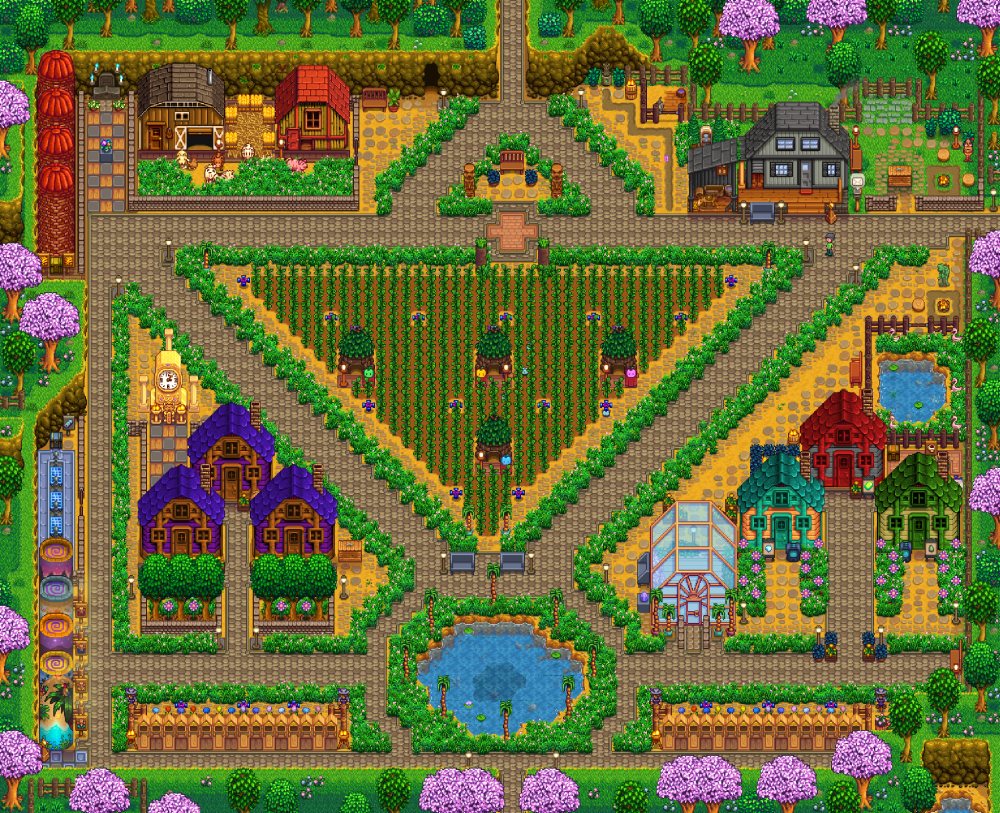
Image source: Stardew Valley Forums
Is the Meadowlands Farm Better for Early Game Progress?
The Meadowlands farm is a strong contender for the most efficient early-game map in the 1.6 meta. By starting with two chickens, you bypass the initial 4,000g cost of a Coop and the 300 Wood / 100 Stone requirement. In the first week of Spring, while other players are waiting for their first harvest of Parsnips, you are already producing eggs.
This map synergizes exceptionally well with the Rancher Profession . As noted in Gemini's Farming Guide , taking the Rancher skill at Level 5 increases the value of animal products by 20%. When combined with the Blue Grass friendship boost, you can start producing Gold-quality Mayonnaise very early, which sells for a significant premium. This creates a "snowball effect" where you can afford tool upgrades and bag expansions much faster than the traditional farming route.
Can You Change Your Farm Type After Starting the Game?
Officially, the answer is no. The game does not provide a "remodel" service at Robin’s shop or the Wizard’s tower to change the base map. However, the PC community has developed several workarounds for players who regret their initial choice.
The Save Editing Workaround
Advanced players can change their farm type by editing the
.xml
save file. This involves finding the
<whichFarm>
tag and changing the numerical value (e.g., 0 for Standard, 1 for Riverland).
However, this is highly risky.
Changing the map type does not move your existing buildings or trees. If you switch from a Standard farm to a Riverland farm, your barns might end up floating in the middle of a lake, potentially crashing the game.
Recommended Mods
The safest way to change your farm type is using the "Change Farm Type" mod available on Nexus Mods. This mod handles some of the coordinate translations more gracefully than manual editing. Regardless of the method, you should always back up your save file before attempting to alter the map metadata. For console and mobile players, there is currently no way to change the farm type; a new save file is the only option.
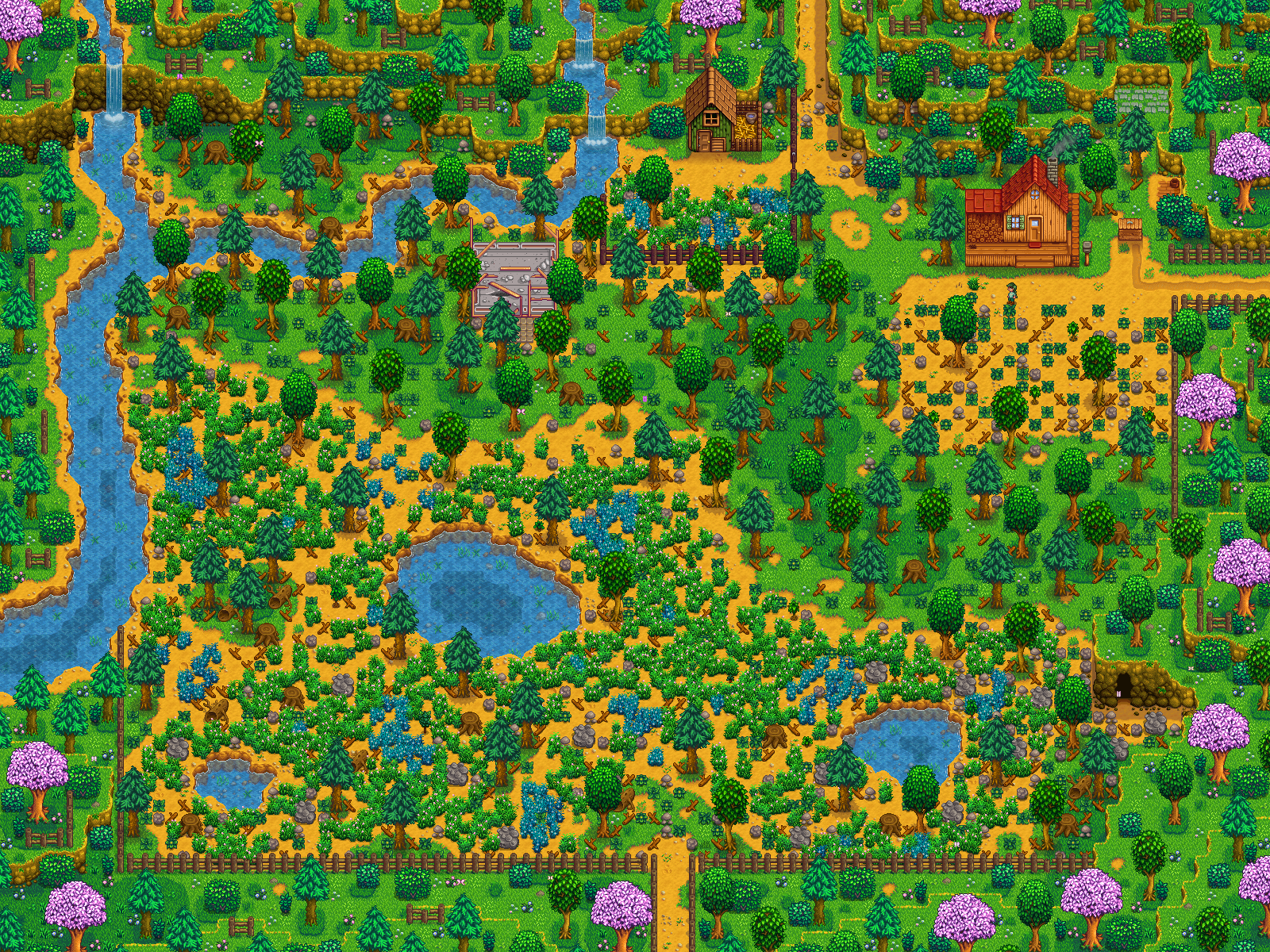
Image source: IGN
Frequently Asked Questions
Which farm map has the most space for buildings?
Is the Meadowlands farm good for beginners?
Can I get Blue Grass on the Standard Farm?
Does the Beach Farm really ban all sprinklers?
Which farm is best for a multiplayer save?
Key Takeaways for Choosing Your Farm
- Standard Farm is the top choice for players focused on late-game profit and industrial-scale wine production.
- Meadowlands Farm offers a significant advancement for early-game progression by starting players with chickens and blue grass.
- Forest Farm stands out for players who prioritize a cozy aesthetic and need a reliable source of hardwood.
- Beach Farm provides a unique challenge for veterans, trading sprinkler automation for valuable supply crates.
- Riverland Farm is now a highly impactful choice for fishing-focused runs thanks to the 1.6 Fish Smoker buff.
- Four Corners remains a premier option for multiplayer organization and distinct player zones.
- Map Choice is Permanent , so prioritize your preferred playstyle (animals vs. crops) over temporary trends.
Before you start your next save, decide whether you want to maximize your gold per hour or create a relaxing, aesthetic retreat, as this will determine which map serves you best.