Home
Which Stardew Valley Farm Type Should You Choose for the 1.6 Update?
Choosing a farm in Stardew Valley is a permanent decision that dictates your gameplay style. For maximum profit, the Standard Farm remains a top choice due to its vast tillable space. However, the 1.6 update introduced the Meadowlands Farm , which is widely considered one of the best options for players who prefer raising animals, as it features unique Blue Grass and a starting coop. Veterans seeking a challenge often opt for the Beach Farm , while multiplayer groups typically find Four Corners to be a highly effective layout.
How the 1.6 Update Changes Your Initial Farm Choice
The 1.6 update for Stardew Valley brought significant advancements to the early-game experience, most notably through the introduction of the Meadowlands Farm. Before this update, players were largely locked into a specific progression path: plant parsnips, clear land, and slowly build up to animals. The new map options and mechanical tweaks have shifted this dynamic, offering more flexibility from day one.
One of the most impactful changes in version 1.6 is the ability to move the Greenhouse. Previously, the Greenhouse was a fixed structure that often dictated the entire layout of a farm. Now, once it is repaired, you can visit Robin’s Carpentry Shop or the Wizard’s Tower to relocate it, allowing for much more creative and efficient designs. This change alone makes maps with awkward Greenhouse placements, like the Riverland or Hill-top farms, much more viable for long-term planning.
According to the official Stardew Valley Wiki , there are now eight distinct farm maps. Each map is designed to favor a specific skill—such as Foraging, Mining, or Fishing—but the 1.6 update has balanced these choices by adding new items and environmental features that reward diverse playstyles. Whether you are a returning veteran or a new player, understanding these nuances is essential before committing to a multi-year save file.
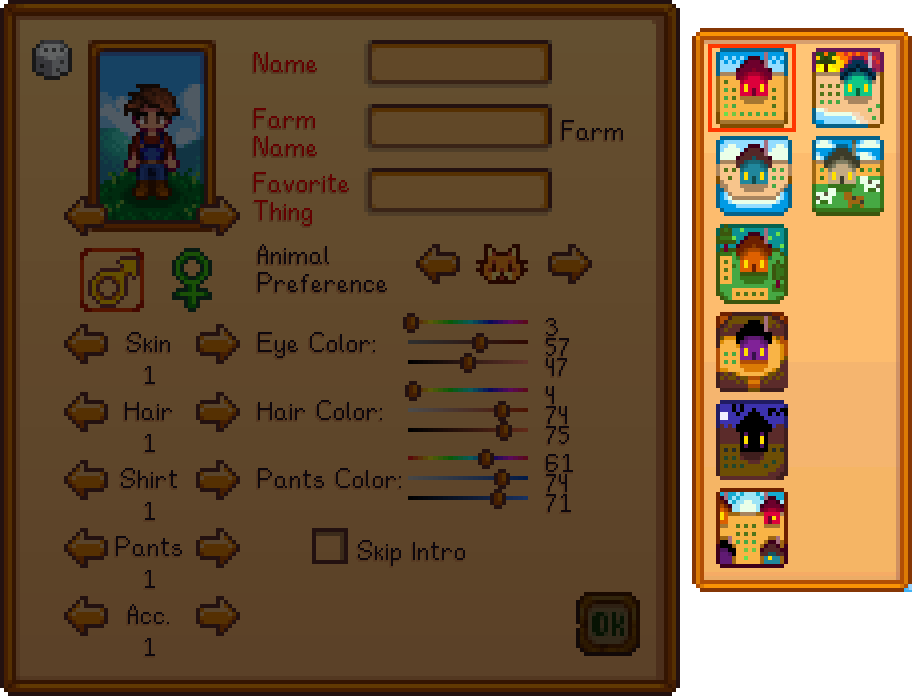
Image source: Stardew Valley Wiki
Why the Meadowlands Farm Is a Major Shift for Animal Lovers
The Meadowlands Farm (Granja de la Pradera) is perhaps the most significant addition to the game's map roster in years. Unlike every other farm that starts you with a packet of Parsnip seeds, the Meadowlands Farm starts you with a small Coop and two Chickens. This immediately pivots the early-game focus from crop management to animal husbandry.
The Blue Grass Advantage
The standout feature of this map is the Blue Grass . This isn't just a cosmetic change; Blue Grass is a highly functional resource that provides a significant boost to animal productivity. When animals eat Blue Grass, they gain friendship and mood at twice the rate of regular grass. This allows players to reach high-quality products, like Large Eggs and Gold-star Mayonnaise, much faster than on other maps.
For players aiming to complete the Community Center quickly, the Meadowlands Farm ranks among the top choices. The accelerated friendship gains mean you can unlock the Greenhouse (via the Animal Bundle) with much less RNG and time investment. While it has less tillable land than the Standard Farm, its layout is spacious enough to accommodate several barns and coops, making the "Rancher" profession a highly competitive alternative to the traditional "Artisan" meta.
Comparing the Stats and Perks of Every Farm Map
Selecting the right map requires balancing your aesthetic preferences with your mechanical goals. Some maps offer thousands of tiles for ancient fruit empires, while others provide unique resources at the cost of space. The following table breaks down the core statistics for each map as of the 1.6 update.
| Farm Type | Tillable Tiles | Primary Perk | Fishing Quality |
|---|---|---|---|
| Standard | 3,427 | Maximum Space | Low (Trash) |
| Riverland | 1,578 | Fishing Focus | High (Town Fish) |
| Forest | 1,413 | Hardwood & Foraging | Moderate (Woodskip) |
| Hill-top | 1,648 | Mining & Ores | Moderate (River Fish) |
| Wilderness | 2,131 | Combat Practice | Low (Lake Fish) |
| Four Corners | 2,952 | Multiplayer Balance | Mixed (All types) |
| Beach | 2,700 | Supply Crates | High (Ocean Fish) |
| Meadowlands | ~2,500 | Blue Grass & Animals | Low (Trash) |
Deep Dive into Map Specialties
- Standard Farm: The premier choice for those who want to build massive automated systems. With over 3,400 tillable tiles, it offers a level of freedom that few alternatives compare to.
- Forest Farm: A favorite for players who want to rush the Stable. It features eight large stumps that respawn daily, providing a steady stream of Hardwood. It also grows unique seasonal forage items and the rare Woodskip fish.
- Beach Farm: Often described as "Hard Mode," this map does not allow sprinklers on sandy soil. However, it compensates with supply crates that wash ashore, containing high-value items like coffee, quality retaining soil, and even cooked meals.
- Four Corners: This map is a significant step forward for organized play. It divides the land into four distinct zones, each with a small perk from other maps (a mini-quarry, a mini-pond, etc.), making it a top-performing option for solo players who like categorized layouts.
Which Farm Map Is Best for Making the Most Money?
If your goal is to reach the "Perfection" milestone and buy the Gold Clock, your choice of farm will dictate your strategy. Historically, the Standard Farm has been the undisputed king of profit because of its sheer volume. More tiles mean more Ancient Fruit, which leads to more Kegs and more Wine. However, the 1.6 update has made other paths more viable.
The Meadowlands Farm offers a strong alternative through the Rancher profession. By leveraging Blue Grass, you can produce Iridium-quality Truffles and Large Goats Milk much earlier in the game. While it may not reach the absolute ceiling of a full-map Ancient Fruit winery, the early-game cash flow is exceptionally strong, allowing you to buy upgrades and seeds without the usual "Spring Year 1" struggle.
For those who choose the Beach Farm , the lack of sprinklers is a major hurdle. To maximize profit here, many players rely on "Deluxe Retaining Soil," which keeps crops watered indefinitely once applied. This allows you to maintain large outdoor fields without manual labor. Additionally, the Greenhouse becomes your most valuable asset on the Beach Farm, as it is the only place where sprinklers function normally. Rushing the Greenhouse is a recommended practice for any Beach Farm playthrough.
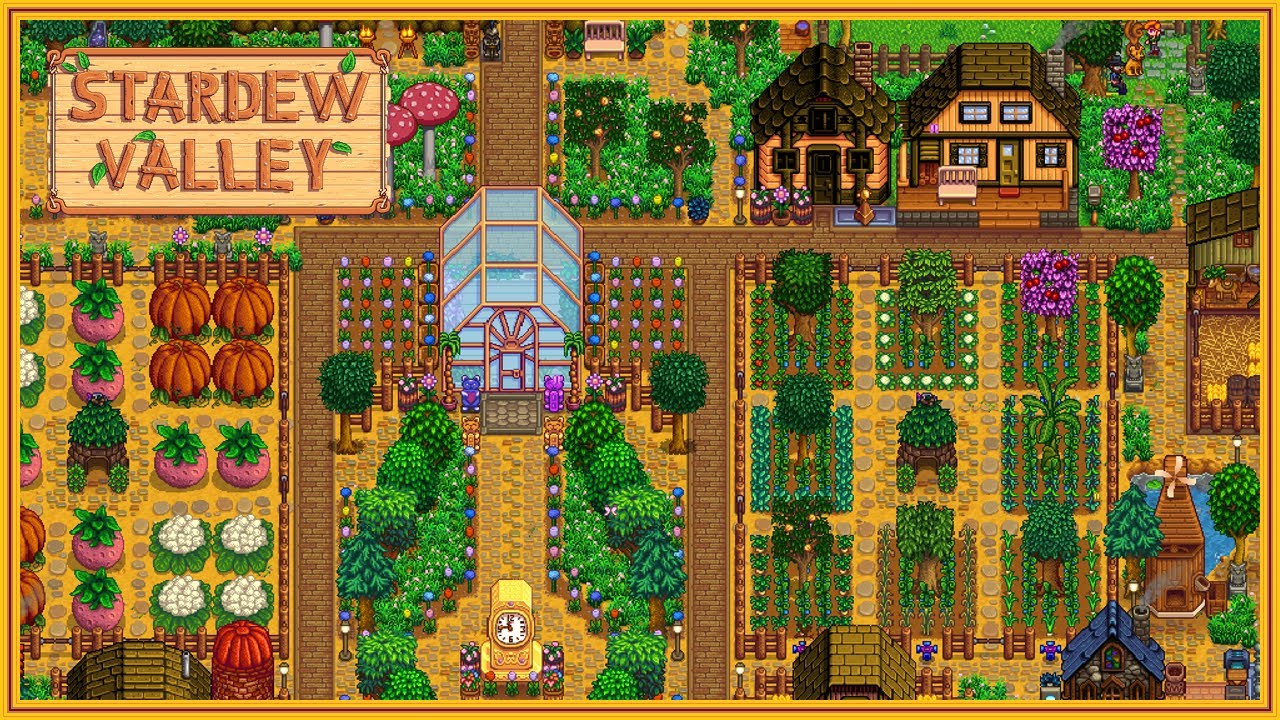
Image source: YouTube
How to Design a Beautiful and Functional Farm Layout
With the 1.6 update, aesthetics have taken a front seat. Players can now place almost any furniture item outdoors, allowing for the creation of cozy patios, outdoor cafes, and intricate garden paths. Designing a farm is no longer just about efficiency; it is about creating a space that feels lived-in.
Using Advanced Planning Tools
Before you start placing buildings that cost thousands of gold, it is wise to use a tool like the Stardew Planner V3 . This browser-based application allows you to upload your save file or start from scratch to visualize your layout. It includes "Restriction Overlays" that show exactly where you can and cannot build, which is particularly useful for the irregular terrain of the Forest and Hill-top farms.
Community Design Secrets
According to discussions on the r/FarmsofStardewValley community, one of the most effective ways to keep a farm looking clean is the "Flooring Trick." By placing your scarecrows and sprinklers on top of a piece of flooring (like Wood Path or Stone Floor), you prevent them from being accidentally uprooted when you use your Hoe to till the soil nearby. This small adjustment saves hours of frustration during the seasonal transitions.
"A beautiful farm is one that balances negative space with productivity. Don't feel the need to fill every tile with a crop; leave room for trees, benches, and decorative lighting to make the farm feel like a home."
Fixing Common Technical Issues and Save File Errors
As Stardew Valley continues to evolve, technical hurdles can occasionally arise, especially for mobile players or those using mods. The 1.6 update changed how files are structured on several platforms, leading to some confusion regarding save migrations.
Mobile Save Migration Guide
Android users, in particular, have reported issues with "missing" saves after updating. This is usually due to Android's "Scoped Storage" rules. To fix this, you must manually move your save folders. The correct path for 1.6 saves on most Android devices is:
Android/data/com.chucklefish.stardewvalley/files/saves
. Moving your old files from the root directory to this specific folder will typically restore your progress.
Handling Multiplayer Desync
In co-op mode, players may experience "time desync," where the clock for the host and the farmhands does not match. This can lead to crops not growing at the same rate or events triggering at different times. A common fix found in the official forums is to have the host pause the game for a few seconds or, in extreme cases, restart the day. Ensuring all players have a stable internet connection and disabling heavy background downloads can also mitigate these issues.
Frequently Asked Questions
Can I change my farm type after starting the game?
What is the top farm choice for a total beginner?
Does Blue Grass grow back if I cut it all?
How do I move my Greenhouse in the 1.6 update?
Is the Beach Farm worth the difficulty for experienced players?
Final Recommendations for Your Next Save File
Choosing your farm is the first step in a journey that can last hundreds of hours. Here are the key takeaways to help you decide:
- Prioritize space by choosing the Standard Farm if you plan on building a massive, automated industrial empire.
- Focus on animals with the Meadowlands Farm to take advantage of the Blue Grass friendship multiplier and the early coop.
- Leverage multiplayer by using the Four Corners map, which provides a balanced experience for up to four players.
- Embrace the challenge of the Beach Farm if you want to move away from sprinkler-heavy gameplay and enjoy ocean fishing.
- Plan ahead using external tools like Stardew Planner V3 to avoid costly mistakes in building placement.
- Stay updated on technical fixes, especially regarding mobile save migration, to ensure your progress is never lost.
Before you start your next day in Pelican Town, take a moment to consider which of these maps aligns with your long-term goals for your farm.